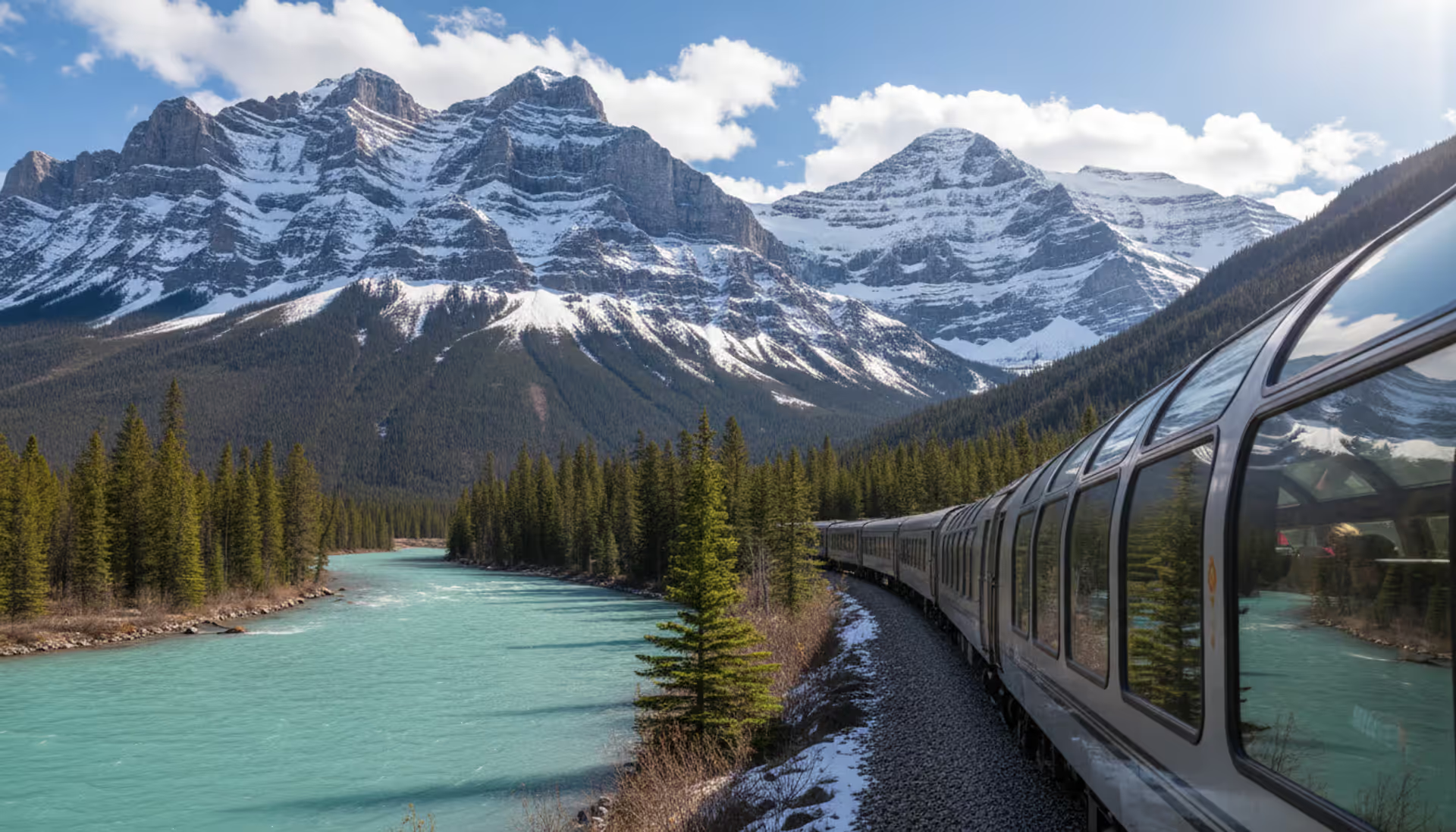
Luxury glass-domed train traveling along a turquoise glacial river with snow-capped Canadian Rocky Mountain peaks in the background on a sunny day
Luxury Train Travel Canada Guide

Content
Canada's luxury train journeys offer something European rail can't replicate: vast wilderness corridors where grizzly bears outnumber people, turquoise glacial lakes that stretch beyond the horizon, and mountain passes so remote that cell service disappears for hours. For travelers accustomed to Switzerland's manicured Alpine villages or Ireland's compact countryside, Canadian rail travel presents a fundamentally different scale—one measured in days crossing terrain larger than most European countries.
This guide breaks down what you'll actually encounter on Canada's luxury trains, how costs compare to European alternatives, and the practical decisions that separate a good trip from one you'll reference for decades.
What Makes Luxury Train Travel in Canada Unique
Canadian luxury rail operates under constraints that shape the entire experience. Unlike European networks with centuries of passenger rail infrastructure, Canada's transcontinental routes were built for freight. Luxury operators lease track time from cargo companies, which explains why most journeys happen during daylight hours only—trains pull into stations each evening, and passengers sleep in hotels.
This daylight-only model has an unexpected advantage: you never miss scenery while sleeping. The Rocky Mountaineer pioneered this approach in 1990, and it remains the defining characteristic of Canadian luxury train travel. You're awake for every river gorge, wildlife sighting, and snowcapped peak.
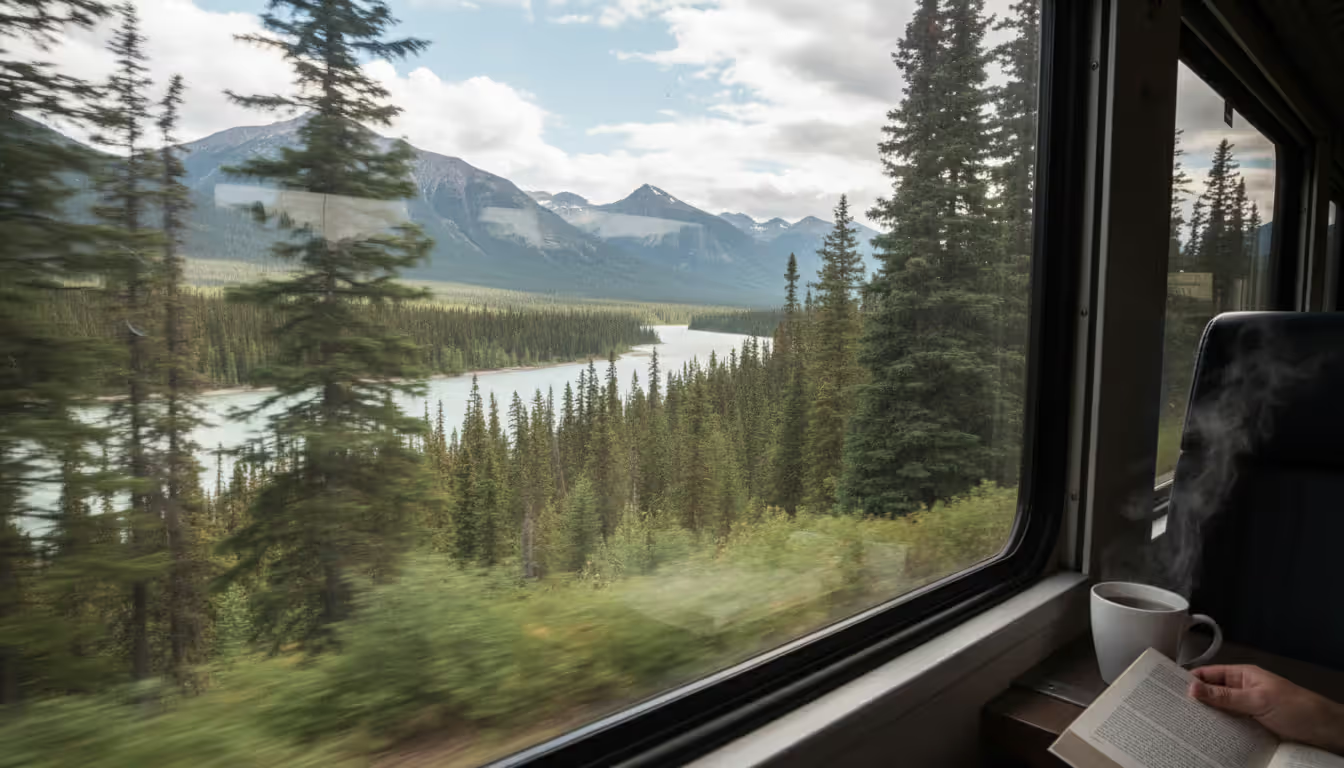
The scenery itself differs markedly from European rail. Switzerland's Glacier Express travels through inhabited valleys with farmhouses and church steeples punctuating every view. Canadian routes through the Rockies or along British Columbia's Fraser River often go hours without visible human structures. You'll see forests that have never been logged, rivers that flow unnamed, and mountain ranges without ski resorts or cable cars.
Service standards reflect North American hospitality norms rather than European formality. Onboard hosts narrate landscapes with stories about railway construction history, local wildlife patterns, and geological formations, creating an educational layer absent from most European luxury trains. Meals emphasize regional ingredients—wild salmon, Alberta beef, Okanagan wines—rather than the Continental cuisine common on European routes.
Author: Alexander Moreau;
Source: reykjaviksegwaytours.com
Weather variability matters more in Canada. A September journey might encounter snow in the Rockies and 70°F sunshine in Vancouver within the same day. European trains operate year-round with predictable seasonal conditions; Canadian luxury rail concentrates departures from mid-April through mid-October, when mountain passes are reliably accessible and daylight extends late into evening.
Rocky Mountaineer: Canada's Premier Luxury Train Experience
The Rocky Mountaineer operates four distinct routes, all originating or terminating in Vancouver. Unlike Amtrak or VIA Rail, this isn't transportation—it's a touring product where the journey itself is the destination. Trains average 35 miles per hour, slow enough to spot wildlife and photograph waterfalls without motion blur.
Routes and Scenic Highlights
First Passage to the West connects Vancouver and Banff or Lake Louise through the Canadian Rockies. This two-day journey follows the original Canadian Pacific Railway route completed in 1885. Day one travels the Fraser Canyon, where the river narrows to 110 feet between vertical rock walls. You'll pass through the spiral tunnels at Cathedral Mountain—engineering marvels where trains loop inside mountains to gain elevation. Day two enters the Rockies proper, with views of glaciers, emerald lakes, and peaks exceeding 11,000 feet.
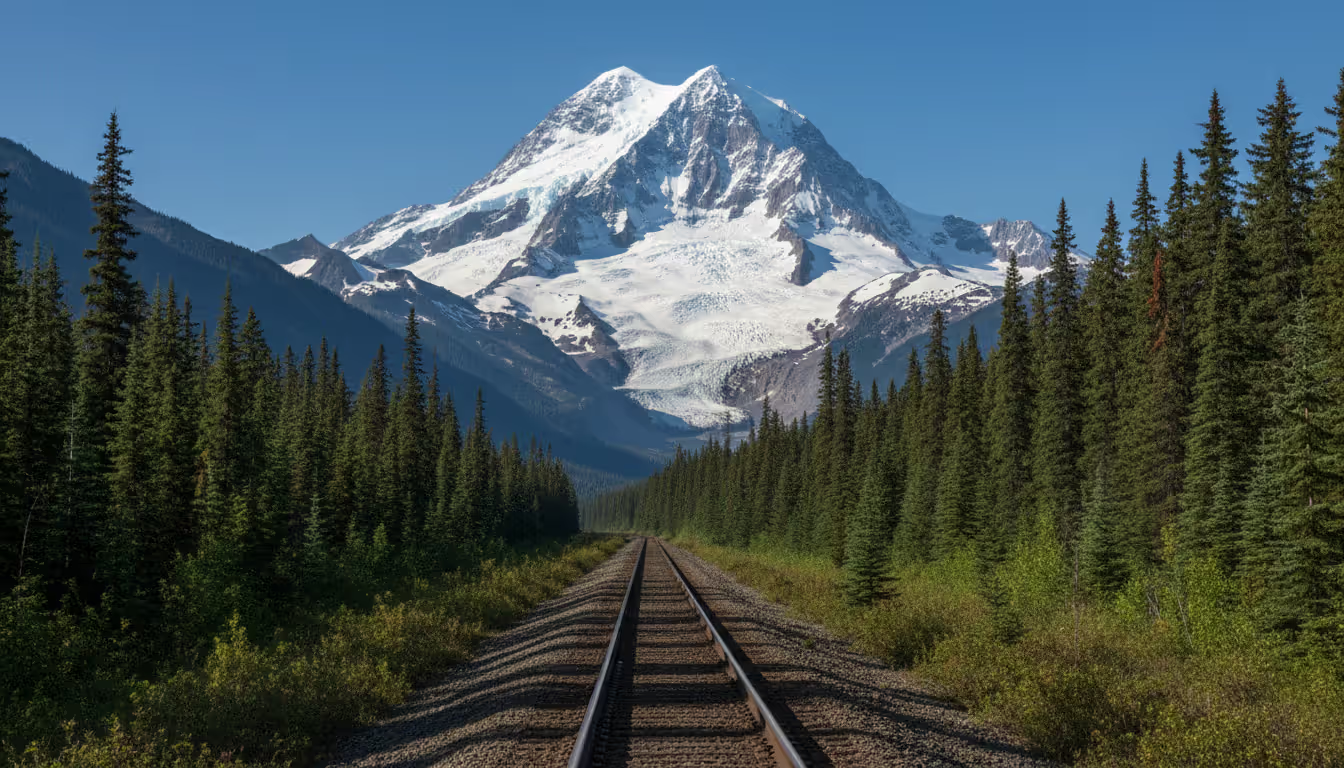
Journey through the Clouds adds a third day, routing through Jasper instead of Banff. This version includes Mount Robson, the Canadian Rockies' highest peak at 12,972 feet, and Pyramid Falls, visible directly from the train. The Jasper route sees fewer tourists than Banff, and wildlife sightings—elk, bighorn sheep, occasionally wolves—increase noticeably.
Rainforest to Gold Rush travels from Vancouver to Jasper via Whistler and Quesnel. This route emphasizes British Columbia's diversity: coastal rainforests give way to high desert, then alpine terrain. You'll cross the bridge over Cheakamus Canyon and skirt Anderson Lake, a turquoise glacial lake that photographs impossibly well in morning light.
Author: Alexander Moreau;
Source: reykjaviksegwaytours.com
Coastal Passage runs between Seattle and the Canadian Rockies, adding a day along Puget Sound and the Pacific coast before entering mountain terrain. This route works well for travelers combining rail with Seattle's urban attractions or San Juan Islands cruises.
Service Tiers and What's Included
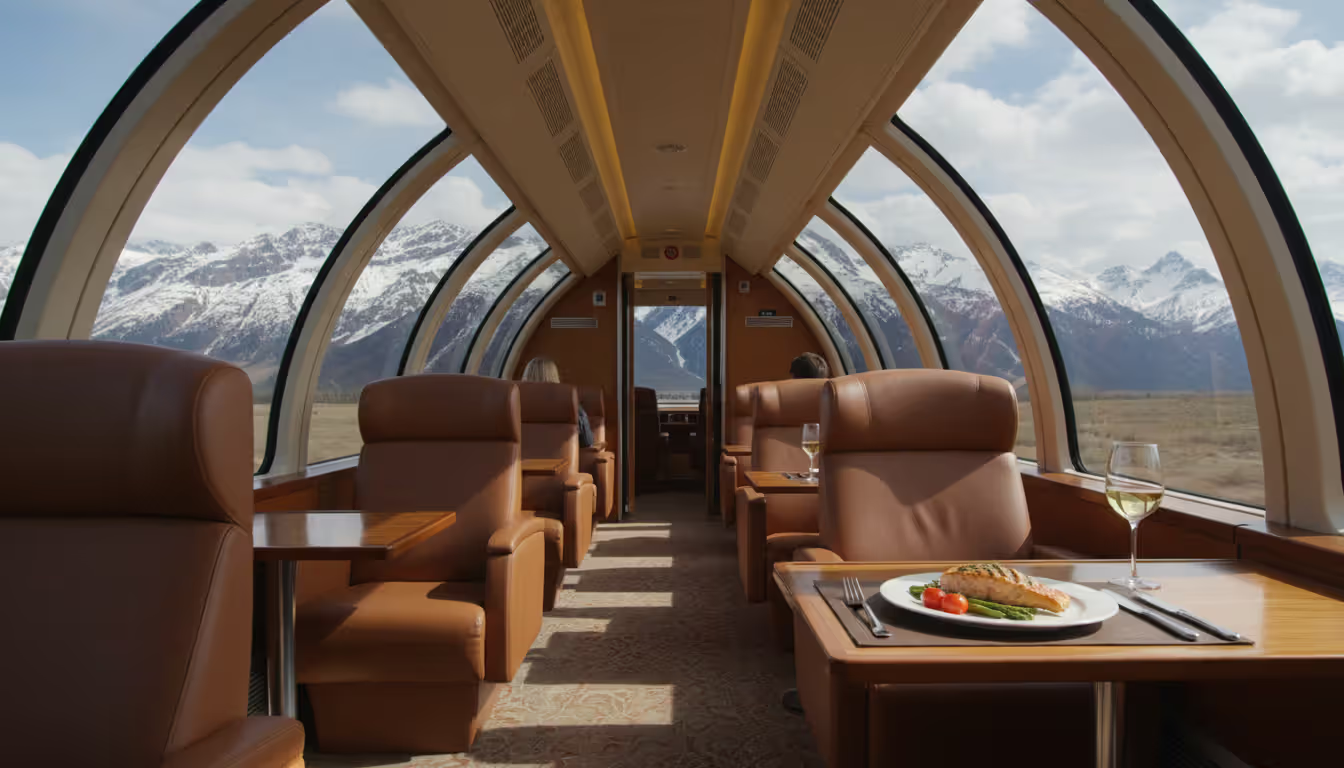
GoldLeaf Service features bi-level dome cars with 180-degree windows on the upper level and a dining room below. Seats are configured two-by-one, meaning solo travelers aren't forced into shared seating. Meals are served course-by-course at your seat or in the lower-level dining car, with menu options like bison short ribs or Fraser Valley duck. Complimentary alcoholic beverages flow throughout the journey—a significant cost difference from European trains, where drinks often add €50-100 per person daily.
GoldLeaf passengers receive priority hotel check-in, luggage delivery to rooms, and access to private station lounges. These details matter when you're managing a two- or three-day itinerary with daily hotel changes.
SilverLeaf Service uses single-level dome cars with oversized windows and reclining seats in a two-by-two configuration. Meals are served at-seat rather than in a separate dining car, and beverage options are more limited. The scenery is identical, and many seasoned travelers argue SilverLeaf offers better photography angles since you're not shooting through a second layer of dome glass.
The price gap between service tiers typically runs $800-1,200 per person for a two-day journey. Solo travelers should note that GoldLeaf's single-seat rows eliminate the forced-pairing common in SilverLeaf.
Both tiers include two nights' hotel accommodation (one mid-journey, one at the destination), all meals aboard the train, and non-alcoholic beverages. Neither includes hotel meals, gratuities, or transportation beyond the train itself.
Author: Alexander Moreau;
Source: reykjaviksegwaytours.com
How to Choose the Right Luxury Train Journey
Start with your tolerance for remoteness. Canadian routes spend hours beyond cell coverage, passing through terrain where the nearest road might be fifty miles away. European luxury trains connect cities and towns; you're never far from civilization. If constant connectivity matters for work or family contact, European rail offers more flexibility.
Consider your scenery preferences. Switzerland's Bernina Express showcases human interaction with landscape—Alpine villages, terraced vineyards, centuries-old stone bridges. Canada's Rocky Mountaineer emphasizes raw wilderness. If you prefer landscapes that show minimal human impact, Canada delivers. If you appreciate how humans have shaped terrain over millennia, Europe satisfies differently.
Trip duration differs significantly. Most Canadian luxury rail journeys require 2-3 days dedicated solely to the train, plus travel days reaching Vancouver or Calgary. European options like the Glacier Express complete their routes in 8 hours, allowing same-day connections to other destinations. The Venice Simplon-Orient-Express offers overnight journeys, but even its longest routes finish within 24-30 hours.
Budget considerations extend beyond ticket prices. Canadian journeys include hotels and most meals, consolidating costs. European luxury trains typically charge only for the rail journey itself; you'll book separate hotels and pay for all meals beyond basic onboard service. When comparing total costs, add €200-400 per day for European hotels and meals to the train ticket price.
Seasonal windows constrain Canadian travel more than European. Rocky Mountaineer operates mid-April through mid-October only. European luxury trains run year-round, with Christmas markets and winter sports adding seasonal appeal. If you're locked into travel dates outside Canada's operating season, European rail becomes the default option.
Accessibility varies. Rocky Mountaineer accommodates wheelchairs and mobility devices with advance notice, but the bi-level GoldLeaf cars require stair navigation. European trains offer better accessibility overall, with level boarding and elevator access between cars on most modern luxury services.
Luxury Train Travel: Canada vs Europe vs Switzerland
Direct comparisons reveal where each destination excels and where compromises exist. The table below outlines key differences across flagship routes:
| Destination/Route | Duration | Price Range (USD) | Best Season | Scenery Type | Booking Window |
| Rocky Mountaineer (Canada) | 2-3 days | $2,400-$5,800 per person | May-September | Wilderness, mountains, glacial rivers | 6-12 months ahead |
| Glacier Express (Switzerland) | 8 hours | $1,800-$3,200 per person | Year-round; June-September peak | Alpine villages, engineered landscapes | 2-6 months ahead |
| Venice Simplon-Orient-Express (Europe) | 1-2 nights | $3,500-$12,000 per person | March-November | Cities, countryside, cultural landmarks | 6-18 months ahead |
| Bernina Express (Switzerland) | 4 hours | $800-$1,500 per person | Year-round; July-August peak | Mountains, viaducts, Italian lakes | 1-3 months ahead |
Price ranges include accommodation where applicable and represent 2026 standard fares for double occupancy. Solo travelers typically pay 125-175% of the per-person rate.
Switzerland's luxury trains operate more frequently—the Glacier Express departs daily, while Rocky Mountaineer runs 2-4 times weekly depending on season. This frequency difference matters when coordinating with international flights or cruise schedules.
The Venice Simplon-Orient-Express occupies a different category entirely. It's a mobile hotel emphasizing 1920s glamour, Art Deco design, and formal dining. Scenery matters less than the onboard experience. Canadian and Swiss trains prioritize landscapes over period nostalgia.
Swiss trains integrate seamlessly with Europe's rail network. You can book a Glacier Express journey as part of a larger European itinerary using a Swiss Travel Pass or Eurail pass. Canadian luxury rail operates independently—there's no pass system or integration with standard rail services.
Food philosophies differ. Rocky Mountaineer emphasizes regional Canadian ingredients and wine pairings from British Columbia's Okanagan Valley. Swiss trains serve Continental cuisine with Swiss specialties like raclette or Zürcher Geschnetzeltes. The Orient Express focuses on haute cuisine with Michelin-trained chefs and vintage champagne service.
Canadian luxury rail isn't about getting from point A to point B efficiently. It's about surrendering to landscapes that dwarf human presence entirely. Passengers often tell me the first hour through the Rockies recalibrates their sense of what 'scenic' actually means
— Sarah Mitchel
What Luxury Train Tours Cost in Canada
Rocky Mountaineer packages for the two-day First Passage to the West route start at $2,400 per person in SilverLeaf Service during shoulder season (late April or early October). The same route in GoldLeaf Service during peak season (July-August) reaches $4,200 per person. Adding a third day for the Journey through the Clouds route increases costs by $900-1,400 per person depending on service tier and season.
These base prices include: - Two days aboard the train with all meals and non-alcoholic beverages - Two nights' hotel accommodation (mid-journey and at destination) - Luggage transfer between hotels - Onboard commentary and entertainment
Not included: - Flights to/from Vancouver or Calgary - Hotel nights before or after the train journey - Meals at hotels (breakfast sometimes included depending on property) - Alcoholic beverages in SilverLeaf Service - Gratuities (recommended at $30-50 per person per day) - Activities or excursions at departure or arrival cities
Solo travelers face supplements of 25-75% above the per-person double-occupancy rate. GoldLeaf Service offers better solo value since single-configuration seating eliminates the need to pair strangers.
Package deals bundling Rocky Mountaineer with Alaska cruises or Canadian Rockies hotel stays can reduce per-component costs by 10-15%. These packages typically require booking 9-12 months ahead to capture early-bird pricing.
Shoulder season (April 15-May 15, September 15-October 15) offers the best value, with prices 20-30% below peak season. Weather remains generally favorable, though snow can still occur in mountain passes during April. Wildlife sightings actually increase in shoulder seasons as animals move to lower elevations.
Booking directly through Rocky Mountaineer versus third-party tour operators rarely yields price differences, but direct bookings offer more flexibility for modifications. Many luxury travel advisors receive commission from Rocky Mountaineer without marking up client prices, adding value through itinerary planning and hotel selection expertise.
Credit card rewards can offset costs significantly. Premium travel cards offering 3-5x points on travel purchases effectively discount luxury train travel by 6-10% when points are redeemed for future travel. Some cards provide trip delay or cancellation coverage that supplements travel insurance.
Planning Your Luxury Rail Journey: Booking and Logistics
Book Canadian luxury train travel 8-12 months ahead for peak season (June-August), 4-6 months for shoulder season. Popular departure dates around Canadian holidays (Victoria Day in May, Canada Day in July) sell out earliest. European luxury trains require similar lead times, though the Bernina Express and Glacier Express offer more frequent departures and sometimes accommodate last-minute bookings during off-peak periods.
Flight routing into Vancouver or Calgary should arrive at least one day before your train departure. Weather delays, missed connections, or jet lag can derail tight itineraries. Most travelers build 1-2 days in Vancouver for recovery and sightseeing before boarding. Calgary serves as the eastern terminus for most routes, making it logical to fly into one city and out of the other rather than backtracking.
Author: Alexander Moreau;
Source: reykjaviksegwaytours.com
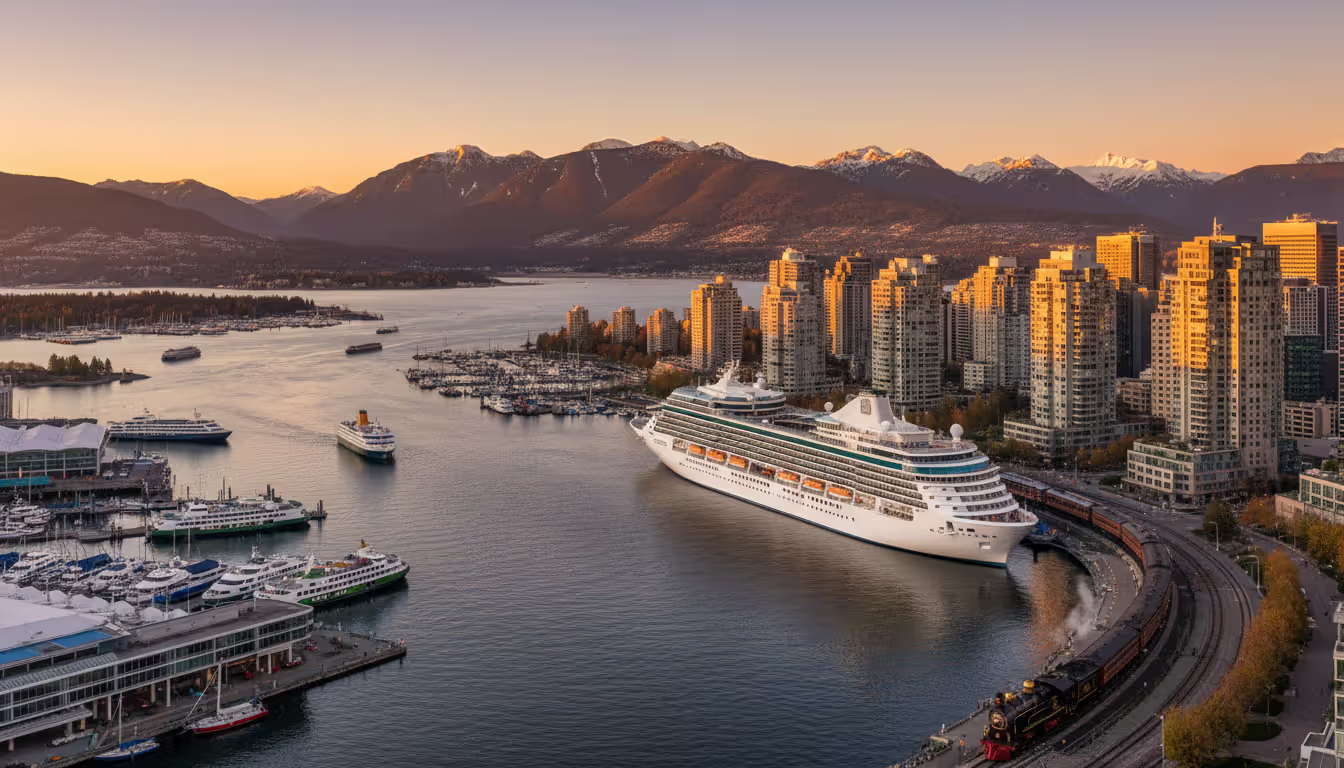
Combining luxury train travel with scenic ocean cruises creates popular Alaska-Canada itineraries. Many cruise lines offer packages where you cruise Alaska's Inside Passage for 7 days, then transfer to Vancouver for Rocky Mountaineer travel to the Canadian Rockies. This combination works well because both experiences emphasize scenery and wildlife over urban attractions. Book these combined packages 10-14 months ahead, as cruise cabins and train seats are allocated separately and can sell out independently.
Ireland train tours pair less naturally with Canadian rail due to geographic distance and trip duration. However, travelers planning multi-week luxury vacations sometimes route through Iceland or the UK, combining Ireland's Belmond Grand Hibernian train with a transatlantic crossing before continuing to Canada. This requires 3-4 weeks minimum and careful attention to seasonal operating windows—Ireland's luxury train operates May-September, overlapping with Canadian rail season.
Packing for Canadian luxury train travel differs from European rail. Layers matter more due to temperature swings between coastal Vancouver (60-75°F in summer) and mountain passes (40-65°F). The Rocky Mountaineer has no formal dress code, though most passengers dress smart-casual for dinner service. European luxury trains, particularly the Venice Simplon-Orient-Express, enforce formal dress codes for evening meals.
Travel insurance should cover trip interruption, not just cancellation. Rocky Mountaineer journeys can be disrupted by wildfires, flooding, or track maintenance issues that arise after booking. Policies covering missed connections, itinerary changes, and accommodation expenses provide better protection than basic cancellation coverage.
Photography equipment deserves consideration. Wide-angle lenses (16-35mm) capture dome car interiors and expansive landscapes. Telephoto lenses (100-400mm) allow wildlife photography without disturbing animals. Polarizing filters reduce glare from dome glass. The train's motion rarely causes blur issues given the slow speeds, but image stabilization helps during occasional rough track sections.
Frequently Asked Questions About Luxury Train Travel in Canada
Luxury train travel in Canada delivers experiences fundamentally different from European rail—not better or worse, but distinct in scale, remoteness, and the relationship between human presence and landscape. The Rocky Mountaineer's daylight-only journeys through the Canadian Rockies prioritize scenery over speed, creating space for the kind of sustained attention to environment that modern travel rarely permits.
Your choice between Canadian and European luxury rail should reflect what you value: wilderness immersion versus cultural landscapes, dedicated multi-day journeys versus flexible day trips, North American hospitality versus European formality. Budget differences narrow when you account for total trip costs including hotels and meals, making the decision more about experience preference than price sensitivity.
Book early, pack layers, and adjust expectations away from efficiency toward immersion. The best luxury train journeys—whether through Canada's Rockies, Switzerland's Alps, or Ireland's countryside—share one characteristic: they convince you that arrival matters less than the hours spent watching landscapes unfold at speeds slow enough to actually see them.