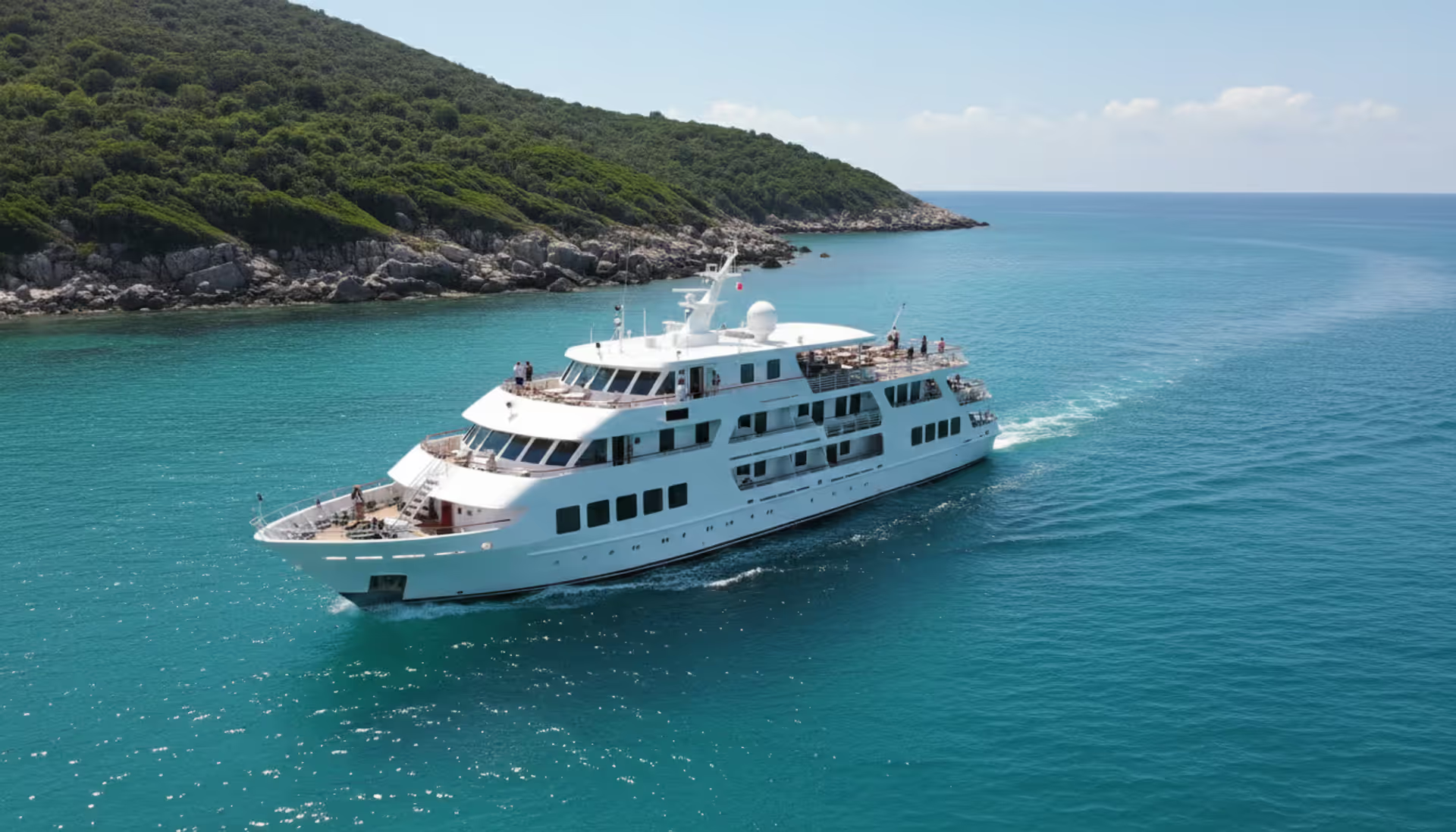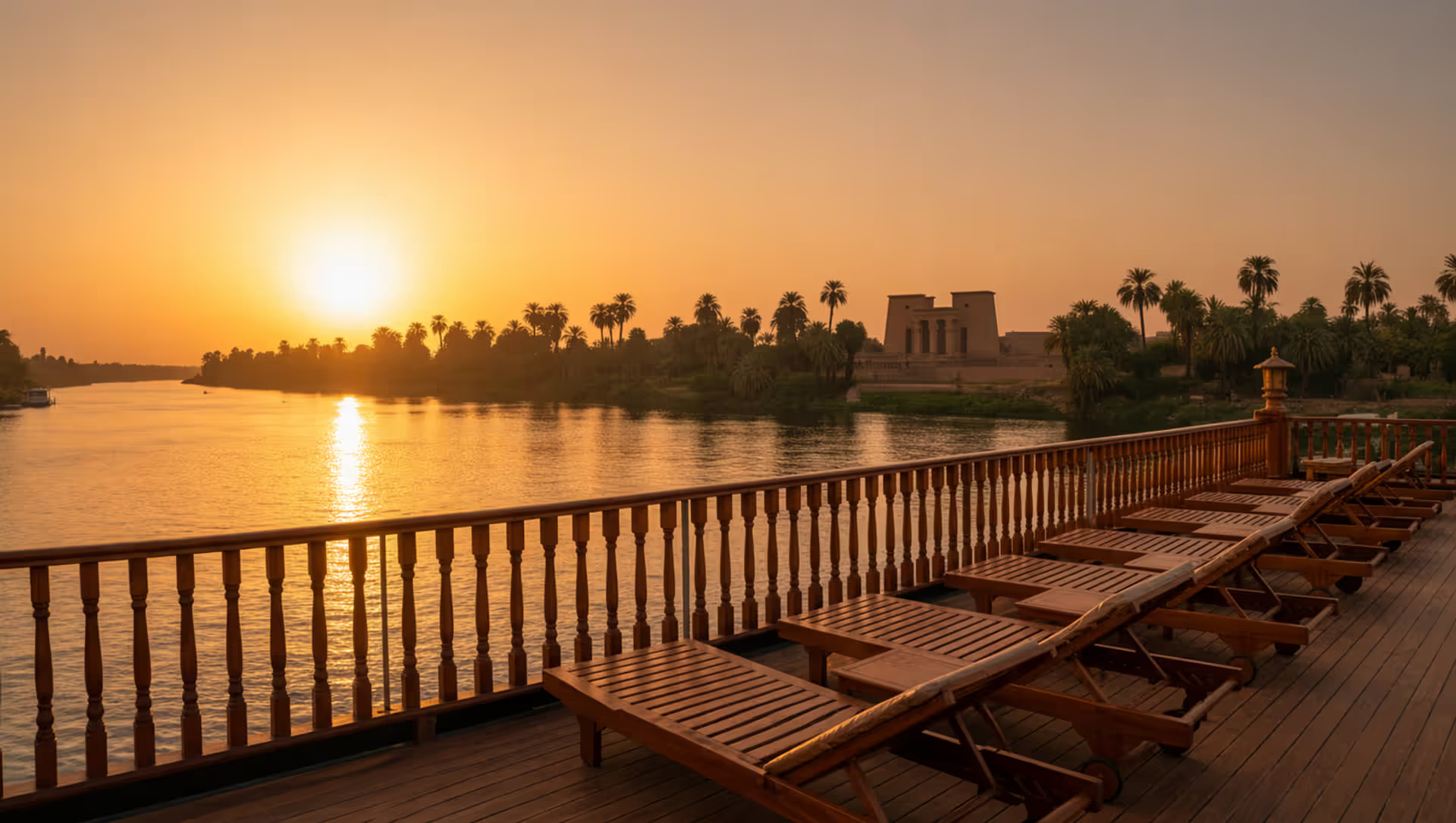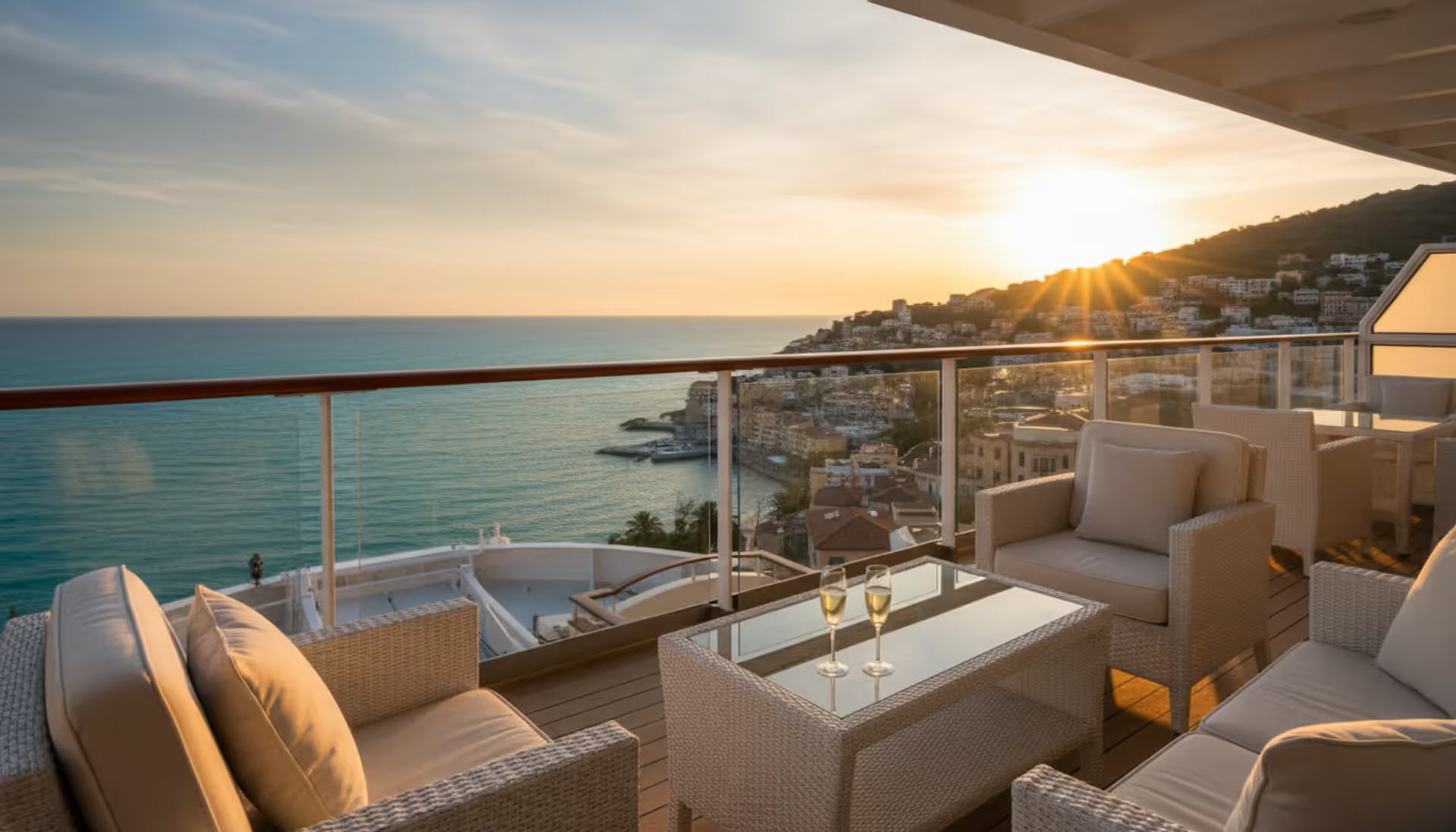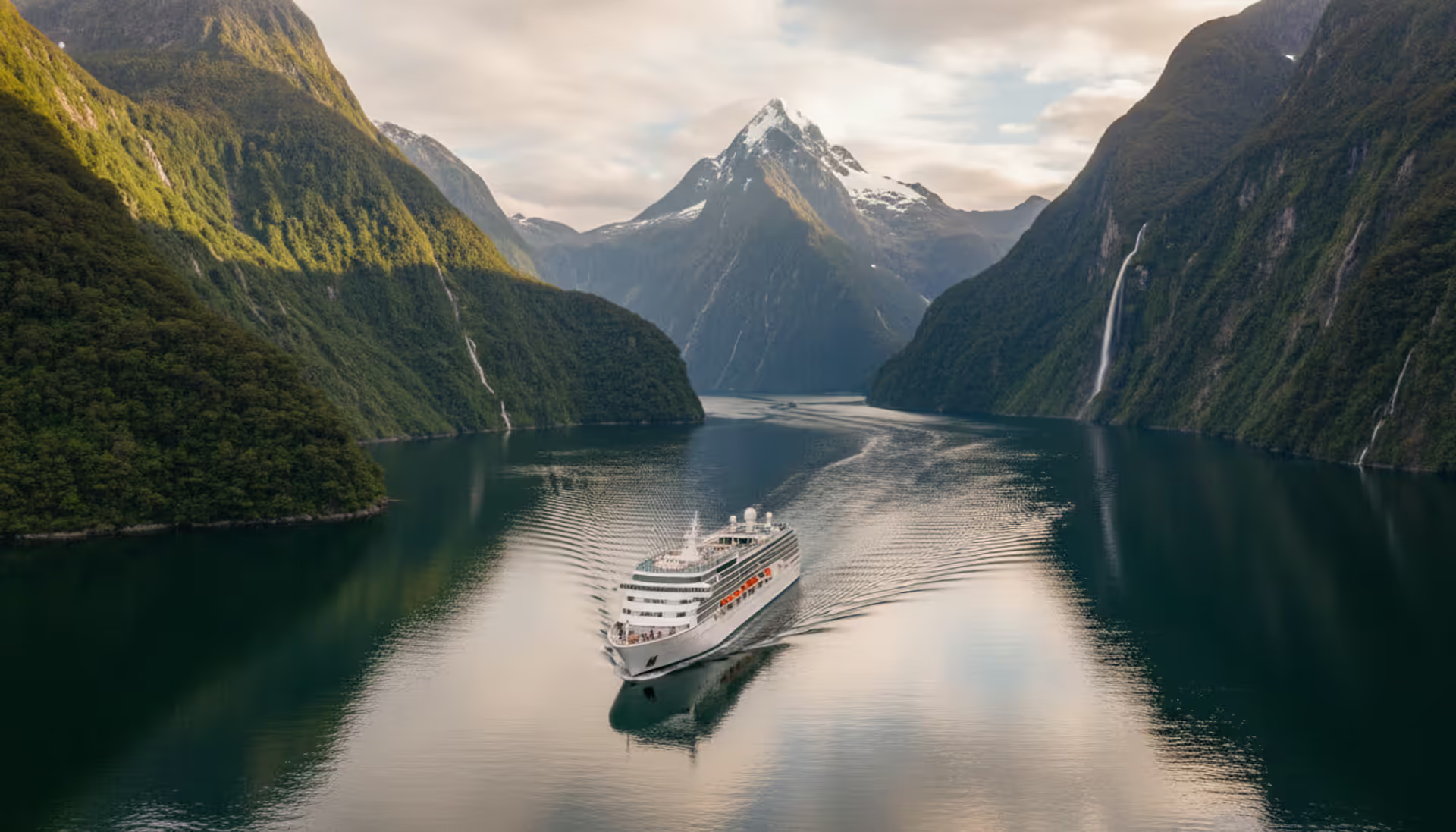
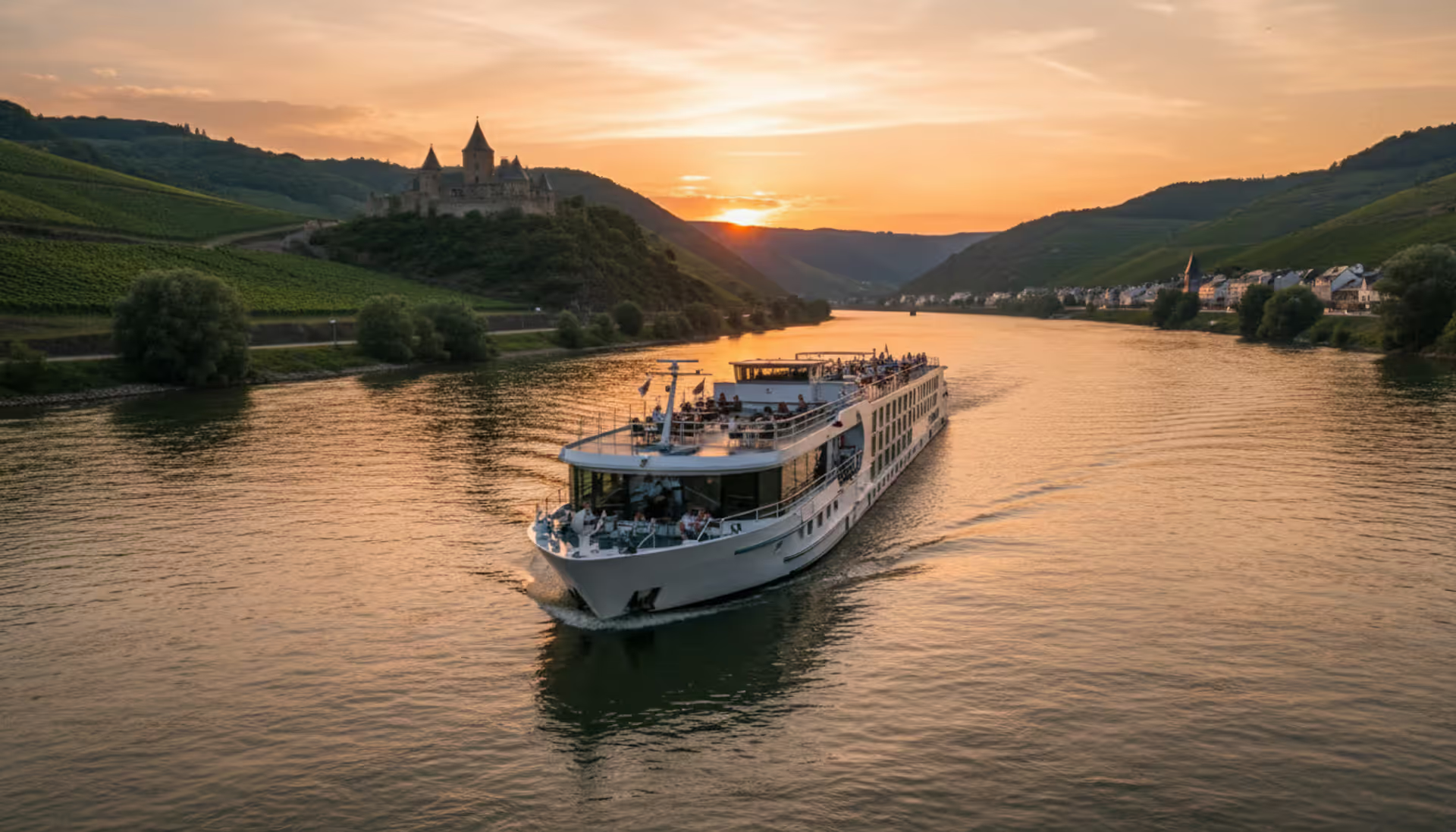
Luxury river cruise ship sailing along a European river at sunset with vineyards and a medieval castle on the hillside
Luxury River Cruise Guide

Content
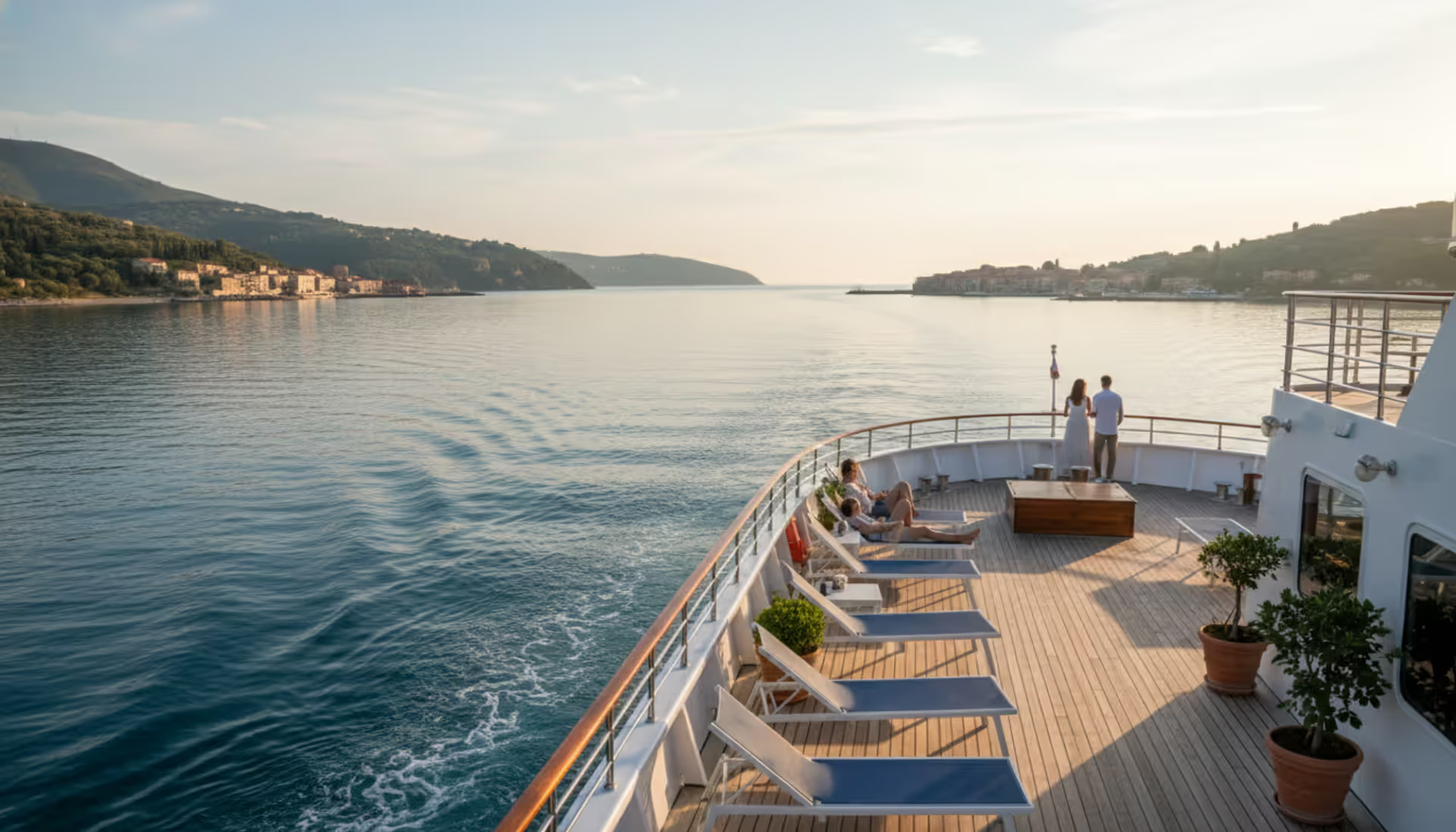
Floating past medieval castles, vineyard-draped hillsides, and centuries-old villages from the comfort of a boutique floating hotel represents the pinnacle of European travel. Luxury river cruises combine intimate ship sizes with white-glove service, curated shore experiences, and all-inclusive pricing that removes the friction from exploring multiple countries in a single journey.
Unlike ocean cruising, where mega-ships carry thousands of passengers, river vessels accommodate 100-190 guests maximum. This creates a club-like atmosphere where crew members learn your name by the second day and fellow travelers become familiar faces at dinner. The shallow draft of river ships allows docking in city centers—you'll wake up steps from Cologne's cathedral or Budapest's thermal baths rather than an industrial port miles from town.
For American travelers accustomed to service standards at Four Seasons or Ritz-Carlton properties, luxury river cruising delivers comparable attention to detail on water. But the category spans a wide spectrum, from near-luxury to ultra-premium, with pricing and inclusions that vary dramatically.
What Makes a River Cruise Luxury vs Standard
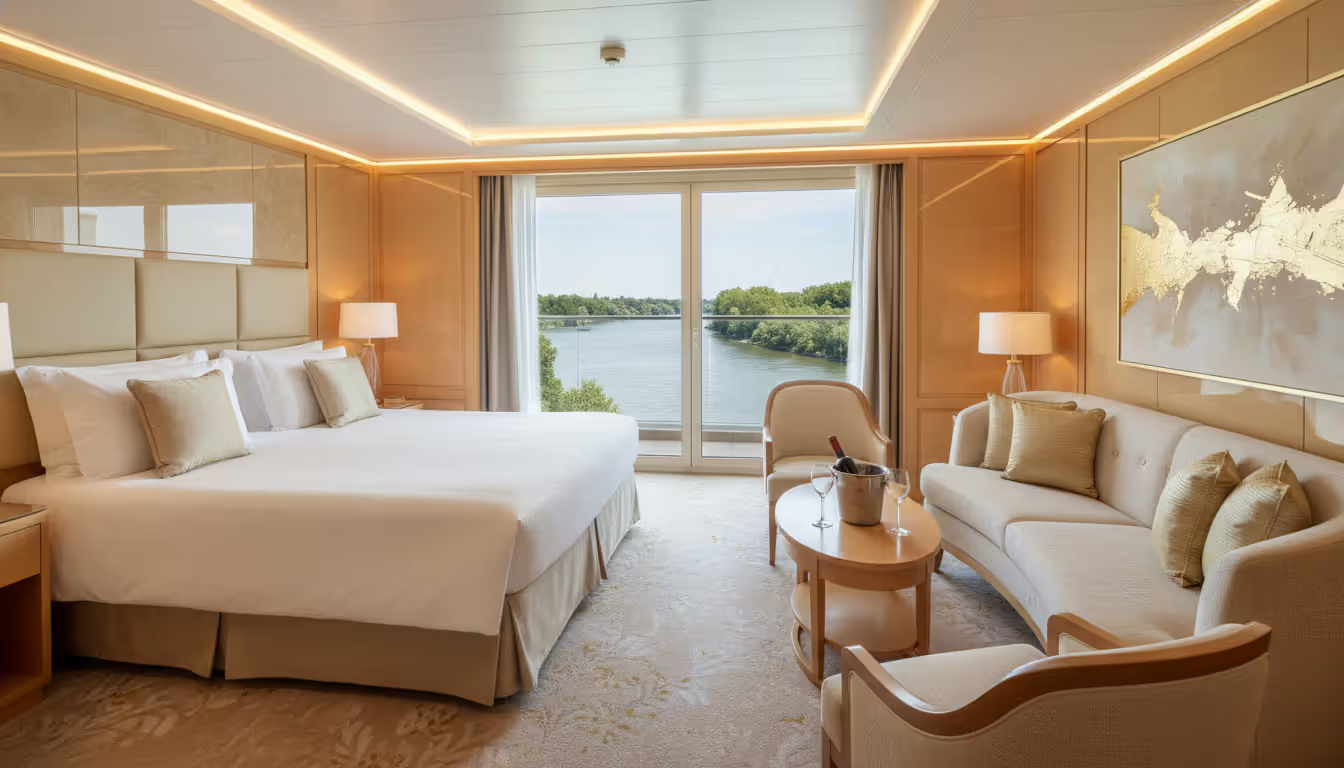
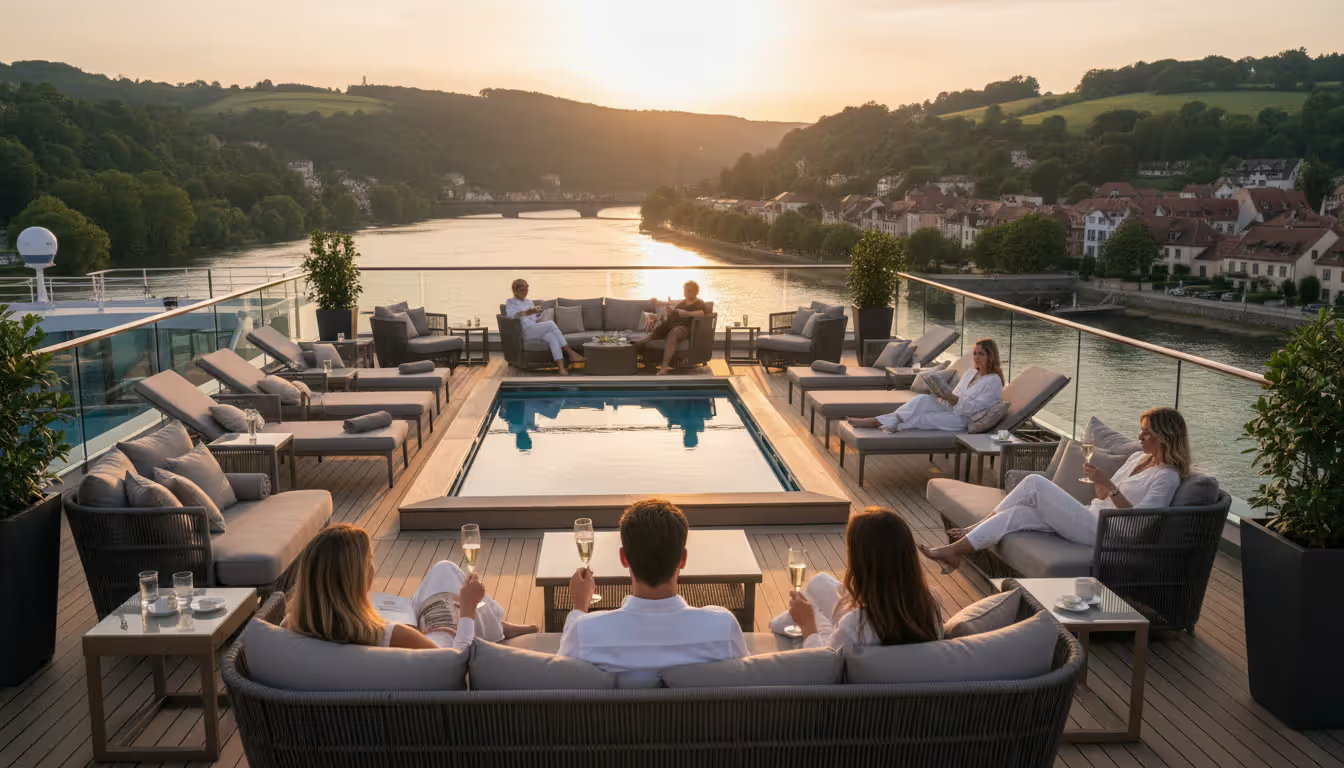
The luxury tier separates itself through tangible differences that compound over a seven- to ten-day voyage. Suite sizes start at 200-300 square feet in the luxury segment versus 135-170 square feet on mainstream lines. More importantly, luxury cabins feature walk-in closets, separate sitting areas, and bathrooms with full tubs rather than shower stalls. French balconies (floor-to-ceiling glass doors) are standard, with many suites offering step-out balconies with chairs.
Crew-to-guest ratios tell another story. Luxury operators maintain ratios of 1:3 or better, while mainstream lines hover around 1:4.5. You'll notice this during embarkation, at meals, and when requesting special arrangements. A river cruise luxury guide should emphasize that luxury ships employ dedicated concierges, sommeliers, and expedition leaders—roles absent on standard vessels.
Culinary programs diverge sharply. Luxury lines partner with Michelin-starred chefs for menu development, source regional ingredients at each port, and offer multiple dining venues. Mainstream lines serve competent buffet-style meals with limited choice. Wine lists on luxury ships feature premier French and German labels included in the fare; standard cruises pour house wines.
Author: Sophie Laurent;
Source: reykjaviksegwaytours.com
Shore excursions represent the widest gap. Luxury river cruising includes multiple options daily—walking tours, cycling excursions, culinary experiences, private museum access—all with professional guides and small group sizes capped at 15-20 guests. Mainstream lines charge $50-150 per excursion or bundle them for an additional $1,000-2,000 per person. When you calculate total trip cost including these add-ons, the luxury premium shrinks considerably.
Pricing differences range from $300-450 per person per day for mainstream river cruises to $600-1,200 daily for luxury operators. That $4,200-8,400 weekly premium buys genuine all-inclusive convenience, superior accommodations, and experiences curated for discerning travelers rather than mass-market tourists.
Top Luxury River Cruise Lines Compared
Scenic pioneered the "truly all-inclusive" model with Scenic Freechoice excursions, complimentary e-bikes at every port, and butler service in most suites. Their ships feature sun decks with pools, multiple dining venues, and innovative Scenic Culinaire cooking classes. The Australian-founded company attracts active travelers aged 55-75 who value independence and choice. Scenic's river cruise offerings emphasize wellness amenities and technology, including tablets in every suite for self-guided touring.
Tauck brings six decades of escorted tour expertise to the rivers. Their differentiator is exclusive access—private Orangerie concerts in Vienna, after-hours Château visits, performances by local artists aboard ship. Tauck bundles gratuities, premium spirits, and airport transfers that competitors charge separately. The clientele skews slightly older (60-80) and appreciates structured experiences over free time. Family departures during summer accommodate grandparents traveling with grandchildren.
Uniworld transforms ships into floating boutique hotels with custom furnishings, original artwork, and design themes reflecting their regions. The S.S. Catherine on the Rhône evokes Provençal elegance; the Maria Theresa on the Danube channels Habsburg grandeur. Owned by the Tollman family (Red Carnation Hotels), Uniworld excels at hospitality details and farm-to-table dining. Their "No Regrets" pricing includes everything except spa treatments, making budgeting simple.
AmaWaterways operates the largest luxury fleet with 26 European vessels. Their twin-balcony staterooms provide both French and step-out balconies—a configuration others have copied. AmaWaterways partners with tour operators like Backroads for biking-focused departures and offers wellness cruises with onboard fitness hosts. Pricing runs 15-25% below Scenic and Tauck while maintaining quality, making them popular with first-time river cruisers testing the category.
Crystal River Cruises entered the market in 2016 with just five ships, emphasizing ultra-luxury positioning. Butler service extends to all accommodations, Michelin-inspired cuisine rivals ocean-going Crystal, and enrichment programs feature notable lecturers and performers. The line attracts ocean cruise loyalists accustomed to Crystal's standards. Expect the highest per-day rates but also the most refined experience.
Aqua Expeditions operates boutique vessels in Southeast Asia and Europe with expedition-style itineraries. Their Mekong and Amazon ships carry just 20-40 guests, while European vessels accommodate 40-50. Design-forward interiors, destination-immersive programming, and access to smaller waterways distinguish Aqua from mainstream European operators. They appeal to well-traveled guests seeking something beyond the classic European routes.
Emerald Waterways positions as accessible luxury—a step above mainstream but priced below ultra-premium competitors. Their indoor pool with retractable roof, complimentary fitness classes, and included excursions deliver solid value. Emerald attracts budget-conscious luxury seekers willing to accept smaller suites and fewer dining venues for savings of $100-200 daily versus top-tier lines.
| Cruise Line | Avg. Cost Per Day | Ship Capacity | Key Inclusions | Best For |
| Scenic | $650-900 | 169 guests | All excursions, e-bikes, butler service, premium drinks, gratuities | Active travelers wanting choice and independence |
| Tauck | $700-1,000 | 130 guests | Exclusive access, all gratuities, airport transfers, premium spirits | Travelers valuing curated experiences and convenience |
| Uniworld | $600-850 | 130 guests | All meals/drinks, excursions, gratuities (except spa) | Design enthusiasts and foodies |
| AmaWaterways | $500-750 | 156 guests | Most excursions, wine/beer, fitness classes | Value-conscious luxury seekers, active travelers |
| Crystal | $800-1,200 | 106 guests | All-inclusive luxury, butler service, Michelin-level dining | Ultra-luxury ocean cruise loyalists |
| Aqua Expeditions | $750-1,100 | 40-50 guests | All-inclusive, expedition programming, intimate ships | Adventurous, design-focused travelers |
| Emerald | $450-650 | 182 guests | Most excursions, select drinks, pool access | First-time river cruisers seeking value |
Best Luxury River Cruises in Europe
European waterways dominate luxury river cruising, with the Danube, Rhine, and Rhône accounting for 60% of all sailings. Seasonal timing dramatically affects the experience—tulip season (late March-April) along Dutch waterways, Christmas markets (late November-December) on German rivers, and harvest season (September-October) in wine regions create peak demand and premium pricing.
Danube Luxury Itineraries
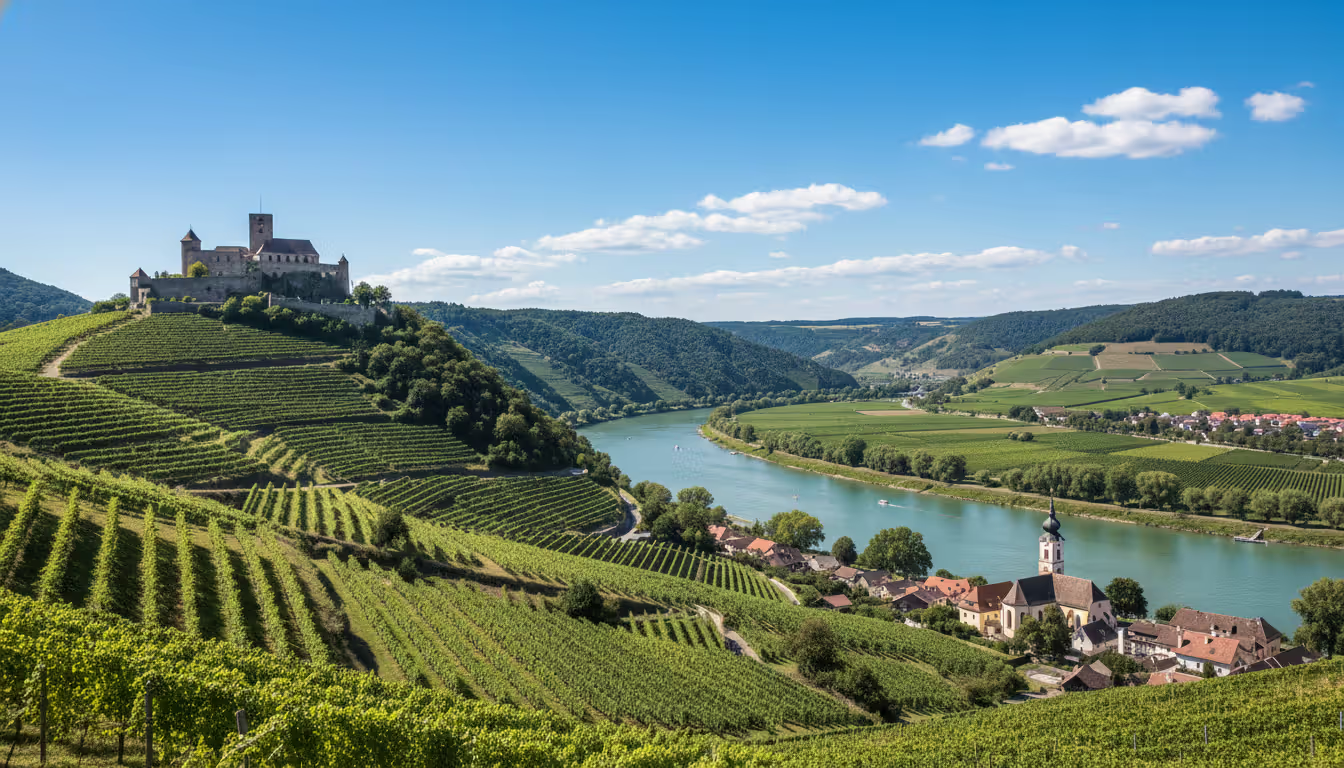
The Danube flows 1,780 miles from Germany's Black Forest to the Black Sea, passing ten countries. Luxury river cruises in Europe concentrate on the 600-mile stretch between Passau and Budapest, with extensions to Bucharest. Eight-day sailings typically include Vienna (two nights), Bratislava, Budapest (overnight), Melk Abbey, and Dürnstein in the Wachau Valley.
Spring departures (April-May) offer mild weather and fewer crowds. Summer brings long daylight hours but peak tourist congestion at major sites. September and October deliver harvest season in wine regions plus comfortable temperatures. Christmas market cruises (late November-December) feature festive decorations and seasonal foods, though some outdoor excursions become less appealing in cold weather.
Luxury operators differentiate through exclusive access. Tauck arranges private classical concerts in Viennese palaces. Scenic offers hot air balloon rides over Wachau vineyards. Uniworld hosts wine blending sessions with Austrian vintners. These experiences, impossible to arrange independently, justify premium pricing.
Author: Sophie Laurent;
Source: reykjaviksegwaytours.com
Rhine and Moselle Routes
The Rhine connects Switzerland to the Netherlands, with luxury cruises focusing on the Middle Rhine Valley's castle-studded gorge and Amsterdam's canal network. Seven-day itineraries typically sail Amsterdam to Basel (or reverse), stopping in Cologne, Koblenz, Rüdesheim, and Strasbourg. The Moselle tributary adds Luxembourg and Germany's oldest wine region.
Tulip season transforms Dutch itineraries. Shore excursions visit Keukenhof Gardens, private bulb farms, and flower auctions. Book 12-18 months ahead for April departures—ships sell out quickly. Christmas market cruises substitute Nuremberg, Heidelberg, and Strasbourg's festive markets for standard summer programming.
The Rhine's popularity means crowded locks during peak season. Luxury lines mitigate this through flexible scheduling, priority lock passage agreements, and onboard programming during wait times. Smaller ships (under 135 guests) navigate the Moselle's tighter turns more easily than larger vessels.
French River Cruises
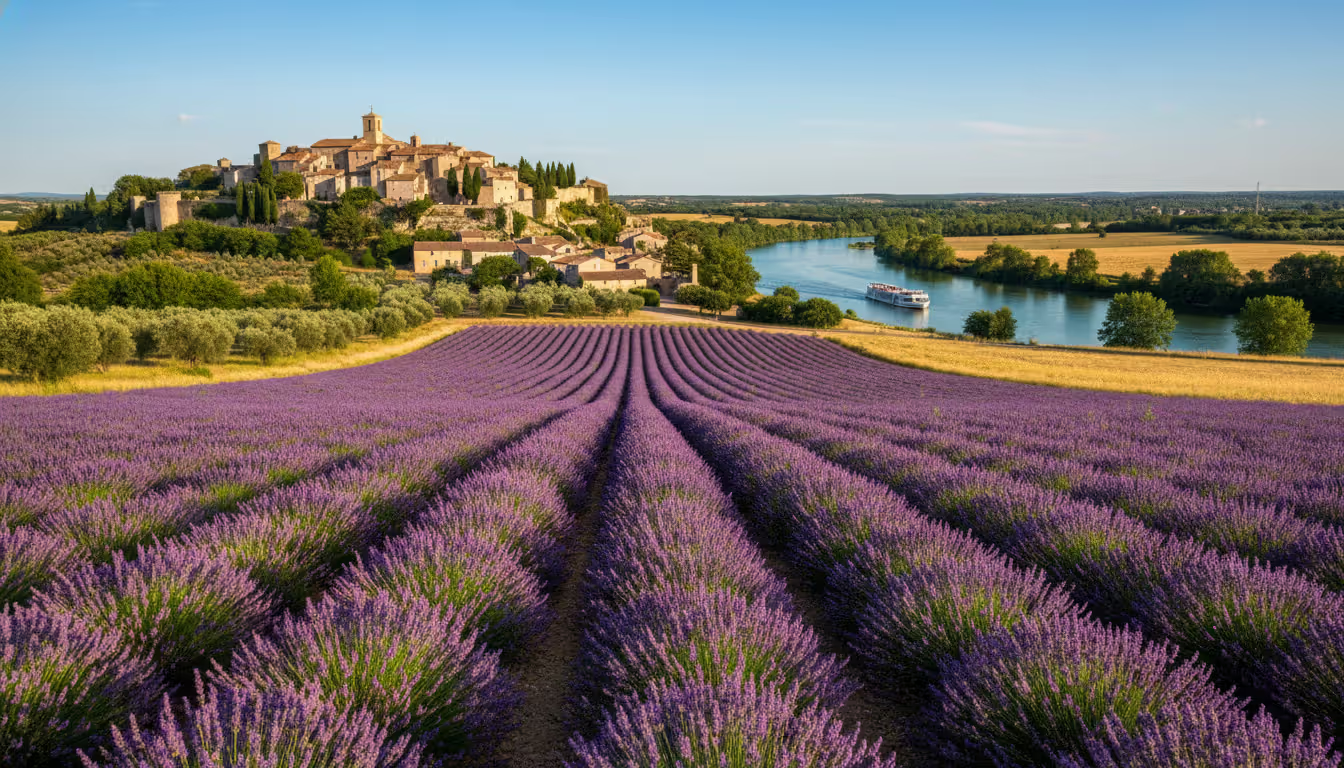
France offers three distinct experiences. Rhône-Saône itineraries explore Burgundy and Provence, with wine-focused shore excursions, truffle hunting, and Avignon's papal palace. Seine cruises between Paris and Normandy feature Giverny's gardens, Rouen's cathedral, and D-Day beaches. Bordeaux's Garonne and Dordogne rivers access Saint-Émilion vineyards and medieval villages.
Luxury European river cruises on the Rhône emphasize culinary experiences. Uniworld's Chef's Table excursions visit Lyon's Les Halles market with the ship's chef. Tauck arranges private wine tastings at Châteauneuf-du-Pape estates. AmaWaterways offers bike-and-barge excursions through sunflower fields.
Author: Sophie Laurent;
Source: reykjaviksegwaytours.com
Seine cruises suit art and history enthusiasts. Monet's gardens at Giverny, Rouen's Joan of Arc sites, and Normandy's American Cemetery provide cultural depth. Paris embarkation allows pre-cruise hotel stays at properties like Le Meurice or Shangri-La, creating seamless luxury experiences.
What's Included on Luxury River Cruises
True all-inclusive pricing eliminates onboard spending decisions. Luxury river cruise lines include shore excursions in every port—typically 2-3 options daily ranging from walking tours to active bike rides to culinary experiences. Mainstream lines charge $50-150 per excursion, adding $700-1,500 to weekly costs.
Premium wine, beer, and spirits flow freely at meals and bars. Luxury operators stock French Champagne, premier Bordeaux, and top-shelf liquor. Some lines (Crystal, Scenic, Tauck) include cocktails and premium spirits; others (AmaWaterways, Emerald) limit complimentary drinks to wine and beer. Specialty coffees, soft drinks, and bottled water are always included.
Gratuities represent another differentiator. Uniworld, Tauck, and Crystal bundle all tips. Scenic and AmaWaterways include gratuities for onboard staff but suggest $15-20 per person daily for tour guides. Mainstream lines recommend $12-15 daily per guest for crew, plus guide tips. Over a week, this adds $170-350 per couple.
High-speed Wi-Fi throughout the ship enables video calls and streaming—essential for business travelers checking in or families sharing experiences. Mainstream lines offer limited free Wi-Fi or charge $50-100 per week for premium packages.
Airport transfers eliminate arrival logistics. Luxury lines provide group transfers from designated airports or reimburse independent transfers up to $200. This saves $150-300 per couple versus taxis or private cars.
Specialty dining venues, fitness classes, and enrichment lectures carry no surcharge. Crystal and Uniworld feature alternative restaurants for intimate dinners. Scenic's Salt Room offers molecular gastronomy tasting menus. These experiences cost $75-150 per person on mainstream lines.
What isn't included? Spa treatments run $100-250 for massages and facials. Private car arrangements for independent touring cost $400-800 daily. Travel insurance, pre- and post-cruise hotels, and airfare remain separate expenses. Some lines charge for premium shore excursions like hot air ballooning ($300-400) or helicopter tours ($500-700).
The all-inclusive versus near-all-inclusive distinction matters when comparing quotes. A $5,000 Scenic cruise and $4,200 AmaWaterways sailing may cost the same after adding excursions, gratuities, and premium drinks to the AmaWaterways fare.
How to Choose the Best Luxury River Cruise
Start with destination priorities. First-time European river cruisers gravitate toward Rhine or Danube itineraries featuring iconic cities and varied experiences. Repeat visitors explore secondary rivers—the Douro's terraced vineyards, the Elbe's Czech and German towns, or Bordeaux's wine estates. Consider what interests you most: art and architecture, food and wine, active exploration, or historical immersion.
Cruise line style significantly impacts satisfaction. Tauck's structured programming suits travelers who appreciate guided experiences and exclusive access. Scenic's Freechoice model appeals to independent types wanting multiple options. Uniworld attracts design-conscious guests. AmaWaterways serves active travelers with extensive biking and hiking programs. Crystal caters to ultra-luxury ocean cruise veterans. Request deck plans and sample menus from multiple lines before booking.
Author: Sophie Laurent;
Source: reykjaviksegwaytours.com
Cabin category selection involves trade-offs. Entry-level suites (200-225 sq ft) provide adequate space for two people who don't linger in their room. Mid-tier suites (250-300 sq ft) add sitting areas and larger bathrooms. Top suites (350-600 sq ft) include separate bedrooms, walk-in closets, and premium amenities. Upper-deck suites cost 30-60% more than lower-deck equivalents but offer better views and less engine noise. Midship cabins experience less movement in locks.
Time of year affects both experience and value. Shoulder seasons (April-May, September-October) deliver ideal weather, fewer crowds, and moderate pricing. Peak summer (June-August) brings long daylight hours and vibrant outdoor life but maximum tourist congestion and higher fares. Christmas market cruises (late November-December) create festive experiences but cold weather and limited outdoor activities. Wave season (January-March) offers 2026 bookings at 10-25% discounts plus cabin upgrades and air credits.
Solo travelers face single supplements of 50-100% on most departures. A few lines (Tauck, Uniworld) offer limited single-occupancy cabins at 25-50% premiums. Traveling with another single eliminates supplements while providing companionship. Some luxury river cruises organize solo traveler meet-ups and shared dining tables.
Pre- and post-cruise extensions maximize European trips. Two-night Paris stays before Seine cruises allow jet lag recovery and museum visits. Three-day Prague extensions after Danube sailings explore Czech culture. Post-cruise Black Forest or Swiss Alps programs add variety. Book extensions through cruise lines for seamless transfers and quality hotels, or arrange independently for more control and potential savings.
Luxury River Cruise Costs and Booking Tips
Budget $4,000-7,000 per person for week-long European luxury river cruises during shoulder season, $5,500-9,000 in peak summer, and $6,000-11,000 for Christmas markets or ultra-premium lines. These figures include the cruise, excursions, drinks, and gratuities but exclude airfare ($800-1,500 from East Coast, $1,000-1,800 from West Coast), travel insurance ($200-400), and pre/post hotels ($250-600 per night for luxury properties).
Regional variations impact pricing. Danube and Rhine cruises cost 10-15% less than Rhône or Douro sailings due to higher supply. Portugal's Douro commands premiums for its scenery and limited ship capacity. French rivers price higher during lavender season (late June-July) and harvest (September-October).
Booking 12-18 months ahead secures best cabin selection and early-booking discounts of 10-20%. Wave season (January-March) brings promotions including reduced deposits, cabin upgrades, air credits ($500-1,000 per person), and onboard credits ($100-300). Last-minute deals (60-90 days before departure) occasionally appear but risk limited cabin availability and higher airfares.
The perceived premium for luxury river cruising evaporates when you calculate total costs. A $5,500 luxury cruise with everything included often costs less than a $3,800 mainstream cruise after adding $1,200 for excursions, $400 for drinks, and $300 for gratuities. You're paying for convenience and quality, not just luxury
— Sarah Mitchell
Travel advisors specializing in river cruising provide value beyond booking. They secure amenities like onboard credits, cabin upgrades, and private car transfers. Advisors monitor pricing for automatic repricing if fares drop, arrange complex multi-country itineraries, and intervene when issues arise. Commission-based advisors cost nothing extra—suppliers pay their fees. Direct booking through cruise lines offers no price advantage and fewer perks.
Cancellation policies vary by line and timing. Most luxury operators allow cancellations 120 days before departure with minimal penalty ($250-500 per person). Within 120 days, penalties escalate to 50-100% of fare. Travel insurance with Cancel For Any Reason coverage (purchased within 14 days of deposit) refunds 75% of non-refundable costs. Annual policies make sense for frequent travelers.
Group bookings (16+ passengers) unlock private shore excursions, onboard receptions, and reduced rates. Family reunions, milestone birthdays, and special-interest groups benefit from dedicated space and customized programming. Book groups 18-24 months ahead for best availability.
Frequently Asked Questions
Luxury river cruising delivers immersive European experiences impossible to replicate through independent travel or mainstream cruising. The combination of boutique ship sizes, all-inclusive convenience, curated shore excursions, and white-glove service creates seamless journeys through the continent's cultural heartland. While premium pricing initially appears steep, comprehensive inclusions often make luxury river cruises cost-competitive with mainstream alternatives once you account for excursions, drinks, and gratuities.
Choosing among top-tier operators depends on personal preferences—structured programming versus independent exploration, design aesthetics, activity levels, and budget parameters. The best luxury river cruises balance your destination priorities with cruise line style and timing that optimizes weather, events, and value.
Booking 12-18 months ahead through specialized travel advisors secures optimal cabin selection, promotional pricing, and expert guidance navigating the decision process. Whether you're drawn to Danube castles, Rhine vineyards, or French gastronomy, luxury river cruising offers Americans a refined pathway to Europe's most enchanting regions.