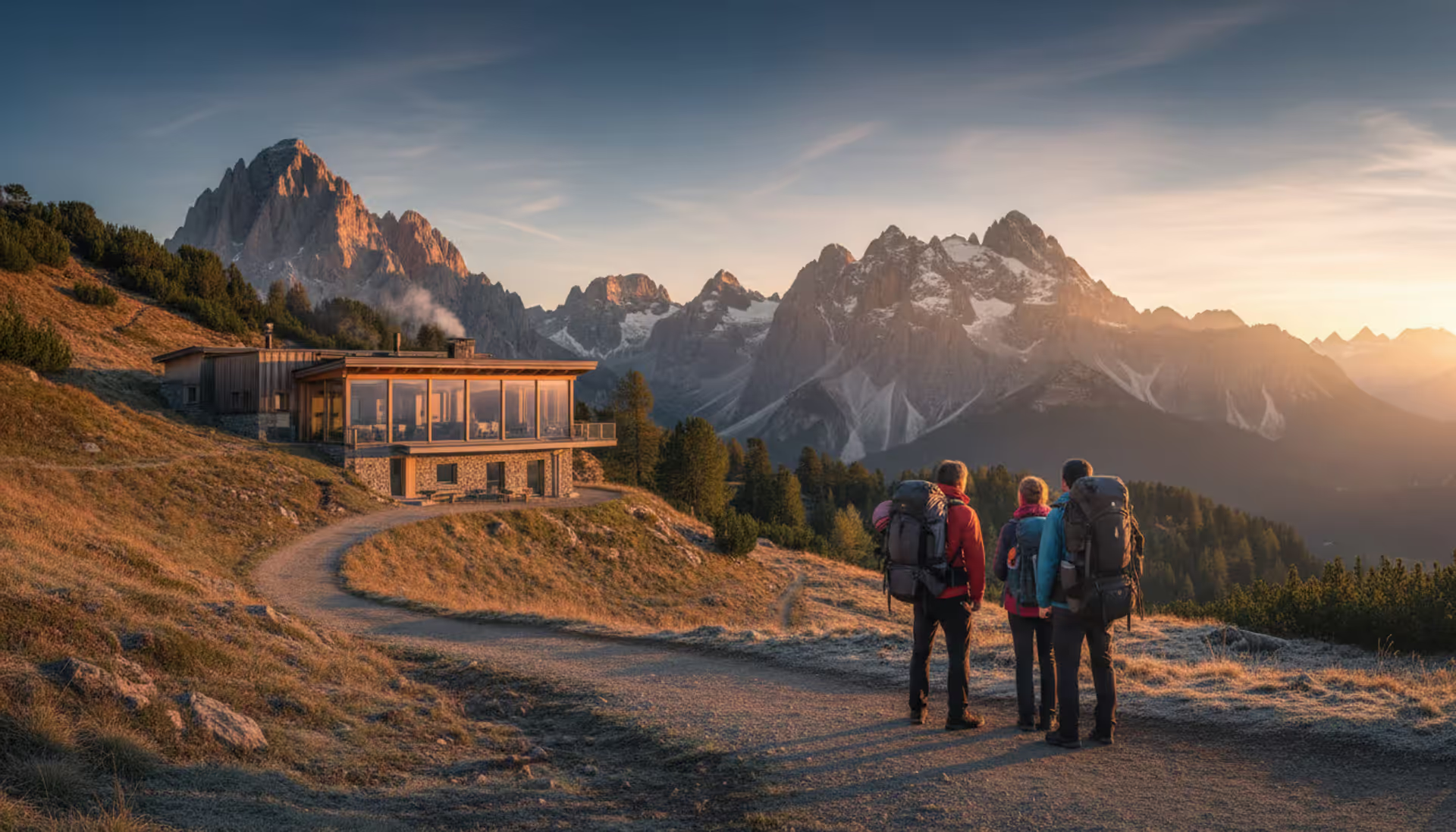
Small group of hikers with backpacks standing on a mountain trail at sunrise looking at snow-capped peaks with a luxury mountain lodge in the valley below
How to Choose Luxury Adventure Travel Companies?

Content
Selecting the right company for a high-end adventure vacation requires more than browsing glossy brochures. The difference between an exceptional expedition and a disappointing investment often comes down to understanding what separates genuine luxury adventure operators from those simply charging premium prices.
The luxury adventure travel sector has matured significantly, with operators now offering experiences that combine authentic wilderness immersion with sophisticated comfort. Yet this growth has also created confusion. Some companies market themselves as luxury providers while delivering standard tours at inflated rates. Others genuinely invest in expert guides, exclusive access, and exceptional logistics but struggle to communicate their value proposition.
This guide breaks down the evaluation process into actionable criteria, helping you identify operators that match your expectations and avoid common booking pitfalls.
What Makes Adventure Travel "Luxury"
Luxury adventure travel companies distinguish themselves through four core elements that standard operators rarely deliver simultaneously: accommodation quality, guide expertise, logistical excellence, and group dynamics.
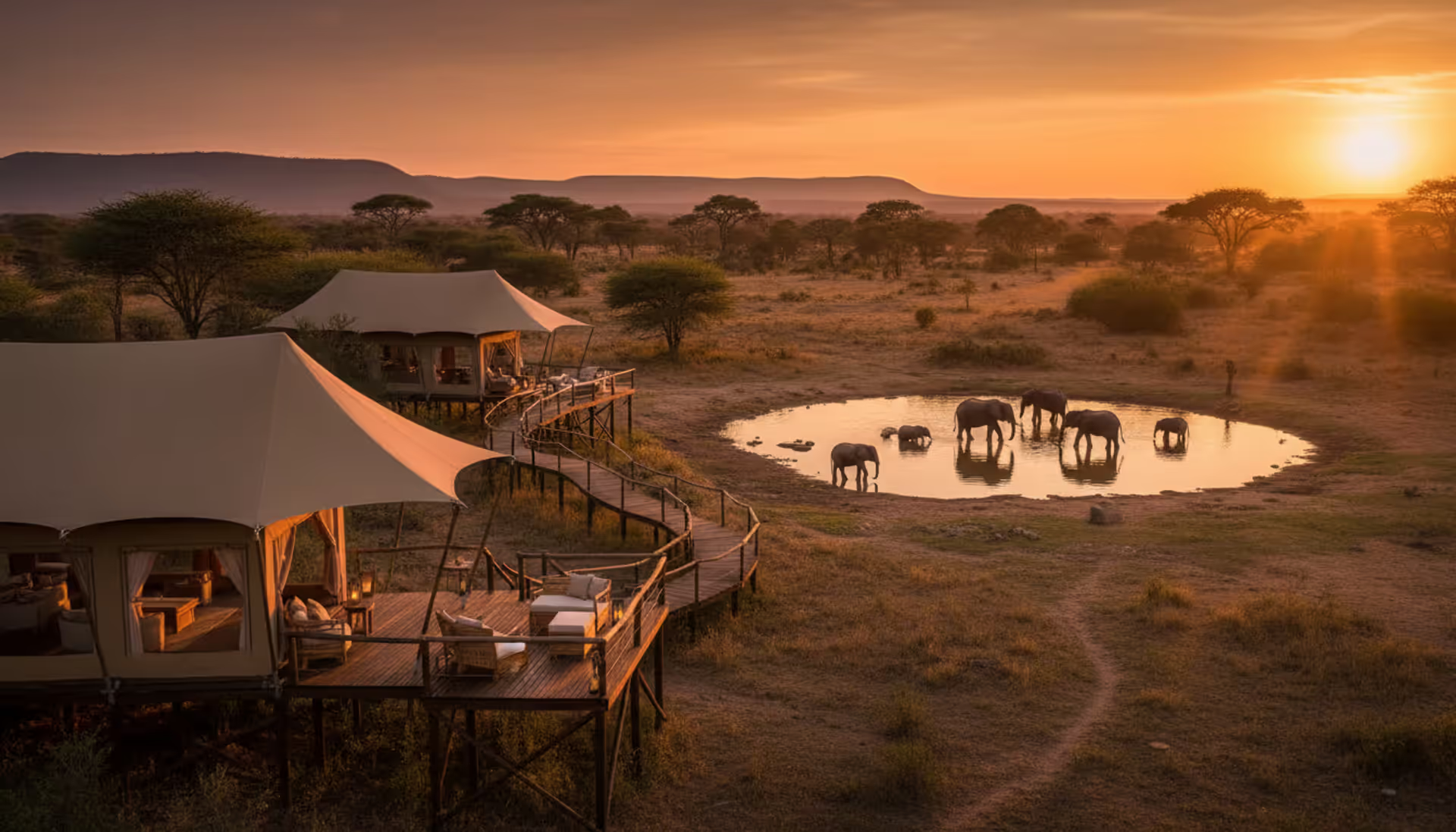
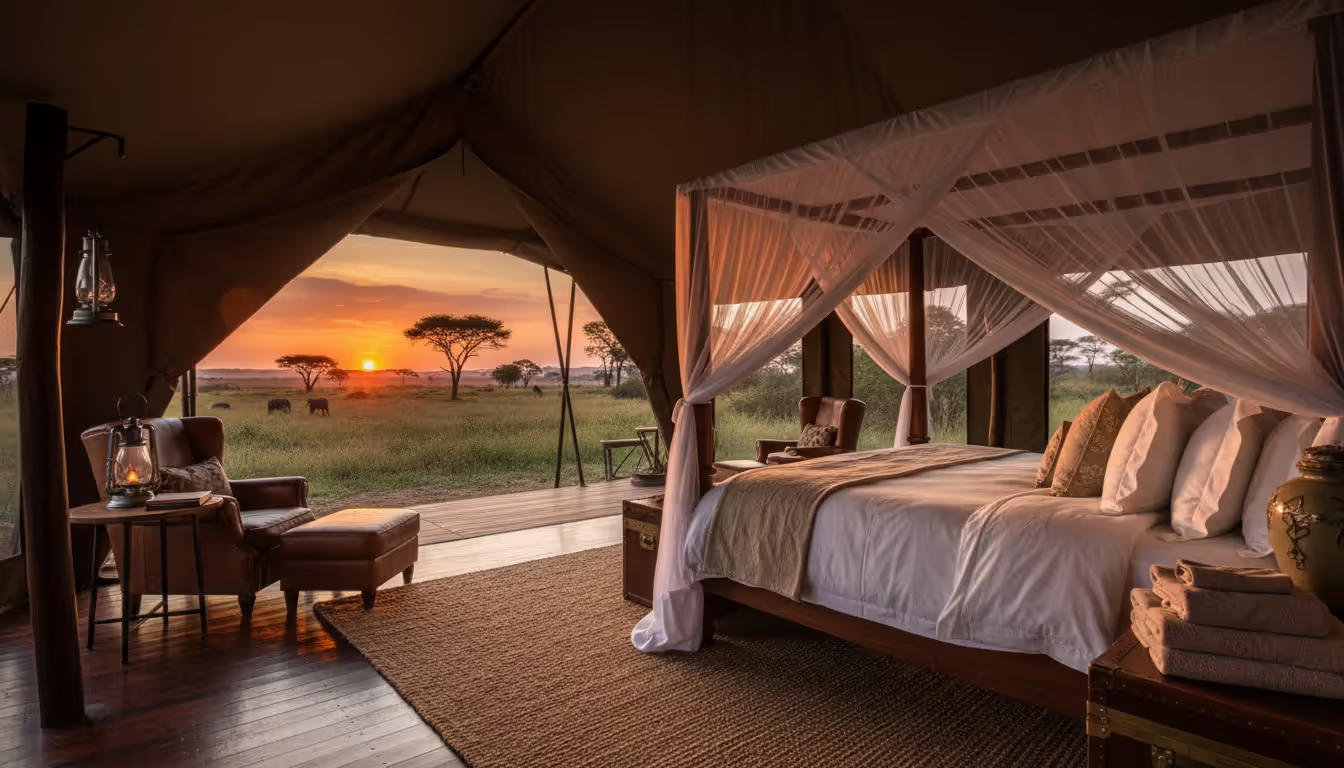
Accommodations represent the most visible differentiator. While budget adventure tours rely on basic lodges or camping, premium adventure experiences utilize properties that balance location with comfort. This might mean a tented camp in Tanzania's Serengeti with en-suite bathrooms, heated water, and chef-prepared meals, or a boutique mountain lodge in Patagonia with floor-to-ceiling windows overlooking glaciers. The key isn't opulence for its own sake—it's thoughtful design that enhances rather than diminishes the wilderness experience.
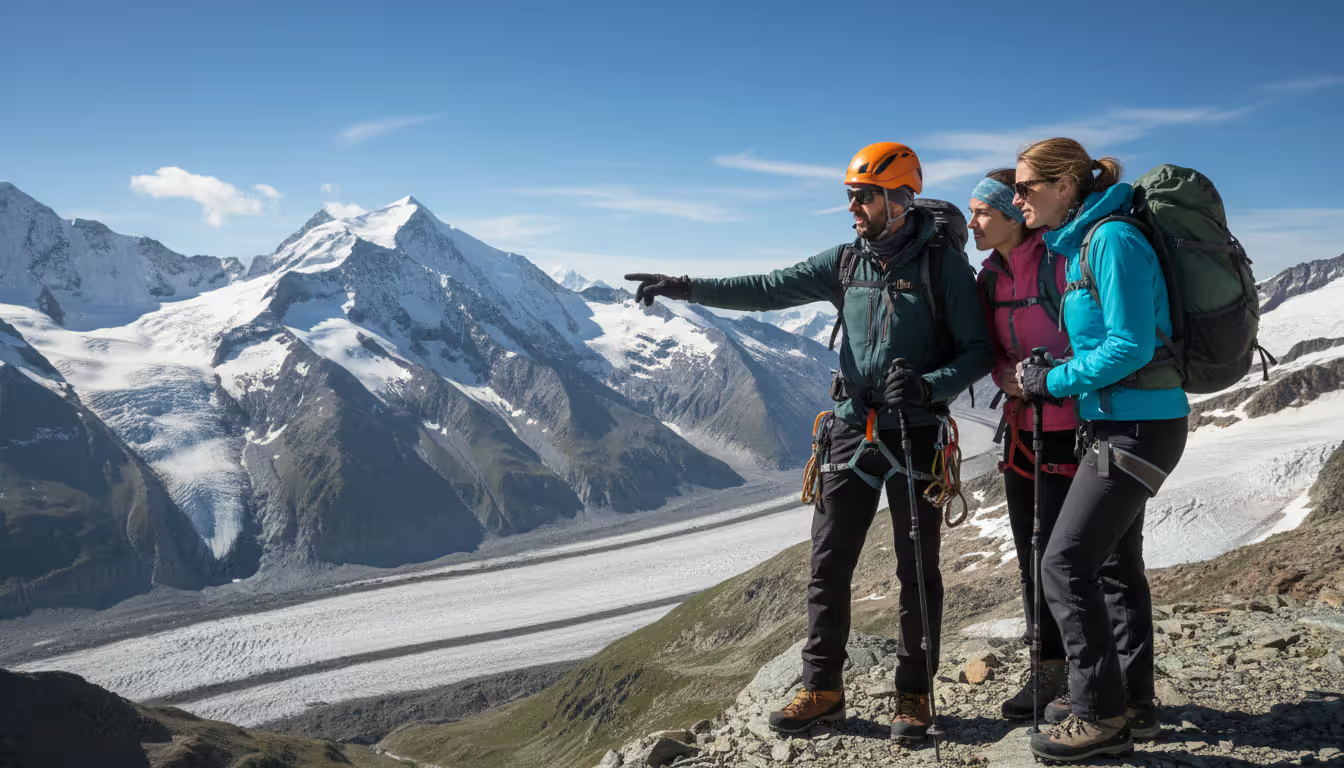
Guide expertise extends beyond basic safety certification. Adventure luxury tours employ specialists who combine technical skills with deep regional knowledge. A luxury trekking guide in Nepal might hold international mountain guide certification while also maintaining relationships with local communities that enable cultural exchanges unavailable to standard tour groups. These guides often speak multiple languages, hold wilderness first responder credentials, and possess the judgment to modify itineraries based on conditions or group capabilities.
Logistical excellence appears in details most travelers never see. Luxury adventure travel companies maintain equipment redundancies, pre-position supplies, coordinate helicopter evacuations if needed, and handle permit acquisitions months in advance. When a standard tour encounters a closed trail, guides improvise. When a luxury operator faces the same situation, they activate a pre-planned alternative that maintains the experience quality.
Group size fundamentally changes the adventure dynamic. While conventional tours might accommodate 12-16 participants, premium adventure experiences typically cap groups at 6-8 guests. Smaller groups move more efficiently through wilderness areas, receive more personalized attention from guides, and gain access to accommodations that physically cannot host larger parties. Some operators offer guaranteed departures for just two guests, though at corresponding price premiums.
The distinction from traditional luxury travel matters equally. A five-star beach resort delivers predictable comfort. Luxury wilderness tours introduce controlled unpredictability—wildlife encounters that can't be scheduled, weather that demands flexibility, and physical challenges that create genuine accomplishment. The luxury component ensures that when you return from a challenging day, recovery happens in comfort rather than a cramped tent.
Author: Sophie Laurent;
Source: reykjaviksegwaytours.com
Types of Luxury Adventure Experiences Available
The luxury adventure landscape encompasses several distinct categories, each requiring different operator expertise.
Luxury trekking holidays and luxury hiking vacations focus on multi-day walking experiences with upgraded accommodations. In regions like the Tour du Mont Blanc, this might mean inn-to-inn trekking with luggage transfers and gourmet dinners. In more remote areas like Bhutan's Snowman Trek, it involves full-service camping with heated dining tents, portable toilets, and fresh meals prepared by expedition chefs. Operators specializing in these experiences maintain relationships with mountain lodges and possess the logistics expertise to move camp efficiently.
Luxury expedition travel typically involves polar regions, remote islands, or areas requiring specialized transportation. Antarctica voyages on ice-strengthened expedition ships with 100-200 passengers fall into this category, as do Galapagos yacht charters and Northwest Passage transits. These trips demand operators with maritime expertise, naturalist guides, and the infrastructure to handle medical emergencies far from hospitals.
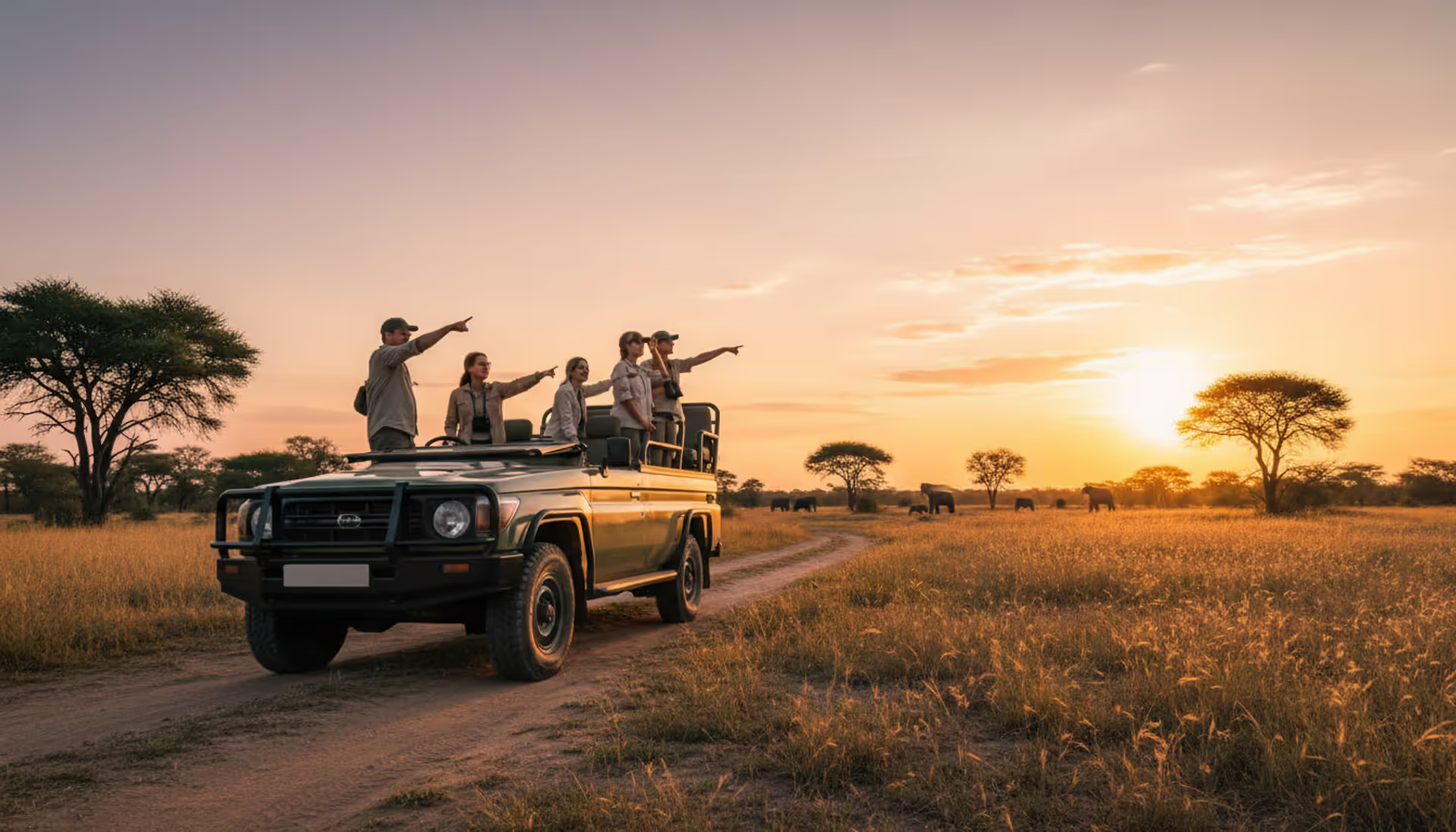
Safari-focused luxury outdoor expeditions center on wildlife viewing with premium accommodations. Beyond the standard game drives, luxury operators provide private conservancy access, walking safaris with armed rangers, photographic hides overlooking waterholes, and night drives unavailable in national parks. The accommodation spectrum runs from permanent tented camps to contemporary lodges, but location often matters more than amenities—a camp positioned for optimal wildlife movement outweighs one with a fancier spa.
Multi-sport active luxury vacations combine activities like kayaking, cycling, hiking, and rafting into single itineraries. Patagonia trips might integrate ice trekking, horseback riding, and kayaking among icebergs. These require operators who maintain diverse equipment, employ guides with varied certifications, and coordinate complex logistics across multiple activity types.
Cultural immersion adventures blend physical activity with deep cultural engagement. A luxury trek through Morocco's Atlas Mountains might include nights in restored kasbahs, cooking classes with Berber families, and private access to artisan cooperatives. These experiences demand operators with established local partnerships and cultural sensitivity training.
Guided vs. Private Custom Itineraries
Standard luxury adventure trips follow set departures with fixed itineraries. You join other travelers on predetermined dates, following a route the operator has refined through repetition. This approach offers cost efficiency—shared guide expenses, guaranteed departures, and established logistics. It works well when your schedule aligns with departure dates and the standard itinerary matches your interests.
Private custom itineraries provide complete flexibility but at significant cost premiums—typically 30-60% above equivalent group trips. You select dates, customize daily activities, adjust pace based on your fitness, and modify routes based on interests. A private Namibia safari might spend extra days in Etosha because you're passionate about photography, then skip scheduled cultural visits that don't interest you. The economic reality: guides, vehicles, and accommodations cost the same whether serving two guests or eight, so private trips distribute those fixed costs across fewer people.
The middle ground—small group departures with some customization—has grown popular. Operators might offer a core itinerary but allow participants to choose between activity levels (challenging versus moderate hikes) or optional extensions. This preserves some cost efficiency while acknowledging that luxury travelers expect personalization.
What to Look for When Comparing Companies
Evaluating luxury adventure travel companies requires examining specific credentials and practices that indicate operational quality.
Safety certifications vary by activity type and region. For trekking operators, look for affiliations with organizations like the American Mountain Guides Association (AMGA) or International Federation of Mountain Guides Associations (IFMGA). Safari operators should hold memberships in regional tourism boards with safety standards. Polar expedition companies need ice-strengthened vessels meeting Polar Code requirements. Don't just verify that certifications exist—confirm they're current and apply to the specific guides who'll lead your trip.
Guide qualifications deserve detailed scrutiny. Request specific credentials for assigned guides, not just company-wide statistics. A wilderness first responder certification differs significantly from wilderness first aid—the former requires 70+ hours of training versus 16-24 hours. Language capabilities matter when cultural interaction forms part of the experience. Years of experience in the specific region you're visiting outweigh general adventure credentials.
Sustainability practices have evolved from marketing talking points to operational necessities. Responsible operators demonstrate specific commitments: waste management protocols in wilderness areas, partnerships with conservation organizations, fair wages for local staff, and carbon offset programs. Greenwashing remains common, so look for third-party certifications like Travelife or B Corporation status rather than self-awarded sustainability claims.
Accommodation quality requires looking beyond star ratings. Request specific property names and research them independently. A "luxury tented camp" might mean anything from a canvas structure with cots to a semi-permanent suite with hardwood floors and full bathrooms. Check whether rooms are private or shared, bathroom facilities (en-suite versus communal), and heating/cooling capabilities. In remote areas, generator hours affect comfort significantly—some camps provide electricity only during specific hours.
Inclusions and exclusions hide crucial cost differences. One operator's price might include international flights, visa fees, gratuities, and premium alcohol, while another excludes all these elements. Create a spreadsheet comparing total costs after adding excluded items. Particularly scrutinize single supplement policies (solo travelers often pay 50-100% premiums), equipment rental fees, and domestic flight costs.
Customer reviews require careful interpretation. Recent reviews (within 18 months) matter more than older feedback, as operators change ownership and staff. Look for patterns in criticism—one complaint about weather is meaningless, but multiple mentions of inadequate food or rushed itineraries signal problems. Pay attention to how companies respond to negative reviews; defensive or absent responses suggest poor customer service cultures.
Cancellation policies reveal operator confidence and financial stability. Flexible policies with minimal penalties until 90-120 days before departure indicate established operators comfortable with rebooking. Strict policies with heavy penalties starting 180+ days out might signal cash flow concerns or overbooking practices. Understand COVID-related policies separately, as these often differ from standard terms.
Author: Sophie Laurent;
Source: reykjaviksegwaytours.com
Price Ranges and What's Included
Luxury adventure trips span a wide pricing spectrum based on destination, duration, and service level. Understanding these ranges helps calibrate expectations and identify outliers.
Multi-day luxury trekking holidays in accessible regions like the Alps or Colorado typically range from $400-700 per person per day. This includes guide services, upgraded accommodations, most meals, and ground transportation. Equipment rental and alcoholic beverages usually cost extra.
Remote luxury wilderness tours in places like Patagonia, Iceland, or New Zealand generally run $600-1,000 daily. The premium reflects logistical complexity, specialized equipment, and limited accommodation options. These prices typically include all meals, guide services, park fees, and internal transportation but exclude international flights.
Luxury expedition travel to polar regions, the Galapagos, or other remote islands costs $800-1,500+ daily. Antarctica voyages average $1,000-1,200 per day for standard cabins on quality expedition ships, with suite accommodations reaching $2,000+ daily. These rates include all meals, expert guides, zodiac excursions, and lectures but exclude flights to embarkation ports, gear rental, and gratuities.
African safari experiences show the widest variation, from $500 daily at comfortable permanent camps to $2,000+ at exclusive private conservancies with celebrity-chef dining and private plunge pools. The price differences reflect accommodation luxury, exclusivity (private conservancies versus national parks), guide-to-guest ratios, and included amenities like premium alcohol and spa treatments.
Active luxury vacations combining multiple activities typically fall in the $600-900 daily range. Multi-sport trips require diverse equipment and guides with varied certifications, driving costs higher than single-activity adventures.
Several factors drive pricing differences beyond obvious comfort levels. Small group guarantees (departures confirmed with just 2-4 bookings) cost more than trips requiring 6-8 participants. Shoulder season departures often run 20-30% below peak season rates for identical experiences. Private trips command premiums of 30-60% over group departures but offer complete customization.
Standard inclusions should encompass guide services, accommodations, most meals (typically all meals on remote expeditions, breakfast and some dinners on hotel-based trips), ground transportation, park fees, and group equipment. Excluded items typically include international flights, travel insurance, personal gear, alcoholic beverages, gratuities, and visa fees.
Value assessment requires looking beyond per-day costs. A $700/day trip with all-inclusive pricing might deliver better value than a $500/day trip that excludes meals, park fees, and equipment rental. Calculate total costs including excluded items, then evaluate what you're receiving. Two trips at identical all-in prices might differ substantially if one provides private guides while the other uses shared group guides.
Top Destinations for Luxury Adventure Trips
Certain regions have emerged as premier luxury adventure destinations due to their combination of natural spectacle, developed infrastructure, and operator expertise.
Author: Sophie Laurent;
Source: reykjaviksegwaytours.com
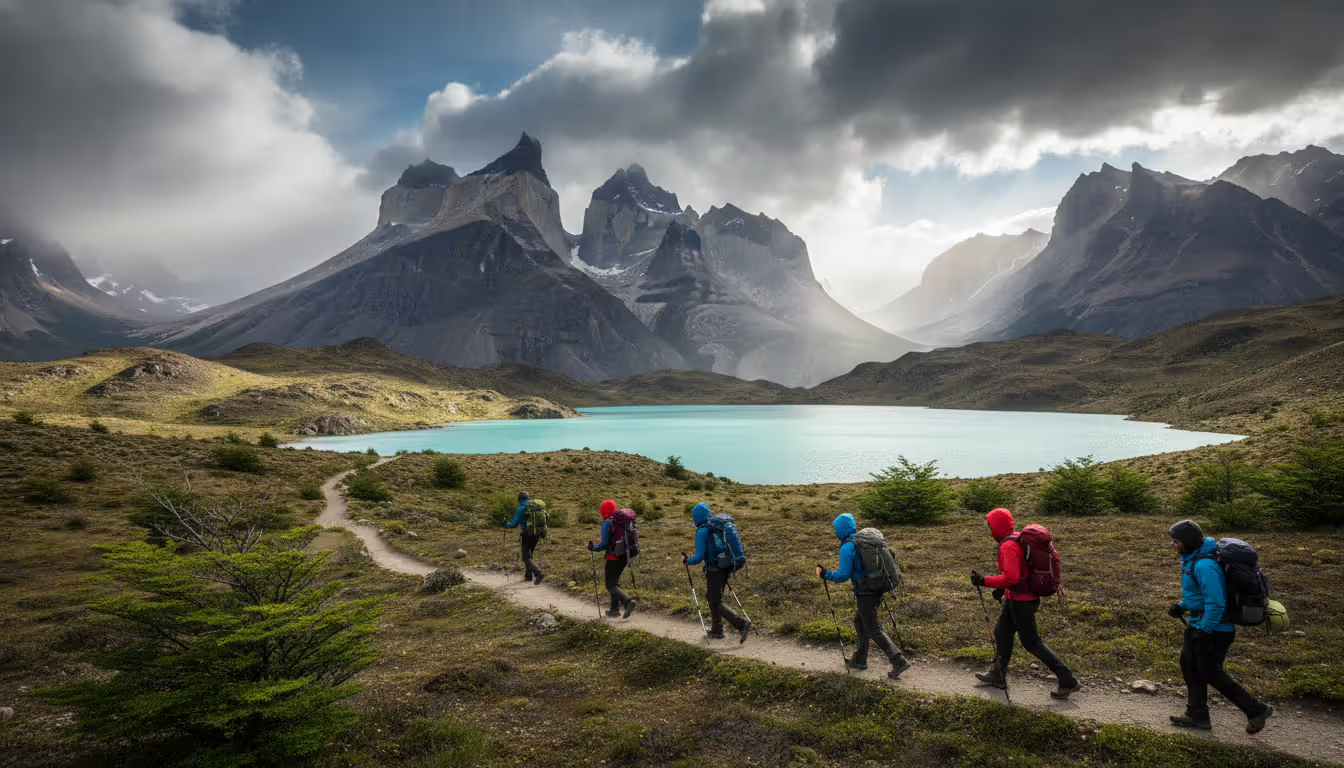
Patagonia (Chile and Argentina) offers luxury trekking holidays through Torres del Paine and Los Glaciares national parks, with high-end lodges like Explora and Awasi providing comfort bases for daily excursions. The region supports multi-sport itineraries combining ice trekking, kayaking among icebergs, horseback riding, and hiking. Peak season (November-March) sees the best weather but highest prices and crowds.
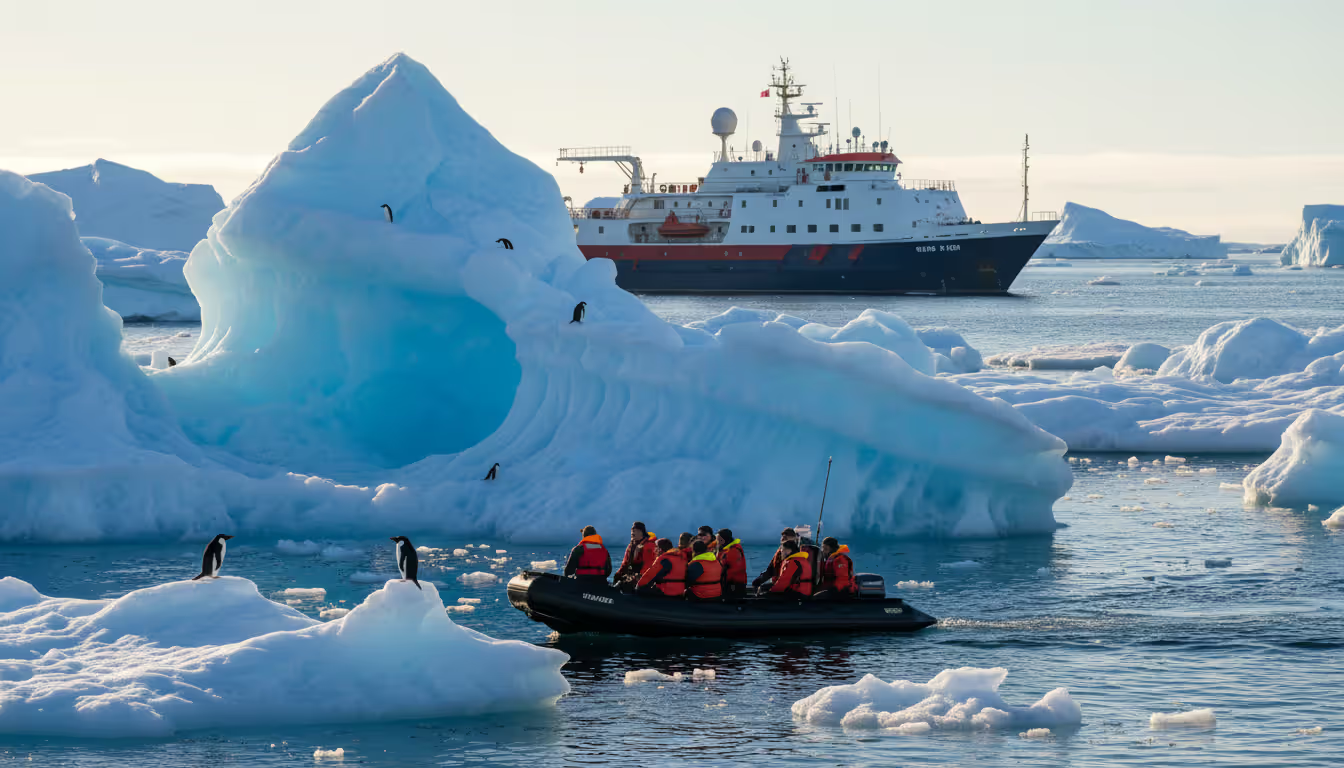
Antarctica represents the pinnacle of luxury expedition travel, with voyages departing from Ushuaia, Argentina between November and March. Expedition ships range from 100-200 passengers, with newer vessels offering balcony cabins, heated observation decks, and multiple expedition guides. Beyond standard zodiac cruises and shore landings, luxury operators provide kayaking, camping on ice, and even scuba diving for certified divers.
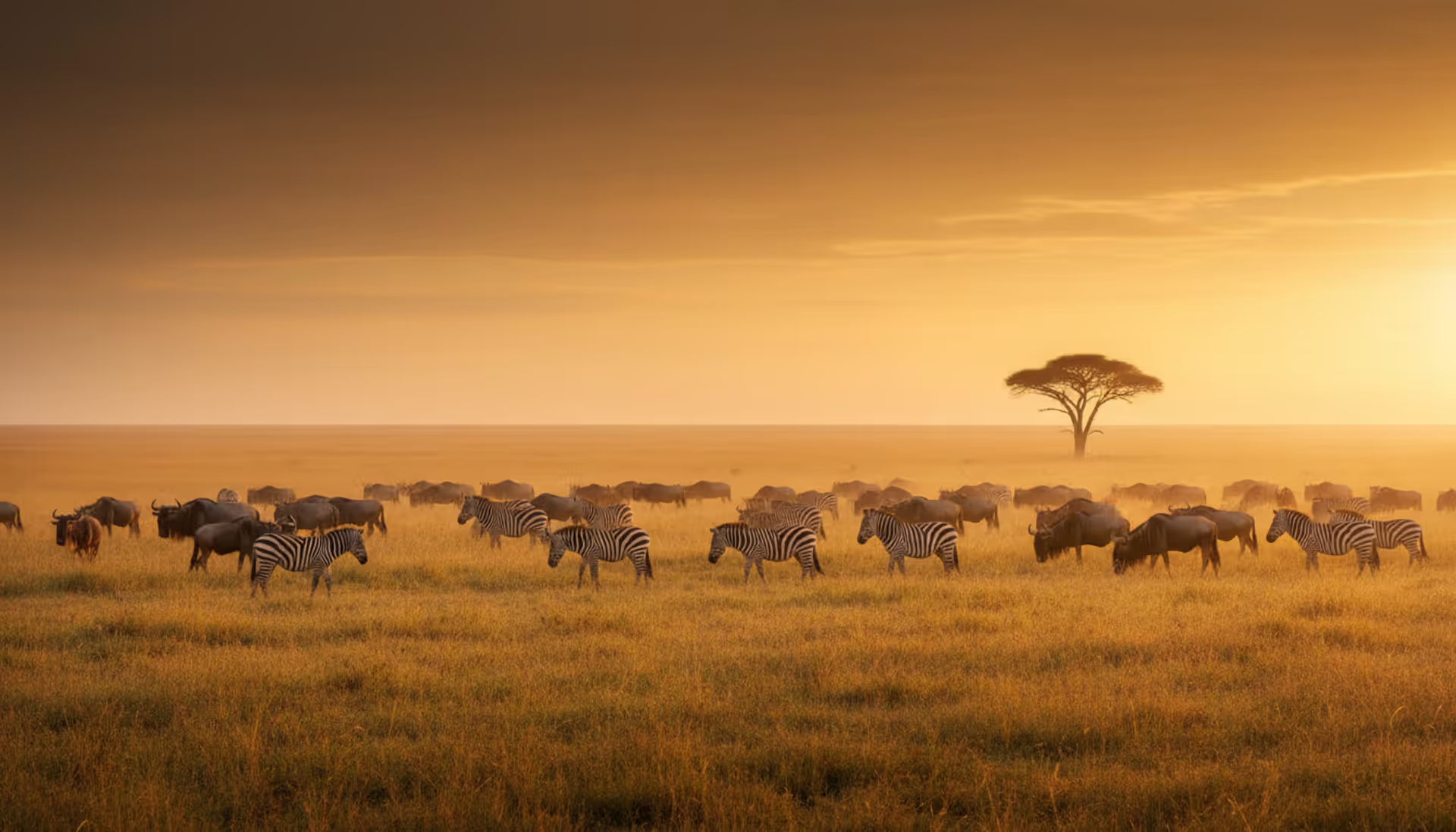
East Africa (Kenya, Tanzania, Rwanda) remains the classic safari destination, with luxury outdoor expeditions focusing on the Serengeti migration, gorilla trekking, and Ngorongoro Crater wildlife viewing. The luxury tier includes private conservancies like Laikipia and Mara Conservancy, where guest densities remain low and activities like walking safaris become possible. Two distinct seasons—the short rains (November-December) and long rains (March-May)—affect pricing and wildlife concentrations.
Nepal and Bhutan cater to luxury trekking holidays, with Nepal offering Everest Base Camp, Annapurna Circuit, and less-traveled routes like Manaslu. Luxury here means tea house upgrades, porter services, and helicopter returns to avoid retracing routes. Bhutan's government-mandated daily tariff ($200-250 per day) creates an inherently upscale experience with included guide services, accommodations, and meals.
The Galapagos Islands provide luxury expedition travel via small yacht charters (16-100 passengers) or land-based programs staying at upgraded hotels with daily boat excursions. The islands' strict visitor management means experiences don't vary dramatically by price—luxury primarily affects accommodation quality and yacht size rather than wildlife access.
Iceland has grown into a luxury wilderness tour destination combining glacier hiking, ice cave exploration, northern lights viewing, and geothermal experiences. Small group sizes and private super-jeep tours distinguish luxury operators from bus-based mass tourism. Summer (June-August) offers midnight sun and accessible highlands, while winter (November-March) provides northern lights and ice caves.
Common Mistakes When Booking Premium Adventure Travel
Author: Sophie Laurent;
Source: reykjaviksegwaytours.com
Several recurring errors undermine luxury adventure experiences, most preventable through better planning.
Booking too far in advance without understanding cancellation terms creates risk. While popular departures sell out 12-18 months ahead, booking this early often means restrictive cancellation policies kick in before you can reliably predict personal circumstances. For most destinations, 6-9 months provides adequate selection while preserving flexibility. Exceptions include Antarctica (book 12-18 months out), gorilla trekking permits (Rwanda and Uganda require 6-12 months), and Bhutan peak season (book 6-12 months ahead).
Ignoring fitness requirements leads to miserable experiences. Operators describe difficulty levels, but these vary by company. "Moderate" might mean 6 miles with 1,000 feet of elevation gain for one operator, 10 miles with 2,500 feet for another. Request specific daily distances, elevation changes, and maximum altitudes. Underestimating altitude effects proves particularly common—a hike that would be easy at sea level becomes challenging at 12,000 feet. If you're between fitness levels, choose the easier option; luxury adventure travel should challenge you appropriately, not leave you struggling to keep pace.
Overlooking travel insurance, particularly cancel-for-any-reason coverage, exposes you to substantial financial risk. Standard trip insurance covers medical emergencies and operator bankruptcies but not personal circumstances like work conflicts or family issues. Cancel-for-any-reason insurance costs 40-60% more but refunds 50-75% of prepaid costs when you cancel for reasons not covered by standard policies. Given that luxury adventures often cost $5,000-15,000+ per person, this extra $500-1,000 provides valuable protection.
Choosing based primarily on price ignores the value equation. The cheapest luxury operator often cuts corners somewhere—less experienced guides, larger groups, lower-quality accommodations, or hidden exclusions. Conversely, the most expensive option doesn't guarantee the best experience. Focus on what's included, group sizes, guide credentials, and accommodation specifics rather than headline prices.
Not verifying actual group sizes versus maximum group sizes creates disappointment. An operator advertising "small groups of maximum 12" might regularly run trips with 11-12 participants, while another with the same maximum might average 6-7. Ask about average group sizes for your specific departure date and whether the trip is guaranteed to run or might be combined with another departure if bookings are low.
Failing to research visa requirements, vaccination needs, and travel restrictions until shortly before departure can derail trips. Some countries require visas obtained weeks in advance. Certain vaccinations need multiple doses over months. While luxury operators typically provide requirement lists, they can't obtain visas or vaccinations for you. Start this process immediately after booking.
Questions to Ask Before You Book
The biggest mistake I see clients make is equating luxury with amenities rather than access and expertise.A truly exceptional luxury adventure operator provides experiences you literally cannot buy elsewhere—private access to archaeological sites, guides who've summited Everest or tracked leopards for 20 years, or positioning that puts you in the right place at the optimal moment. The thread count of your sheets matters far less than whether your guide can read animal behavior well enough to position you for that once-in-a-lifetime wildlife encounter.
— Jennifer Morrison
Specific questions reveal operator quality and help avoid mismatched expectations.
About accommodations: Request exact property names for each night, not just descriptions like "luxury tented camp." Ask whether rooms are private or potentially shared with other travelers. Confirm bathroom facilities—en-suite, private external bathrooms, or shared facilities. For camping-based trips, ask about tent quality, sleeping pad specifications, and toilet facilities. Inquire about heating/cooling, electricity availability, and internet access if connectivity matters to you.
About guides: Ask for credentials of the specific guides who'll lead your trip, not company-wide statistics. Confirm guide-to-guest ratios—one guide for 8 guests differs significantly from two guides for 8 guests. Verify language capabilities if cultural interaction is important. Ask about guide continuity—does the same guide stay with you throughout, or do guides rotate? Request information about guides' experience in the specific region and their emergency medical training level.
About group composition: Confirm minimum and maximum group sizes. Ask about current booking levels for your departure. Inquire whether your trip might be combined with another departure if bookings are low. Request typical age ranges and fitness levels—some departures attract predominantly 60+ travelers, others skew younger. Ask whether children are permitted and if so, what minimum age applies.
About physical requirements: Request specific daily distances, elevation gains, maximum altitudes, and terrain types. Ask about the most challenging day and whether alternatives exist for those who struggle. Confirm whether you can opt out of specific activities without penalty. Inquire about typical daily schedules—some trips start at 5 AM daily, others allow more relaxed pacing.
About customization: Determine how much flexibility exists within the set itinerary. Can you skip activities that don't interest you? Are alternative activity levels available (easier or harder hikes)? Ask about pre-trip or post-trip extensions and whether the operator can arrange these or you should book independently.
About emergency protocols: Verify evacuation procedures for medical emergencies. Ask about communication capabilities—satellite phones, emergency beacons, radio contact. Confirm whether guides carry comprehensive first aid supplies and oxygen (for high-altitude trips). Request information about nearest medical facilities and typical evacuation times.
About sustainability: Ask specific questions about waste management in wilderness areas, staff compensation practices, and relationships with local communities. Request information about conservation partnerships and whether any portion of your fee supports conservation efforts. Inquire about carbon offset programs and whether these are included or optional add-ons.
Comparison of Luxury Adventure Travel Company Types
| Company Type | Typical Group Size | Customization Options | Price Range (per day) | Destinations Offered | Best For |
| Large Established Operators | 10-16 guests | Limited; set departures with fixed itineraries | $400-700 | Worldwide; 50+ destinations across all continents | First-time luxury adventure travelers seeking proven itineraries and guaranteed departures |
| Boutique Specialists | 4-8 guests | Moderate; some flexibility within set itineraries | $600-1,000 | Regional focus; deep expertise in 3-8 destinations | Travelers prioritizing guide expertise and intimate group experiences in specific regions |
| Custom Trip Planners | Private (2-6 guests) | Extensive; fully customized itineraries | $800-1,500+ | Flexible; can arrange most destinations with sufficient lead time | Travelers with specific requirements, schedule constraints, or desire for complete privacy |
| Expedition Cruise Lines | 100-200 passengers | Minimal; fixed routes with some activity choices | $800-1,200 | Polar regions, Galapagos, remote islands requiring ship access | Travelers seeking remote destinations with naturalist guides and comfortable accommodations |
| Luxury Safari Specialists | 4-8 guests | Moderate to extensive; can customize camp selections and activity mix | $700-2,000+ | Africa (East, Southern, and select West Africa destinations) | Wildlife enthusiasts prioritizing expert guides and exclusive conservancy access |
Frequently Asked Questions
Choosing luxury adventure travel companies requires moving beyond marketing language to evaluate concrete operational factors: guide credentials, group sizes, accommodation specifics, safety protocols, and total cost transparency. The best operators distinguish themselves not through superlatives but through demonstrable expertise, established relationships in their destination regions, and track records of delivering exceptional experiences.
Start your evaluation by clarifying your own priorities. Do you value complete customization over cost efficiency? Is guide expertise more important than accommodation luxury? Would you prefer a proven itinerary with guaranteed departures or flexibility to adjust based on conditions? Your answers to these questions will narrow the field significantly.
Verify credentials rather than accepting claims. Request specific guide qualifications, exact accommodation names, detailed inclusion lists, and references from recent travelers. Ask the specific questions outlined in this guide, and evaluate operators based on the quality and transparency of their responses.
Remember that luxury in adventure travel contexts means something different than resort luxury. You're paying for expertise, access, safety, and positioning—the elements that transform a wilderness visit into a transformative experience. The finest luxury adventure travel companies deliver these intangibles while ensuring that when you return from challenging days, recovery happens in genuine comfort.
The investment in a well-chosen luxury adventure trip pays dividends beyond the journey itself. These experiences—whether trekking through Patagonian wilderness, tracking wildlife across African savannas, or exploring polar landscapes—create lasting memories precisely because they balance authentic challenge with exceptional support. Choose your operator thoughtfully, and the only regret you'll have is not booking your next adventure sooner.