
Couple standing on a luxury hotel terrace overlooking mountains at sunset with premium luggage and champagne glasses
How to Choose Luxury Travel Companies?

Content
Selecting the right partner to plan a five-figure vacation requires more scrutiny than booking a hotel through an app. The luxury travel industry has expanded significantly, with operators ranging from boutique agencies specializing in African safaris to full-service concierge firms managing every detail of multi-country itineraries. Understanding what differentiates a truly premium provider from a standard agency—and knowing which services align with your travel style—can mean the difference between a flawless experience and expensive disappointment.
What Makes a Travel Company Qualify as Luxury
Not every agency that uses the word "luxury" in its marketing actually delivers premium service. Genuine luxury travel companies distinguish themselves through four core attributes: white-glove personalization, privileged access, proactive problem-solving, and transparent pricing structures.
Personalization goes beyond asking about your hotel preferences. Premium tour operators conduct multi-hour discovery calls to understand your pace, dietary restrictions, cultural interests, and even the time of day you prefer activities. One client might want sunrise hot air ballooning followed by late breakfasts; another might hate early mornings but enjoy evening cultural performances. A luxury travel company builds itineraries around these nuances rather than offering slight variations on pre-packaged tours.
Access separates good agencies from exceptional ones. This means after-hours museum visits, reservations at restaurants with year-long waitlists, private viewings of art collections, or helicopter transfers that bypass traffic. These connections stem from long-standing industry relationships—hotel general managers who hold suites for specific agencies, local guides who don't work with the general public, winery owners who open their cellars only for certain operators.
Service architecture matters as much as the experiences themselves. Luxury providers assign dedicated trip managers who remain on-call throughout your journey, not just during business hours. They provide detailed briefing documents with photos of your local guides, car types, and even restaurant interiors so you know what to expect. They monitor flights proactively and reroute you before you realize there's a problem.
The defining characteristic of a premium tour operator is their ability to solve problems you didn't know existed. When a client's luggage goes missing in Morocco, we have someone at their riad with perfectly fitted replacement clothing within three hours. That level of ground support isn't cheap, but it's non-negotiable for true luxury service
— Rebecca Moretti
Pricing transparency is the final qualifier. Reputable luxury travel concierge services provide itemized proposals showing exactly what you're paying for—accommodations, ground transportation, guide fees, entrance tickets, and their planning fee. They don't inflate hotel rates to hide commissions or surprise you with "coordination fees" after you've committed.
Types of Luxury Travel Services Available
The luxury travel sector offers three primary service models, each suited to different traveler profiles and trip types.
Private Custom Itinerary Planning
This represents the highest tier of personalization. The agency designs every element from scratch based on your specifications. You might spend three weeks in Japan with a private guide who's a former museum curator, staying in ryokans the agency personally vetted, with kaiseki meals arranged at restaurants that don't accept public reservations.
These itineraries work best for travelers with specific interests (photography, architecture, culinary deep-dives), those celebrating major milestones, or anyone who finds group dynamics restrictive. Expect planning timelines of 4-8 months for complex multi-country trips and minimum trip budgets starting around $15,000 per person for international travel.
The trade-off: you're paying for flexibility and exclusivity, which means higher per-day costs than group tours. A private guide in Peru might cost $600 per day versus $80 per person on a group tour, but you control the pace entirely.
Luxury Concierge and On-Trip Support
Some travelers prefer to book their own flights and hotels but want expert support for complex logistics or special access. Luxury travel concierge services fill this gap by arranging specific components: securing reservations at Noma in Copenhagen, organizing a private yacht day in the Greek islands, or coordinating a multi-family villa rental in Tuscany with private chefs and daily activities.
This model suits experienced travelers who enjoy the planning process but recognize when they need insider connections. Fees typically range from $150-$500 per hour or flat rates for specific services. One family might pay $2,500 to have a concierge arrange all ground transportation, restaurant reservations, and activity bookings for a two-week European trip they've otherwise planned themselves.
High-End Group Tours and Escorted Experiences
High end escorted tour companies offer structured itineraries with expert guides, typically for 8-16 travelers. Unlike mass-market group tours with 40+ participants and budget hotels, luxury group tours feature five-star accommodations, smaller group sizes that allow access to exclusive venues, and specialized guides rather than generalist tour managers.
These tours appeal to solo travelers who want built-in companionship, couples who appreciate the social aspect of group travel, or anyone visiting destinations where group logistics make sense (Antarctica, Galapagos, overland safaris). They also suit travelers who want expert curation without the higher cost of fully private arrangements.
Top 10 Luxury Travel Companies in the US Market
The following companies represent diverse specializations within the luxury travel sector. Each has been operating for at least a decade and maintains consistently high client satisfaction ratings.
| Company Name | Specialty/Focus | Starting Price Range | Best For | Group Tours Available |
| Abercrombie & Kent | Worldwide luxury tours, strong Africa/Asia | $8,000–$25,000 per person | First-time luxury travelers wanting reliability | Yes |
| Black Tomato | Creative custom itineraries, adventure luxury | $12,000–$40,000 per person | Travelers seeking unique, off-beaten experiences | No |
| Butterfield & Robinson | Active/biking tours, cultural immersion | $7,500–$15,000 per person | Active travelers, multi-generational families | Yes |
| Indagare | Membership-based travel planning, insider access | $850/year + trip costs | Frequent luxury travelers wanting ongoing support | Limited |
| Jacada Travel | Tailor-made journeys, family specialists | $10,000–$35,000 per person | Families with children, complex itineraries | No |
| Ker & Downey | Ultra-luxury custom travel, safari experts | $15,000–$50,000+ per person | Ultra-high-net-worth clients, private jet travel | No |
| Remote Lands | Asia specialists, deep cultural experiences | $8,000–$30,000 per person | Asia-focused travelers wanting authenticity | Limited |
| Scott Dunn | Family travel experts, worldwide coverage | $6,500–$25,000 per person | Families with young children | No |
| Tauck | Upscale escorted tours, all-inclusive model | $5,000–$12,000 per person | Travelers preferring structured group experiences | Yes |
| Zicasso | Marketplace connecting travelers with specialists | $7,000–$30,000 per person | Comparison shoppers, various destinations | Varies by specialist |
Abercrombie & Kent pioneered the luxury group tour model and maintains one of the largest networks of ground operations worldwide. Their strength lies in logistical reliability—you won't encounter the bus breakdowns or hotel overbookings that plague lesser operators.
Black Tomato has built its reputation on creative problem-solving. They're the company that arranges private dinners in ice caves or multi-country journeys following historical trade routes. Their "Get Lost" service literally drops clients in unknown locations with survival gear for adventure seekers.
Butterfield & Robinson focuses on active luxury—biking through Provence, hiking the Dolomites, or kayaking in Croatia—with support vehicles, high-end hotels, and gourmet meals. Their trips attract fit travelers who want physical engagement with destinations rather than passive sightseeing.
Indagare operates on a membership model ($850 annually) providing travel planning services, hotel benefits, and access to their network of destination specialists. This works well for people who take 2-3 luxury trips per year and want consistent service across all bookings.
Ker & Downey caters to ultra-high-net-worth clients with complex requests: private jet itineraries, exclusive-use safari camps, or coordinating travel for extended families across multiple properties. Their minimum trip budgets typically start around $50,000.

Author: Alexander Moreau;
Source: reykjaviksegwaytours.com
How Luxury Group Travel Differs from Private Tours
Luxury group travel companies structure their tours around fixed departure dates with set itineraries, typically accommodating 10-16 guests. This model creates economies of scale that reduce per-person costs while maintaining high service standards. A 12-day luxury group tour through Morocco might cost $9,500 per person, while the same itinerary privately arranged could run $18,000-$22,000 per person.
Group tours work particularly well for destinations where exclusive access requires minimum participant numbers. Many museums, archaeological sites, and cultural institutions offer after-hours access only for groups of 10+. Some luxury group tours to Bhutan, for instance, arrange private temple ceremonies that wouldn't be accessible to individual travelers regardless of budget.
The social dynamic appeals to certain traveler types. Solo travelers often prefer group tours to avoid single supplements and enjoy built-in companionship. Couples sometimes appreciate meeting like-minded travelers, especially on specialized tours (photography-focused trips, culinary journeys, or wildlife expeditions) where shared interests create natural connections.
Trade-offs exist, of course. You can't change the pace—if the itinerary allocates two hours at a particular site, that's your window even if you'd prefer four hours or thirty minutes. Group tours follow set meal times, departure schedules, and activity sequences. One slow participant affects everyone's timing.
Luxury group tours also mean sharing your guide's attention. While premium operators maintain low guest-to-guide ratios (often 8:1 or better), you're still splitting expertise among multiple people. Private tours give you unlimited question time and the ability to dive deep into niche topics that might not interest a broader group.
The decision often comes down to destination and travel style. Antarctica, Galapagos, and overland safaris work beautifully as group experiences—the wildlife viewing and expedition elements don't require personalization. Conversely, a culinary tour of Italy or an architecture-focused journey through Japan benefits from private arrangements that can pivot based on your specific interests.
What to Expect from Premium Tour Operators
The booking process with upscale tour companies typically begins with a detailed consultation—often 45-90 minutes—where they assess your travel history, preferences, budget parameters, and specific trip goals. Reputable operators ask probing questions: Do you prefer morning or afternoon activities? How do you handle heat? What's your ideal balance of structured activities versus free time? Have you traveled to developing countries before?
Following this consultation, expect a detailed proposal within 7-10 business days. This should include day-by-day itineraries with specific hotel names (not just "deluxe accommodation"), meal plans, activity descriptions, and itemized pricing. The proposal should specify what's included: are entrance fees covered? Gratuities? Alcohol with meals? Airport transfers?
Premium tour operators build buffer time into itineraries. They don't schedule morning flights then plan activities for that afternoon, accounting for delays. They include rest days on longer trips rather than packing every moment with activities. This cushion is part of what you're paying for—the trip should feel luxurious, not exhausting.
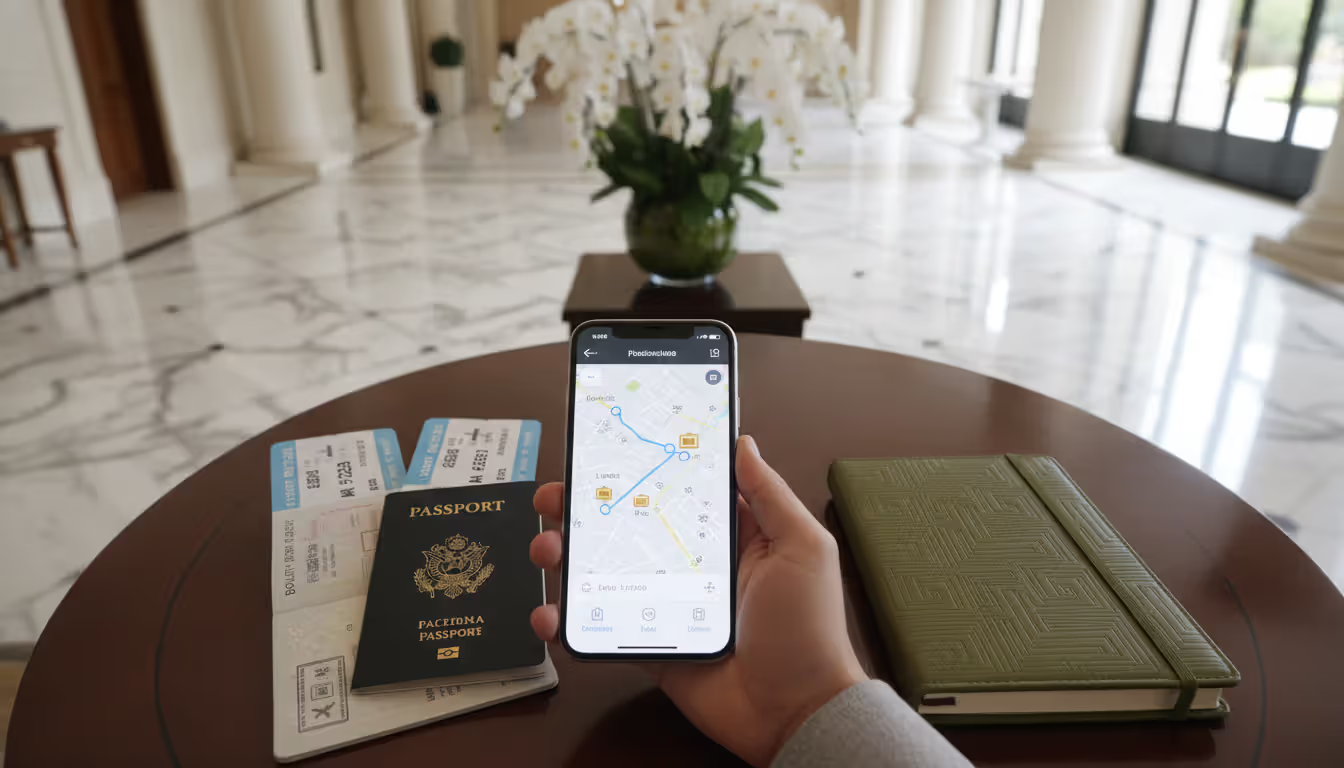
Communication standards matter. Your trip manager should respond to emails within 24 hours during business days. You should receive pre-trip materials 4-6 weeks before departure: detailed packing lists, cultural briefings, local contact information, and digital copies of all confirmations. Some operators provide custom apps with your complete itinerary, offline maps, and emergency contacts.
Author: Alexander Moreau;
Source: reykjaviksegwaytours.com
Cancellation policies vary but typically involve tiered penalties. You might pay 25% if you cancel 90+ days out, 50% at 60-90 days, and 100% within 60 days of departure. Premium operators often recommend travel insurance that covers cancellation for medical reasons, family emergencies, or other covered events.
Cost Factors When Booking with Upscale Tour Companies
Understanding pricing structures helps you evaluate whether you're getting fair value. Most luxury travel companies charge in one of three ways: commission-based (they earn from hotels and tour operators), fee-based (flat planning fee plus net-rate bookings), or hybrid models.
Commission-based agencies don't charge planning fees but earn 10-20% commissions from suppliers. This model works fine if the agency books you at standard rates, but some inflate prices to increase their commission. Always ask whether quoted hotel rates match what you'd pay booking directly.
Fee-based agencies charge $150-$500 per day of travel as a planning fee, then book everything at net rates (the actual cost without markup). This creates transparency—you see exactly what each component costs. For a 10-day trip, you might pay a $3,000 planning fee plus $15,000 in actual travel costs, versus $18,500 all-in with a commission-based agency. The fee-based total is $18,000, potentially saving you money while ensuring unbiased recommendations.
Hybrid models charge smaller planning fees ($1,000-$2,000 for complex trips) plus commissions on bookings. This approach works for agencies that provide significant value-added services beyond basic booking.
Deposit structures typically require 25-30% at booking, another 25-30% at 90 days out, and final payment 60-45 days before departure. These schedules allow agencies to secure reservations while giving you time to manage cash flow.
What's included versus add-ons varies significantly. Some operators quote all-inclusive rates covering every meal, activity, and transfer. Others provide base pricing for accommodations and transportation, with meals and activities as optional add-ons. Neither approach is inherently better, but you need clarity upfront. A $12,000 per person trip that includes every meal and activity might offer better value than a $10,000 trip where you'll spend another $4,000 on meals, entrance fees, and guides.
Value versus price becomes clear when comparing specific inclusions. One company might charge $8,500 for a week in Peru with group tours and four-star hotels. Another charges $14,000 but provides private guides, five-star properties, and a private Machu Picchu sunrise visit. The second costs 65% more but delivers an entirely different experience—whether that justifies the premium depends on your priorities and budget.
Author: Alexander Moreau;
Source: reykjaviksegwaytours.com
Common Mistakes When Selecting a Luxury Travel Agency
The biggest mistake is choosing based on price alone. When three agencies quote the same destination with $5,000 price variation, the differences lie in hotel categories, guide quality, included meals, or hidden fees. The lowest quote often means budget hotels labeled as "boutique" or group tours described as "semi-private."
Ignoring specialization leads to mediocre results. An agency that excels at European river cruises might have weak ground connections in Southeast Asia. Their Southeast Asia itineraries will be competent but generic—they're essentially reselling another operator's packages rather than leveraging direct relationships. Always ask: "How many clients did you send to this specific destination last year?" and "Do you have staff who've personally traveled there?"
Skipping the consultation call is another red flag. If an agency sends proposals without a detailed conversation, they're guessing at your preferences. You'll get a generic itinerary that might not match your travel style, pace, or interests.
Not vetting reviews properly means missing warning signs. Look beyond overall star ratings to read detailed reviews. Patterns matter: if multiple reviews mention unresponsive communication, last-minute hotel changes, or guides who didn't show up, those aren't isolated incidents.
Unclear expectations about customization cause frustration. Some "custom" itineraries are actually pre-designed tours with minor tweaks—swapping one hotel for another or adding a cooking class. If you want true customization, ask: "What percentage of this itinerary is designed specifically for us versus adapted from existing tours?"
Failing to clarify what happens when things go wrong is a critical oversight. Ask specifically: "If our flight is canceled, who handles rebooking—us or you? If a hotel is overbooked when we arrive, what's your protocol? Do you have 24/7 support or only business hours?" Premium agencies should have clear, proactive support systems.
Frequently Asked Questions About Luxury Travel Companies
Choosing the right luxury travel company comes down to alignment—their expertise should match your destination, their service model should fit your travel style, and their communication approach should meet your expectations. Start by identifying 3-4 companies specializing in your target destination, then schedule consultations to assess compatibility before requesting formal proposals.
The best luxury travel experiences happen when you view your chosen company as a long-term partner rather than a transactional vendor. Agencies that understand your preferences, travel history, and evolving interests deliver increasingly refined recommendations over time. Your third trip with a trusted advisor will be noticeably better than your first because they've learned what works for you.
Budget appropriately from the start. Luxury travel costs what it costs—trying to force premium experiences into mid-range budgets leads to disappointment on both sides. Better to take one exceptional 7-day trip than a mediocre 14-day journey at the same total cost. Quality consistently trumps quantity in the luxury travel sector.
Finally, remember that the most expensive option isn't always the best fit. A $40,000 trip with the wrong operator will frustrate you more than a $20,000 trip with a company that truly understands your needs. Focus on finding the right match rather than the highest price tag or the most famous brand name.