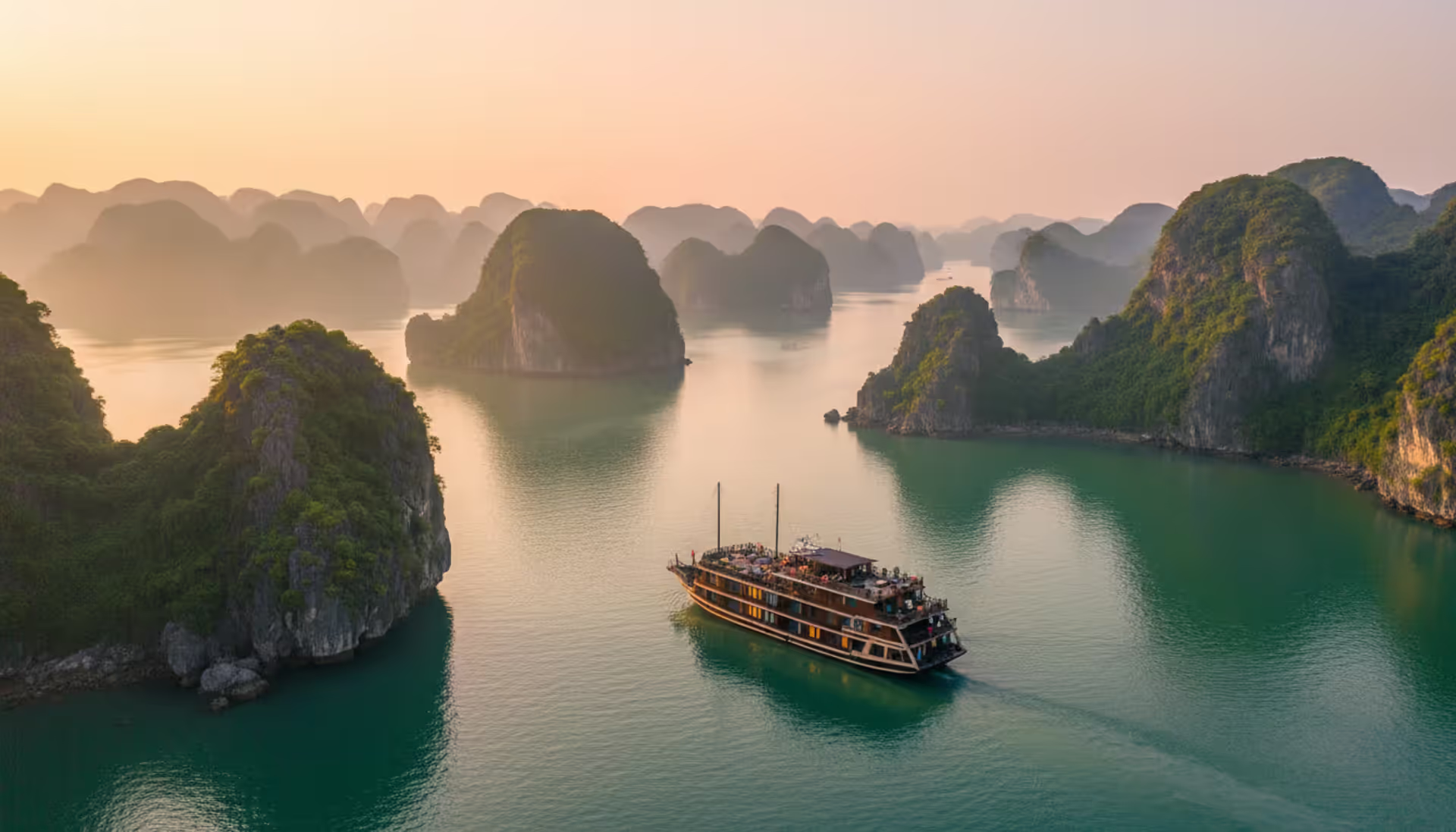
Luxury wooden cruise ship sailing through Halong Bay at sunrise with limestone karst formations rising from emerald water and morning mist
Luxury Vietnam Travel Guide

Content
Vietnam has shed its backpacker image faster than almost anyone predicted. This isn't the budget-travel-only destination your college roommate visited in 2010. Today's Vietnam delivers genuine luxury—the kind where your Halong Bay suite comes with a private balcony overlooking karst formations, where your Hoi An resort's chef sources morning-caught seafood from fishermen he's known for twenty years, where your Hanoi hotel concierge can arrange a private viewing at the Museum of Fine Arts before it opens to the public.
What makes Vietnam particularly compelling for luxury travelers? It combines world-class hospitality with cultural experiences that haven't been sanitized for mass tourism. You'll eat at Michelin-starred restaurants, yes, but you'll also sit on plastic stools at a third-generation pho shop where the broth recipe hasn't changed since 1954.
What Makes Vietnam a Premier Luxury Travel Destination
The transformation of Vietnam's luxury hospitality happened gradually, then suddenly. International hotel groups studied the market for years before committing. When they finally built their flagship properties—the Park Hyatt Saigon in 2005, the Metropole Hanoi's restoration, the Four Seasons Nam Hai in 2006—they set new standards that Vietnamese entrepreneurs quickly matched and sometimes exceeded.
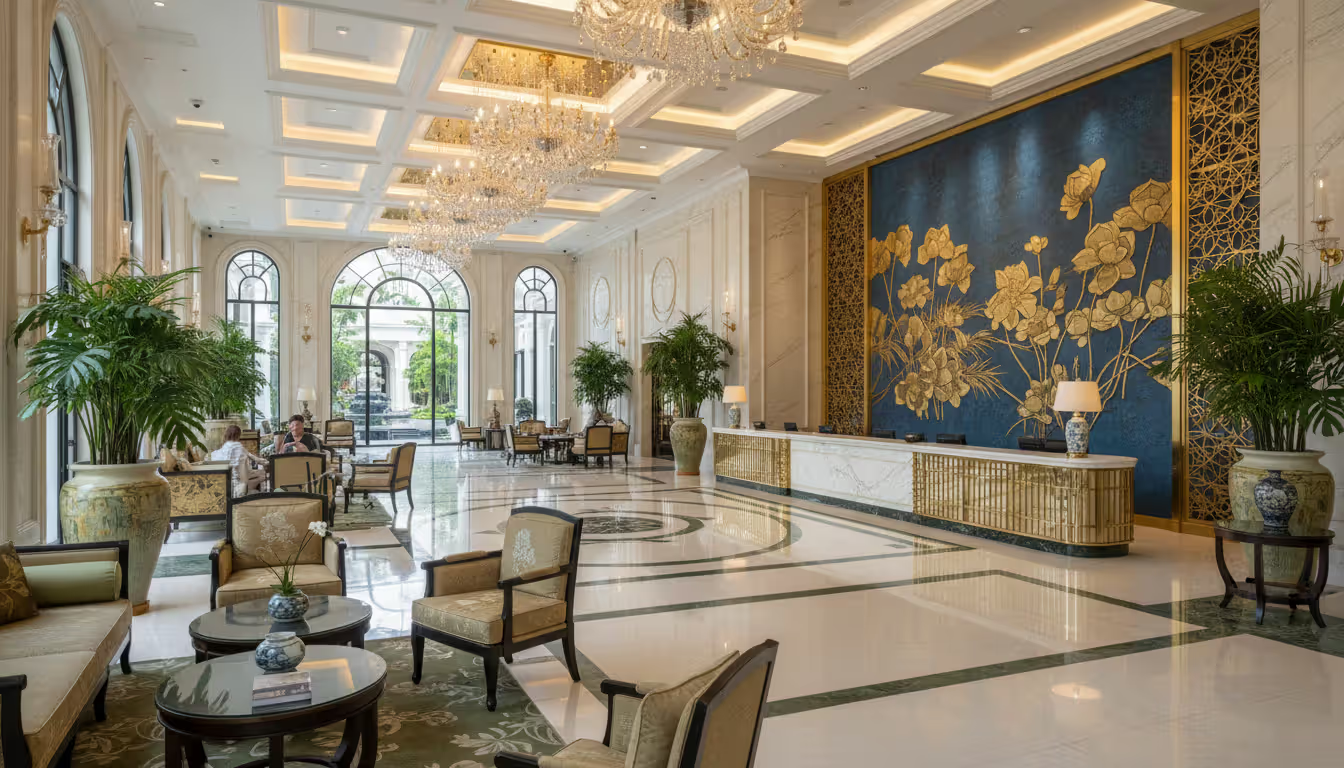
Walk into The Reverie Saigon and you'll encounter interiors so opulent they border on theatrical: Murano glass chandeliers, Italian marble, gold leaf everywhere. It's maximalism as art form. Contrast that with the Six Senses Con Dao, where barefoot luxury means villa accommodations steps from the beach, organic gardens supplying the restaurant, and spa treatments using ingredients harvested that morning.
Both approaches work because they're executed with meticulous attention to detail.
The country's geography compresses what would normally require visiting three or four separate destinations. Within Vietnam's 1,650-kilometer length, you'll find dramatic mountains where Hmong villages cling to terraced hillsides, over 3,000 kilometers of coastline ranging from wild surf beaches to calm bays, the Mekong Delta's waterways thick with river traffic, and cities pulsing with the energy of a country modernizing at breakneck speed.
Author: Daniel Ashcroft;
Source: reykjaviksegwaytours.com
For travelers familiar with luxury southeast asia destinations, Vietnam offers something Thailand's developed beach resorts can't quite deliver anymore: the sense you're still discovering places before everyone else arrives. Sure, Halong Bay gets crowded—but Lan Ha Bay, just next door, sees a fraction of the traffic. Da Nang's beaches sprawl for kilometers with only scattered resorts rather than the wall-to-wall development that defines Phuket.
The culinary landscape alone justifies the trip. Hanoi's old quarter hides restaurants in century-old buildings where chefs trained in Paris return home to reinterpret Vietnamese classics. Ho Chi Minh City's dining scene explodes with innovation—young chefs who've staged at Copenhagen's Noma or New York's Eleven Madison Park applying those techniques to Vietnamese ingredients. Then there's street food elevated to art: banh mi vendors whose bread comes from French-technique bakeries, pho shops where the broth simmers for 24 hours.
Vietnam offers a rare combination of authentic cultural immersion and world-class luxury that few destinations can match. The country has mastered the balance between preserving its soul and elevating its service standards
— Amanda Statham
Cultural depth separates Vietnam from beach-resort destinations. The layers of history—Chinese influence spanning a millennium, French colonial architecture, the American War's legacy, rapid economic development since doi moi reforms—create complexity that rewards exploration. Your private guide in Hue won't just recite dates about the Imperial Citadel; she'll explain how the Nguyen Dynasty's rituals continue to influence Vietnamese family structures today.
Top Luxury Destinations and Experiences in Vietnam
Halong Bay and Lan Ha Bay Luxury Cruises
Those limestone karsts rising from emerald water have become Vietnam's postcard image for good reason. They're genuinely spectacular—even after you've seen hundreds of photos, the reality of cruising through Halong Bay still delivers that throat-catch moment of natural beauty.
Here's what most guides don't tell you: Halong Bay itself can feel overcrowded during peak season. Dozens of vessels anchor in the same popular spots, and the UNESCO site's success has created environmental challenges. Savvy luxury operators increasingly route their halong bay luxury cruise itineraries through Lan Ha Bay instead—same dramatic geology, far fewer boats, better swimming beaches.
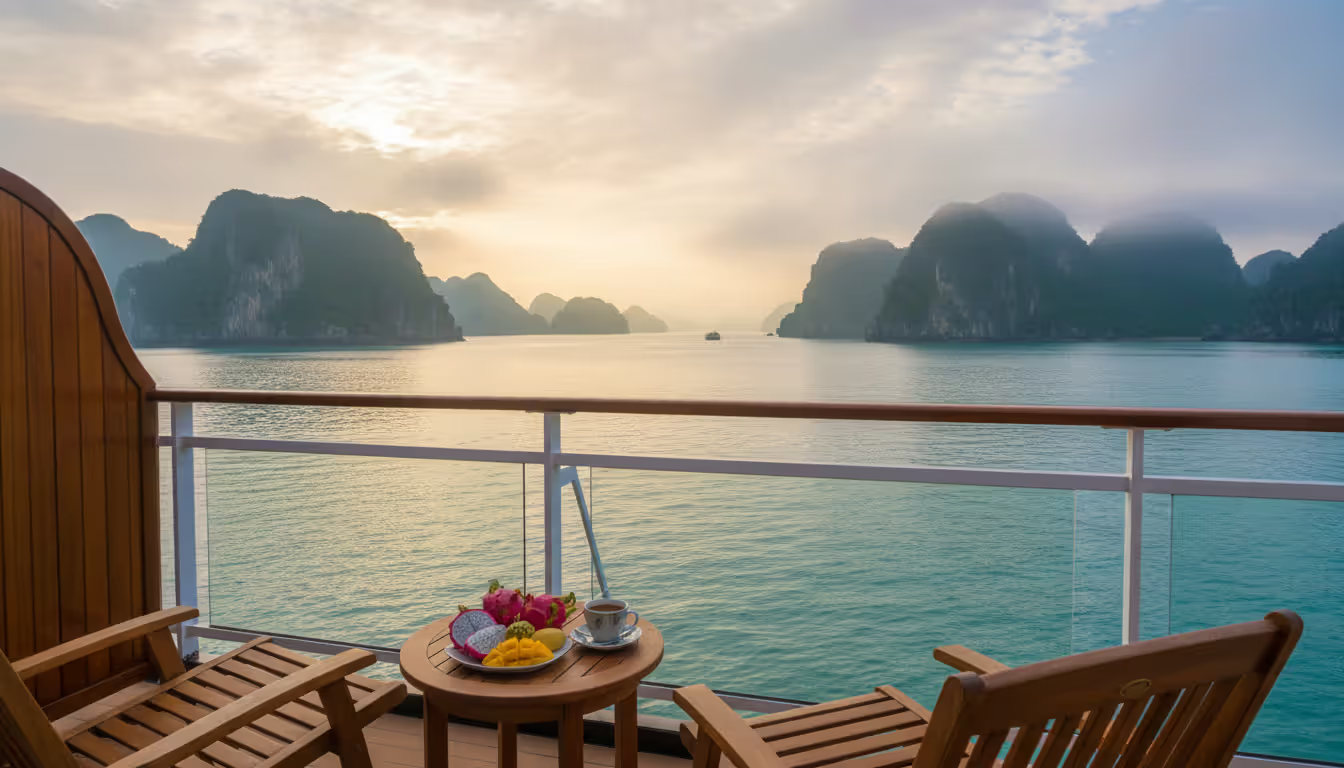
The difference between a $300-per-night cruise and a $1,000-per-night cruise isn't just thread count (though that matters). Premium vessels employ chefs who've worked in Saigon's top restaurants. Your cabin won't just have a window—it'll have a private balcony with teak furniture where you can drink morning coffee while watching mist burn off the water. Spa treatments use local ingredients: honey from island apiaries, sea salt harvested nearby, essential oils distilled from Vietnamese herbs.
Activities on luxury cruises go beyond the standard kayaking and swimming. The Capella Cruise arranges sunrise tai chi sessions on the sundeck with an instructor from Hanoi's national team. Paradise Elegance offers cooking classes where the chef teaches you to make spring rolls using ingredients purchased that morning at Cai Beo floating village. Heritage Binh Chuan, which only has ten suites total, can adjust the entire itinerary based on what their small group wants to explore.
Timing matters enormously. Summer (June-August) brings heat and afternoon thunderstorms that can be dramatic but might disrupt activities. Winter (December-February) offers clear skies but chilly temperatures—not ideal for swimming, perfect for photography. Spring (March-May) and fall (September-November) provide the sweet spot, though September carries some typhoon risk.
Author: Daniel Ashcroft;
Source: reykjaviksegwaytours.com
Hoi An's Boutique Resorts and Private Experiences
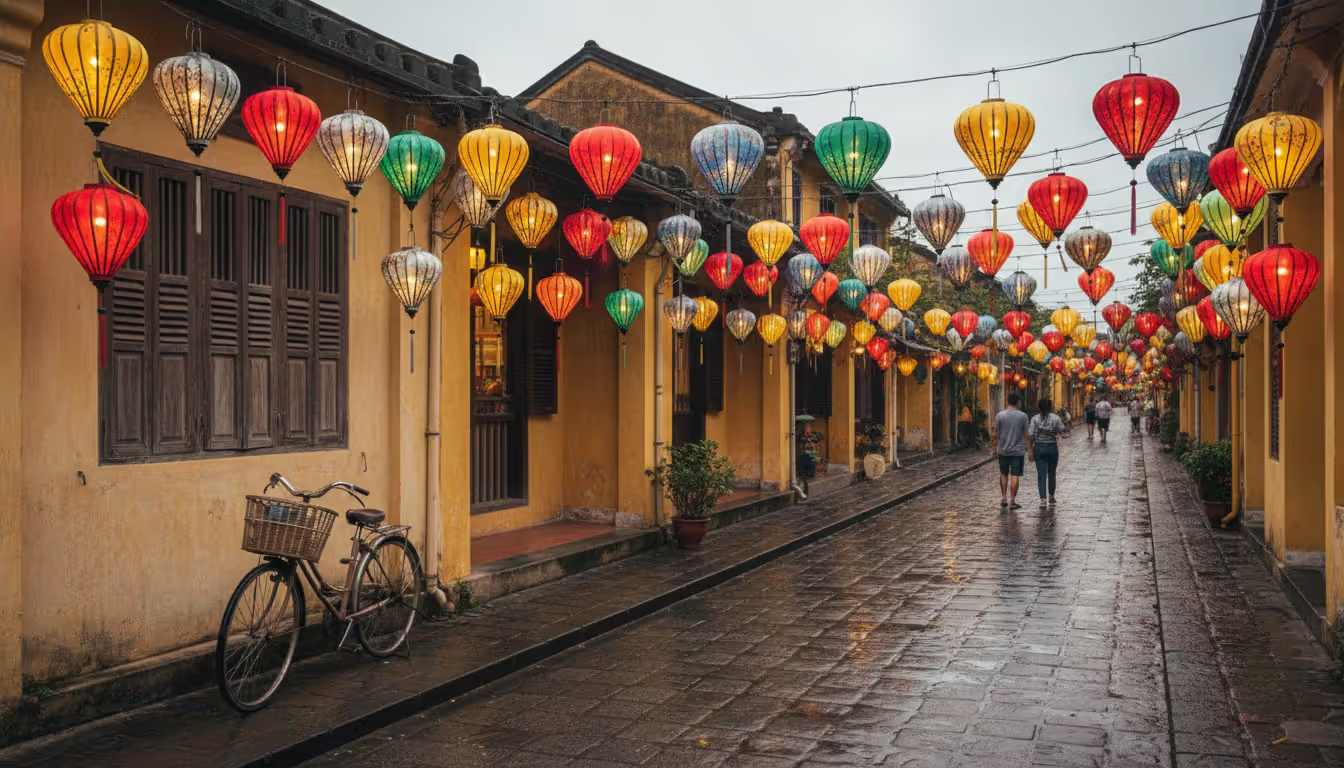
Hoi An operates on a different frequency than the rest of Vietnam. The ancient town's yellow buildings, lantern-lit streets, and car-free old quarter create an atmosphere that feels removed from time—until you notice the tailor shops using computerized measuring systems and accepting Apple Pay.
The best luxury accommodations sit outside the old town itself. Four Seasons Nam Hai occupies a stretch of beach 15 minutes away, with pool villas so private you could forget other guests exist. Anantara Hoi An positions itself on the Thu Bon River just north of town, offering boat shuttle service into the old quarter that lets you skip the traffic snarls. The Azerai, designed by architect Jean-Michel Gathy, brings minimalist elegance to its rice-paddy setting between old town and beach.
What you'll actually do in Hoi An depends on your interests. Tailoring remains the big draw—shops can copy your favorite jacket or create original pieces in 24-48 hours. But quality varies wildly. Avoid the aggressive touts on main streets. Instead, ask your hotel concierge for recommendations. Top-tier tailors like Yaly Couture or Bebe Tailor can execute complex patterns and work with luxury fabrics, though you'll pay accordingly (still a fraction of what comparable work costs in Hong Kong or London).
Beyond clothes shopping, Hoi An excels at food experiences. Red Bridge Cooking School runs half-day classes that start with market visits and end with multi-course meals you've prepared yourself. Morning Glory restaurant's owner leads street food tours that hit spots tourists walk past without noticing. Private chefs will come to your villa to teach family recipes passed down through generations.
The countryside surrounding Hoi An rewards exploration. Bicycle rides through rice paddies lead to villages specializing in pottery (Thanh Ha), woodworking (Kim Bong Island), or organic farming. Some resorts arrange these as private tours rather than group activities, letting you move at your own pace and spend more time in places that interest you.
Author: Daniel Ashcroft;
Source: reykjaviksegwaytours.com
Ho Chi Minh City's Five-Star Hotels and Fine Dining
Saigon (locals still use the old name) embodies modern Vietnam's entrepreneurial energy. Traffic flows in organized chaos, construction cranes punctuate the skyline, and the city reinvents itself every few years. This constant evolution means the restaurant that wins awards this year might close next year when the chef decamps to open something new in District 2.
Historic luxury properties anchor District 1: the Continental Hotel where Graham Greene supposedly wrote parts of "The Quiet American" (the hotel definitely trades on this association), the Park Hyatt Saigon occupying a former opera house, the Hotel des Arts Saigon combining colonial architecture with contemporary art. These contrast sharply with newer properties like The Reverie Saigon, which went for baroque maximalism, or the upcoming Capella Saigon (opening schedules in Vietnam are suggestions, not commitments).
The city's dining spectrum runs from street carts to fine dining without much middle ground. For luxury vietnam travelers who want both experiences, companies like Vespa Adventures arrange food tours on vintage scooters—you ride pillion while a local driver navigates traffic, stopping at everything from a rooftop restaurant to a sidewalk banh xeo vendor.
High-end dining options multiply annually. Anan Saigon reinterprets Vietnamese street food as tasting-menu courses. The Refinery brings French technique to local ingredients in a converted opium factory. Xu Restaurant Lounge serves contemporary Vietnamese in a space designed to recall 1920s Saigon. Reservations at top restaurants get competitive—book through your hotel concierge who maintains relationships rather than trying to score tables yourself.
District 2's Thao Dien neighborhood attracts expats and increasingly draws luxury travelers wanting to see residential Saigon. Tree-lined streets hold independent coffee roasters, wine bars, boutiques selling Vietnamese designer clothing, and restaurants without tourist menus. Stay in District 1 for convenience, but spend an afternoon wandering Thao Dien to see how modern Saigonese actually live.
Sapa and Northern Highlands Exclusive Retreats
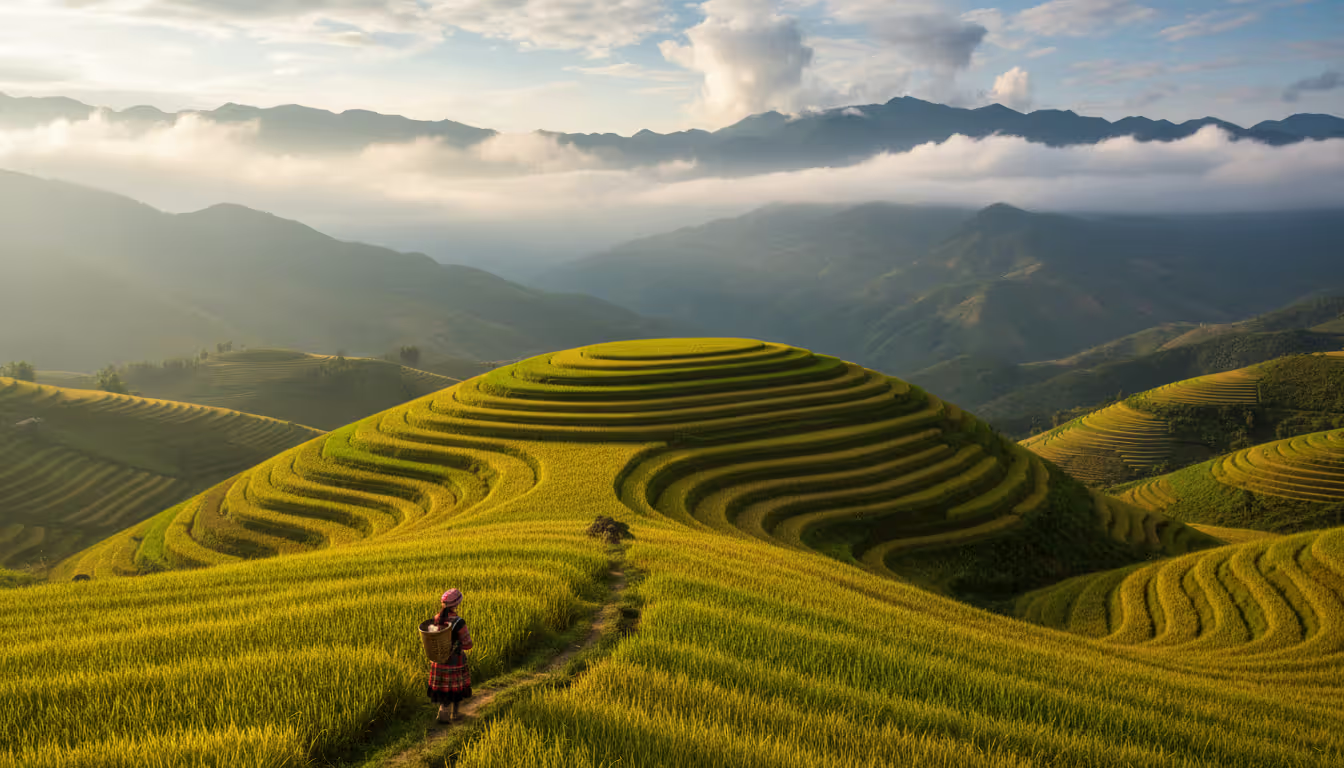
The north offers Vietnam's most dramatic landscape transformation. Leave Hanoi's sticky heat, drive five hours northwest, and you'll arrive in Sapa where temperatures can drop to freezing December through February. Those famous terraced rice fields cascade down mountainsides in patterns refined over centuries—different ethnic minority groups (Hmong, Dao, Tay, Giay) each developed distinct terracing styles you'll learn to recognize.
Luxury accommodations have replaced the basic guesthouses that once dominated Sapa. Topas Ecolodge perches on a ridge with panoramic views across terraced valleys—rooms have heated floors and soaking tubs that are very welcome after a day's trekking. Hotel de la Coupole positions itself in Sapa town with French colonial style, heated pool, and a spa using local medicinal herbs. Aira Boutique Sapa takes a more contemporary approach with floor-to-ceiling windows framing mountain vistas.
The region's appeal goes deeper than scenery. Minority villages maintain traditional lifestyles—weaving, indigo dyeing, subsistence agriculture—though tourism has obviously changed dynamics. Private treks with knowledgeable guides (not just language translators but people who can explain animist spiritual practices, agricultural techniques, kinship structures) transform these encounters from photo opportunities into genuine cultural exchange.
Weather dictates what you'll experience. Winter (December-February) sometimes brings snow—magical for photography, brutally cold for trekking. Spring (March-May) sees fields flooded for planting, creating mirror-like surfaces. Summer (June-August) offers green fields and warm temperatures but afternoon downpours. Fall (September-November) delivers harvest-season golden fields and reliably clear skies. Most luxury travelers target October-November or March-April.
Beyond Sapa itself, the northern highlands encompass Ha Giang Province (dramatic mountain roads, fewer tourists), Mai Chau Valley (Thai minority villages, easier access from Hanoi), and Ba Be National Park (Vietnam's largest natural lake, jungle trekking). These areas lack Sapa's developed luxury infrastructure but offer more authentic glimpses of highland life.
Author: Daniel Ashcroft;
Source: reykjaviksegwaytours.com
How to Choose a Luxury Vietnam Tour Operator
The tour operator selection makes or breaks luxury travel vietnam experiences more than almost any other decision. A mediocre hotel you can escape by going out; a mediocre tour operator colors your entire trip.
Start with customization philosophy. The best operators don't push pre-packaged itineraries—they probe your interests, travel style, dietary preferences, physical abilities, and tolerance for early mornings versus leisurely starts. They'll ask questions you haven't considered: Do you prefer learning by doing (cooking classes, craft workshops) or observing (museum visits, guided walks)? Do you want to meet contemporary artists, or does modern art leave you cold? Would you rather stay in one destination longer or see more places briefly?
Look for operators with genuine local expertise, not just international companies that outsource to Vietnamese ground handlers. The difference shows up in details: securing restaurant reservations at places that don't officially take reservations, arranging private gallery visits with artists in their studios, getting museum access before public hours, knowing which Halong Bay cruise operators actually maintain their boats versus those cutting corners.
Accommodation partnerships reveal priorities. Top operators maintain direct relationships with properties—not just booking-site reservations but actual partnerships where they've vetted everything from mattress quality to chef training to whether the "ocean view" rooms actually see ocean or just parking lot. They'll know which properties suit honeymooners versus families versus solo travelers, and they'll secure upgrades, early check-ins, late checkouts, and amenities that independent bookers don't receive.
Guide quality matters enormously—maybe more than hotels. An excellent guide transforms temple visits from "built in 1345, notice the roof tiles" recitations into conversations about Vietnamese Buddhism, Chinese architectural influence, and how families choose which temples to patronize. The best guides hold degrees in history, art, or architecture, speak English fluently (not just basically), and genuinely enjoy sharing their country rather than just earning a paycheck.
Scrutinize inclusions versus add-ons carefully. Some operators advertise comprehensive packages but include only breakfasts, entry fees, and group transfers—lunches, dinners, spa treatments, and private experiences all cost extra. Better operators might include fewer activities but ensure what's included represents each destination's best rather than most convenient. Ask specifically about vehicle quality (new SUVs versus worn minivans), whether you share guides or vehicles with other travelers, and how they handle situations when things go wrong.
Luxury Accommodation Options Across Vietnam
Vietnam's accommodation landscape has diversified dramatically since the first international luxury hotels arrived. You'll find distinct categories, each delivering different experiences.
Heritage properties occupy historic structures—French colonial villas, merchant houses, imperial buildings—that have been meticulously restored. The Metropole Hanoi (opened 1901, restored multiple times) blends original architecture with modern comforts; Graham Greene and Charlie Chaplin stayed in the same building where you'll sleep. The Park Hyatt Saigon incorporates the former opera house. La Residence Hue occupies the former French Governor's mansion. These properties suit travelers who value historical character and central locations over sprawling resort facilities.
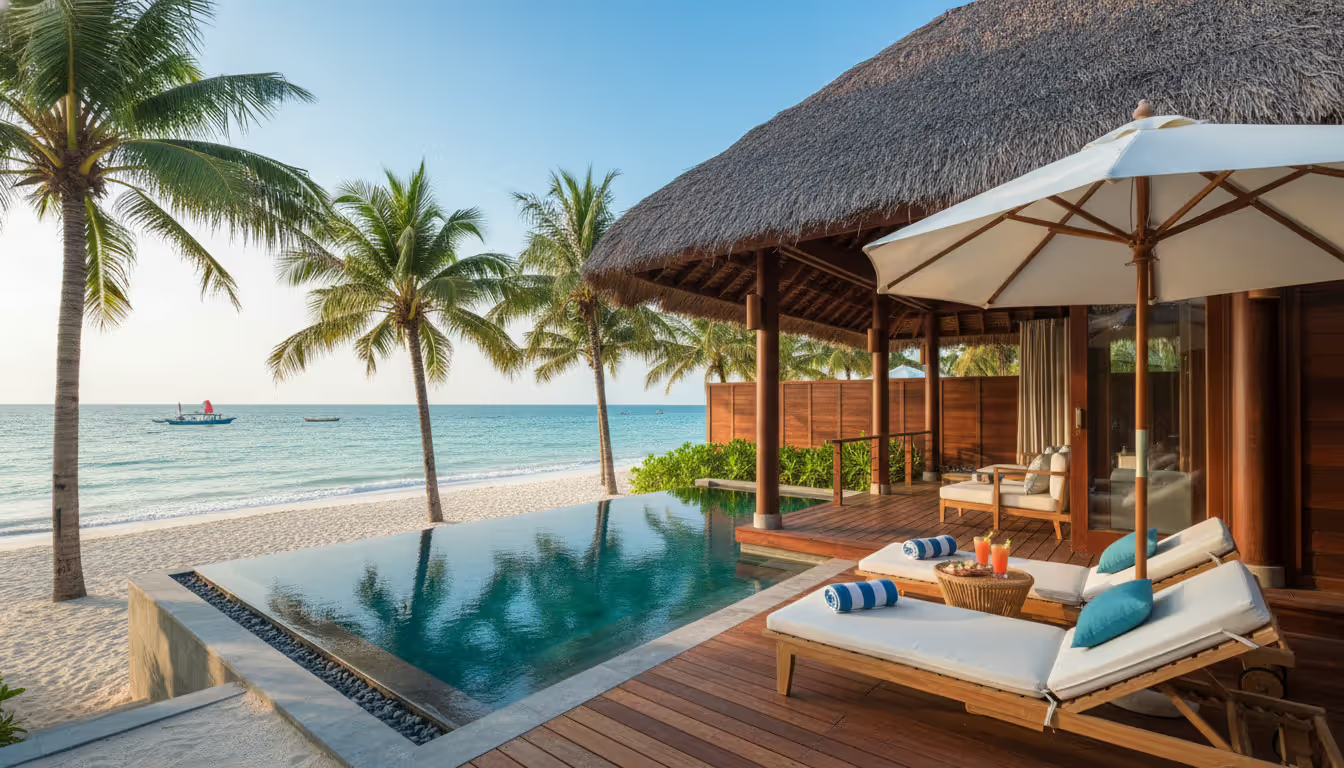
Beachfront resorts line the coast from Danang south to Phu Quoc. The category spans everything from massive properties with hundreds of rooms to intimate boutiques with a dozen villas. Amanoi, perched above Vinh Hy Bay, brings Aman's signature minimalism to Vietnam—pavilions with private pools, a hilltop spa, and service so attentive it borders on mind-reading. Four Seasons Nam Hai near Hoi An spreads across beachfront property with pool villas, multiple restaurants, and a spa large enough to spend an entire day exploring different treatment rooms. These properties work for travelers prioritizing beach time, spa experiences, and not leaving the resort frequently.
Urban luxury hotels cluster in Hanoi and Ho Chi Minh City. International flagships (Four Seasons, Capella, InterContinental) compete with Vietnamese-owned properties emphasizing local design elements. The Reverie Saigon exemplifies the latter—Italian design firm Visionnaire created interiors so ornate they polarize guests (you'll either love the maximalism or find it overwhelming). Rates in Vietnamese cities remain 30-40% below equivalent properties in Tokyo or Singapore, making vietnam luxury tours accessible to travelers who find Japan's costs prohibitive.
Eco-lodges and mountain retreats occupy remote locations that were inaccessible to luxury travelers a decade ago. Topas Ecolodge near Sapa proves sustainability and comfort aren't mutually exclusive—solar power, organic gardens, composting toilets in guest rooms with heated floors and mountain-view bathtubs. Pilgrimage Village outside Hue brings boutique accommodations to rice-paddy settings with meditation gardens, lotus ponds, and a restaurant featuring ancient Hue cuisine recipes. These properties appeal to travelers seeking nature immersion without roughing it.
River cruise vessels on the Mekong represent a newer category. Companies like Aqua Expeditions and Heritage Line operate small ships (20-40 suites) that cruise between Vietnam and Cambodia. Think luxury asia travel meets expedition cruising—you'll visit floating villages, Buddhist monasteries, and local markets while returning each night to air-conditioned suites with balconies and multi-course dinners.
Author: Daniel Ashcroft;
Source: reykjaviksegwaytours.com
Planning Your Luxury Vietnam Itinerary
Vietnam's climate varies so dramatically by region that "best time to visit Vietnam" questions have no single answer. It depends entirely on where you're going.
Northern Vietnam (Hanoi, Halong Bay, Sapa) works best October through April. November through February brings cooler temperatures—perfect for walking Hanoi's old quarter, comfortable for cruising, cold in mountain areas (pack warm layers if heading to Sapa). March through May sees warming weather and spring blossoms but increasing humidity. Summer (June-August) delivers hot, humid conditions with afternoon thunderstorms. Most luxury travelers target November through March for the north.
Central Vietnam (Hue, Hoi An, Danang) flips the script—February through August provides the driest, sunniest beach weather. September through January brings rain and occasional typhoons (September-October sees the highest risk). If beaches matter, visit central Vietnam in spring or summer. If you're more interested in cultural sites and don't mind some rain, shoulder seasons offer lower rates and fewer crowds.
Southern Vietnam (Ho Chi Minh City, Mekong Delta, Phu Quoc) maintains warm temperatures year-round. The dry season (November-April) sees sunny skies and low humidity—ideal for sightseeing. The wet season (May-October) brings afternoon downpours but shouldn't derail plans—rain typically arrives around 3-4 PM, dumps for an hour, then clears. Luxury travelers often visit the south during the wet season since the rain is predictable and morning hours stay sunny.
Most luxury itineraries run 10-14 days minimum. Shorter trips feel rushed given Vietnam's length—you'll spend too much time in airports and vehicles. A typical routing might include Hanoi (3 nights for old quarter exploration, museums, day trips to handicraft villages), Halong Bay (2-night cruise), Hoi An (3 nights for beaches, old town, cooking classes), and Ho Chi Minh City (2 nights for city tours, Cu Chi Tunnels, Mekong day trips). Add Sapa (3 nights), Phu Quoc (3-4 nights), or the central highlands (3 nights) if you have more time.
Domestic flights connect major destinations efficiently—Vietnam Airlines and Bamboo Airways operate modern jets with business class cabins meeting international standards. Flying between Hanoi and Ho Chi Minh City takes 2 hours versus 30+ hours by train. Flying from Danang to Phu Quoc saves a full day compared to surface transport. Budget flight time into your planning—figure half a day lost to travel whenever you change cities.
Entry requirements for US passport holders changed dramatically in 2025. Americans can now enter visa-free for up to 45 days. Your passport needs validity extending six months past your departure date—this is standard for most Asian countries. For trips exceeding 45 days, apply for an e-visa online (straightforward process) or arrange visas through the embassy. The visa-free policy has simplified logistics considerably compared to the previous visa-on-arrival system.
Health considerations don't pose major barriers. Vietnam mandates no vaccinations for entry, though physicians typically recommend ensuring routine immunizations are current plus hepatitis A and B vaccines. Malaria exists in remote rural areas but not in cities or main tourist destinations. Dengue fever occurs countrywide during rainy season—use insect repellent and consider staying in accommodations with good screens and air conditioning. Travel insurance makes sense for any international trip, particularly covering medical evacuation if something serious occurs.
Combining destinations within a trip makes geographic sense. Cambodia lies immediately west—Siem Reap (Angkor Wat) is a 45-minute flight from Ho Chi Minh City or Hanoi. Many travelers pair southern Vietnam with temple exploration, spending 3-4 days at Angkor before continuing to Vietnamese beaches or cities. Laos connections work well too—Luang Prabang's UNESCO old town complements Vietnam's faster pace, accessible via short flights from Hanoi. Thailand pairs naturally—Bangkok sits two hours from Saigon, allowing extensions to Thai islands or northern cultural sites.
Comparing Luxury Travel: Vietnam vs. Other Asian Destinations
Vietnam occupies interesting territory within Asian luxury travel markets, distinct from more established destinations like Japan and Sri Lanka.
Luxury tours japan emphasize precision, minimalism, and traditions preserved with almost religious devotion. Ryokans execute kaiseki meals where every ingredient's seasonality and placement carries meaning. Tea ceremonies follow protocols refined over centuries. Trains run on schedules measured in seconds, not minutes. This appeals enormously to travelers who appreciate order, subtlety, and ritual. Vietnam operates differently—luxury here feels warmer, more spontaneous, less bound by rigid protocols. Service aims to please rather than execute perfection.
Cost differences prove significant. Luxury japan travel typically runs 30-40% more than comparable Vietnam experiences—hotels cost more, meals cost more, internal transport costs more. That price differential allows budget reallocation in Vietnam: helicopter transfers, exclusive restaurant buyouts, extended cruise itineraries, private museum access. Experiences that feel extravagant in Japan's expensive market become achievable in Vietnam.
Sri lanka luxury tours share more characteristics with Vietnam than Japan does. Both countries offer cultural complexity, landscape diversity, colonial heritage layered over ancient traditions, and contemporary luxury that hasn't entirely displaced authentic local character. Sri Lanka's compact size (roughly Texas-sized) lets you experience tea country, ancient cities, wildlife reserves, and beaches within a week. Vietnam's larger scale requires more time but means less crowding and more undiscovered corners. Sri Lanka tours often feel intimate given the island's size; Vietnam provides exploration's thrill—discovering places before luxury tourism transforms them.
Comparing Vietnam to broader luxury southeast asia markets highlights distinct positioning. Thailand developed luxury infrastructure earlier, particularly Phuket, Koh Samui, and Bangkok. Those destinations deliver impeccable service but can feel over-developed—beaches lined with resorts, cultural sites mobbed by tour groups. Vietnam's coast retains stretches of undeveloped beach, temples that see dozens of daily visitors rather than thousands. Indonesia's Bali attracts wellness-focused luxury travelers drawn to yoga retreats, healing ceremonies, and spiritual experiences. Vietnam appeals more to history enthusiasts, food-focused travelers, and those prioritizing cultural immersion over inner-work retreats.
Myanmar once competed directly with Vietnam for cultural tourism—both had colonial architecture, Buddhist traditions, complex histories, and were emerging luxury markets. Myanmar's political situation has effectively removed it from luxury itineraries, redirecting that demand toward Vietnam and Laos.
Frequently Asked Questions About Luxury Vietnam Travel
Vietnam has claimed its position among Asia's premier luxury destinations by delivering what travelers actually want: authentic experiences paired with world-class service, dramatic landscapes combined with cultural depth, and hospitality that balances professionalism with genuine warmth. The country rewards curiosity—travelers who venture beyond highlight reels discover layers that mass tourism hasn't homogenized yet.
What sets Vietnam apart from competing luxury markets isn't just affordability (though prices remain lower than Japan or the Maldives). It's accessibility to authentic culture. You're not isolated in resort compounds. You're engaging with a country that welcomes visitors while maintaining distinct identity—street food vendors work next to fine-dining establishments, ancient temples sit amid modern development, traditional crafts continue alongside contemporary art scenes.
First-time luxury visitors should focus on the classics: Hanoi's old quarter and museums, Halong Bay cruising, Hoi An's ancient town and beaches, Ho Chi Minh City's energy and history. Return trips let you explore northern highlands, central coast diving, Mekong Delta waterways, or Phu Quoc's developing luxury resort scene. Vietnam reveals itself gradually—even travelers who've visited multiple times find new dimensions with each return.
The country's rapid development means the Vietnam you visit in 2026 will differ from 2028's version, but core elements remain constant: spectacular geography, complex history, exceptional cuisine, and people who genuinely seem pleased you've chosen to visit their country. That combination proves difficult to find elsewhere, which explains why Vietnam's luxury travel sector continues growing even as competition intensifies across Southeast Asia.