Luxury European Vacations Guide

Content
Every summer, my inbox fills with the same question from Americans planning their first upscale European trip: "Where should we go?" Wrong question. The real one: “What do we actually want to experience?”
Europe doesn't lack luxury options. Walk into any Paris hotel charging $800 a night, and you'll find marble bathrooms and Egyptian cotton sheets. But here's what trips people up—a $15,000 river cruise through Burgundy creates completely different memories than spending that same money on a custom driving tour, even though both deliver "luxury." One puts you on a floating hotel with scheduled excursions. The other gives you keys to a BMW and reservations at Michelin-starred country inns you'd never find alone.
This guide cuts through the marketing speak. We'll compare how different luxury travel formats actually feel, which destinations deliver on their promises, and where your money makes the biggest difference in experience quality.
What Defines a Luxury European Vacation
Three things separate premium European travel from expensive tourism: access to places regular visitors can't reach, service that anticipates rather than reacts, and experiences customized to your interests instead of mass-market itineraries.
Access means standing alone in the Sistine Chapel at 7 AM before tour groups flood in. It's tasting wine in a Châteauneuf-du-Pape cellar that doesn't accept public visitors. It's a cooking lesson with a chef who normally has a three-month restaurant waitlist. You're paying for doors that stay closed to everyone else.
True personalization goes deeper than picking items from a menu of options. Your Rome guide realizes you keep photographing door knockers and spontaneously reroutes the afternoon to show you the city's most spectacular examples in neighborhoods tourists never see. Your hotel in Barcelona remembers you asked about Art Nouveau yesterday and leaves a book about Gaudí's lesser-known works in your room. Someone notices you prefer flat water without asking twice.
Quality execution reveals itself in what doesn't happen. Your luggage moves between hotels in Tuscany and Provence without you touching it. Drivers show up seven minutes early, not seven minutes late. Trains run on schedule, and when they don't, someone has already arranged alternative transportation. Hotel room temperature, water pressure, and blackout curtains work perfectly because properties at this tier actually maintain their infrastructure.
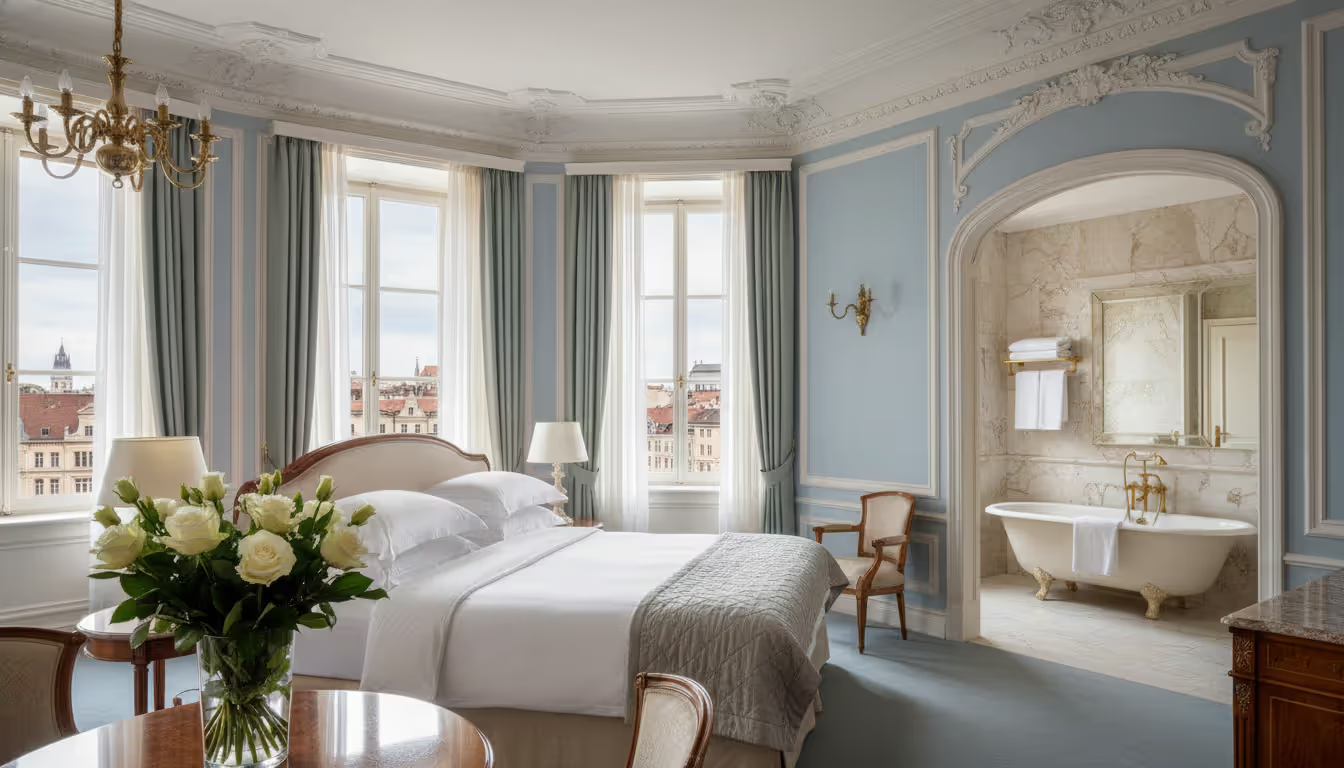
The properties themselves occupy a different category. We're discussing hotels with two staff members for every guest, suites where the bathroom alone exceeds 300 square feet, and locations that can't be replicated—a 1580s palazzo on Venice's Grand Canal, a Belle Époque monument overlooking Lake Geneva, a restored trullo village in Puglia that took architects eleven years to perfect.
Service quality becomes the differentiator. Staff don't just fulfill requests—they solve problems you haven't noticed yet. They remember your name after one interaction, recall that you're celebrating an anniversary without checking notes, and somehow secure theater tickets for a supposedly sold-out performance. This requires training, institutional memory, and staffing budgets that lower-priced properties simply can't match.
Author: Alexander Moreau;
Source: reykjaviksegwaytours.com
Types of Luxury Travel Experiences in Europe
Guided Tours and Packages
Premium tour packages give you structure without strangling spontaneity. Companies like Abercrombie & Kent, Tauck, and Insight Vacations cap groups at 12-16 people max—some guarantee departures with just two guests. These aren't coaches filled with 40 strangers eating lunch at predetermined highway restaurants.
The best guides bring more than knowledge. They've cultivated relationships over decades. Your Florence guide doesn't just explain Renaissance painting techniques—she arranges an unscheduled visit to a church restoration project happening that week, introduces you to the master craftsman, and lets you watch him apply gold leaf using 15th-century methods. Try replicating that experience by yourself.
Tour operators handle tedious logistics that consume hours of independent travel: coordinating train schedules across four countries, managing seven different hotel check-ins, securing August reservations at restaurants that book up in May, navigating interactions when your Italian extends to "buongiorno" and "grazie."
The tradeoff? Limited flexibility. Wake up in Florence wanting an extra day instead of moving to Siena as planned, and you'll face constraints. Good operators build buffer time specifically for these impulses, and experienced guides accommodate reasonable deviations, but you can't completely rewrite the itinerary mid-trip.
River and Ocean Cruises
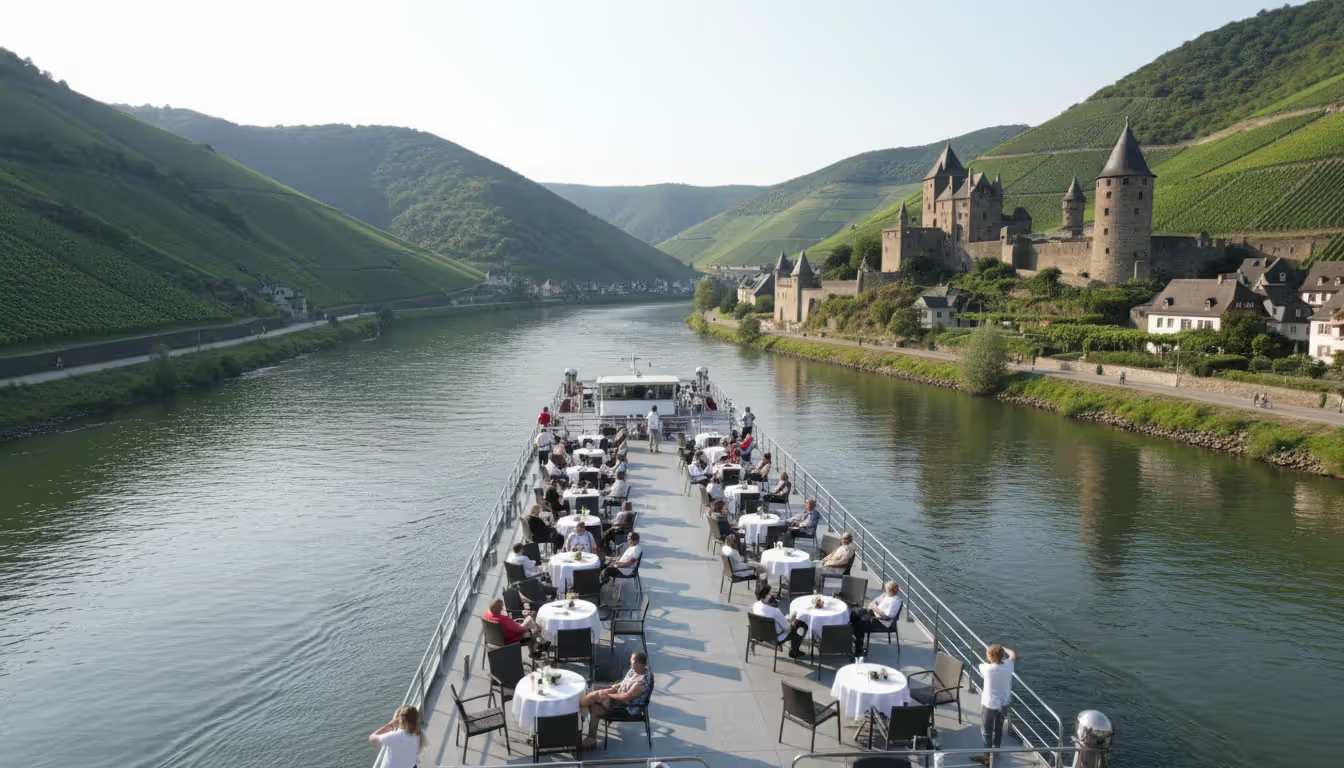
River cruises and ocean cruises both sail European waters, but that's where similarities end. River vessels on the Danube, Rhine, or Douro carry 100-190 passengers on intimate ships that dock in city centers. You walk off the gangway directly into Strasbourg's medieval quarter or Vienna's historic district. Viking, Uniworld, and AmaWaterways have refined this into a seamless format where your floating hotel eliminates constant packing.
River cruising suits people valuing convenience and cultural engagement over resort amenities. Ships lack pools, full spas, and entertainment venues—but you're rarely aboard during daylight anyway. Most itineraries include guided excursions at each stop with options based on mobility and interests: gentle town walking tours, more strenuous castle hikes, or cycling through vineyard country.
Ocean cruises through the Mediterranean or Norwegian fjords operate differently. Regent Seven Seas, Seabourn, and Silversea ships carry 300-750 passengers with full resort amenities—multiple specialty restaurants, extensive spas, enrichment lectures, public spaces designed for days at sea. These vessels cover serious distances, connecting regions that would otherwise require flights: Barcelona to Rome to the Greek islands to Istanbul in one voyage.
Ocean itineraries dock in commercial ports requiring shuttle buses into town. Port time is limited—six hours in Santorini gives you enough for highlights but not depth. You're seeing multiple countries, but you're not understanding them.
Both formats bundle most costs upfront: accommodations, meals, excursions, often beverages. This simplifies budgeting but reduces flexibility. Skip the included Pompeii tour to explore Naples independently, and you're forfeiting value you've already paid for.
Author: Alexander Moreau;
Source: reykjaviksegwaytours.com
Independent City Breaks
Self-designed city breaks offer complete flexibility. Maybe you'll spend five nights in Paris, four in Barcelona, three in Rome—choosing every hotel, restaurant, and activity based on your specific interests rather than package itineraries. This works for experienced international travelers and anyone with focused passions they want to pursue deeply.
Independent planning demands upfront effort. You'll research neighborhoods, compare hotels, book train tickets, secure restaurant reservations (which in Copenhagen or San Sebastian means planning three months ahead for top spots), and arrange private guides. The payoff: total control over pacing and priorities.
Sleep until 10 AM without missing a scheduled departure. Spend five hours in the Prado if a particular gallery captivates you. Change dinner plans based on a recommendation from your hotel's bartender. Extend your Barcelona stay or leave Rome early if it disappoints.
The challenge involves logistics. Moving between cities means coordinating checkout times, train schedules, check-in windows. Luggage becomes your problem—no tour company transferring bags. Language barriers, transportation strikes, and unexpected closures require problem-solving ability and patience.
Multi-Country Itineraries
Combining several countries appeals to first-timers wanting European diversity or travelers with limited vacation time. Two weeks might include London, Paris, the Swiss Alps, and Venice. The luxury version emphasizes quality over quantity—limiting stops to allow genuine experiences rather than exhausting checklist tourism.
Well-designed multi-country trips focus on three to four locations maximum over two weeks, spending at least three nights per place. This pacing lets you adjust to each destination's rhythm, discover neighborhoods beyond tourist centers, and have experiences requiring time—a half-day cooking class in Tuscany, a guided Dolomites hike, an evening at Vienna's opera.
First-class train travel connects cities comfortably. Routes like Paris-Barcelona, Zurich-Milan, or Vienna-Prague offer scenic journeys with spacious seats, dining cars, and the ability to walk around—far more civilized than budget flights through secondary airports. Some travelers book private transfers for routes lacking convenient train service, trading cost for door-to-door convenience.
Multi-country itineraries risk superficiality. You photograph famous sights without understanding the culture behind them. You taste regional cuisine without context that makes it meaningful. Premium travel mitigates this through expert guides, carefully chosen experiences, and accommodations reflecting local character rather than international chains that could be anywhere.
Top Destinations for Luxury European Travel
Paris sets the standard for upscale European experiences. The city offers more five-star properties than any European destination—historic palaces like Le Meurice and Hôtel de Crillon alongside intimate Marais boutique hotels. Michelin-starred restaurants number in the dozens. Private apartments occupy Haussmann buildings with original moldings and chandeliers. Cultural institutions offer after-hours access through specialized companies.
What makes Paris exceptional isn't just obvious landmarks. It's the 11th arrondissement wine bar where the sommelier guides you through natural wines from producers making 3,000 bottles annually. The vintage Hermès dealer in a Marais courtyard who knows the provenance of every scarf. The guide who takes you through Père Lachaise Cemetery sharing residents' actual life stories rather than just pointing at famous graves.
Rome and the Amalfi Coast combine ancient history with contemporary Italian style. Rome's luxury hotels occupy converted palaces and convents, placing you walking distance from the Pantheon, Trevi Fountain, Spanish Steps. Private Vatican tours before 8 AM public opening let you experience the Sistine Chapel in near-silence—dramatically different from shoulder-to-shoulder afternoon crowds.
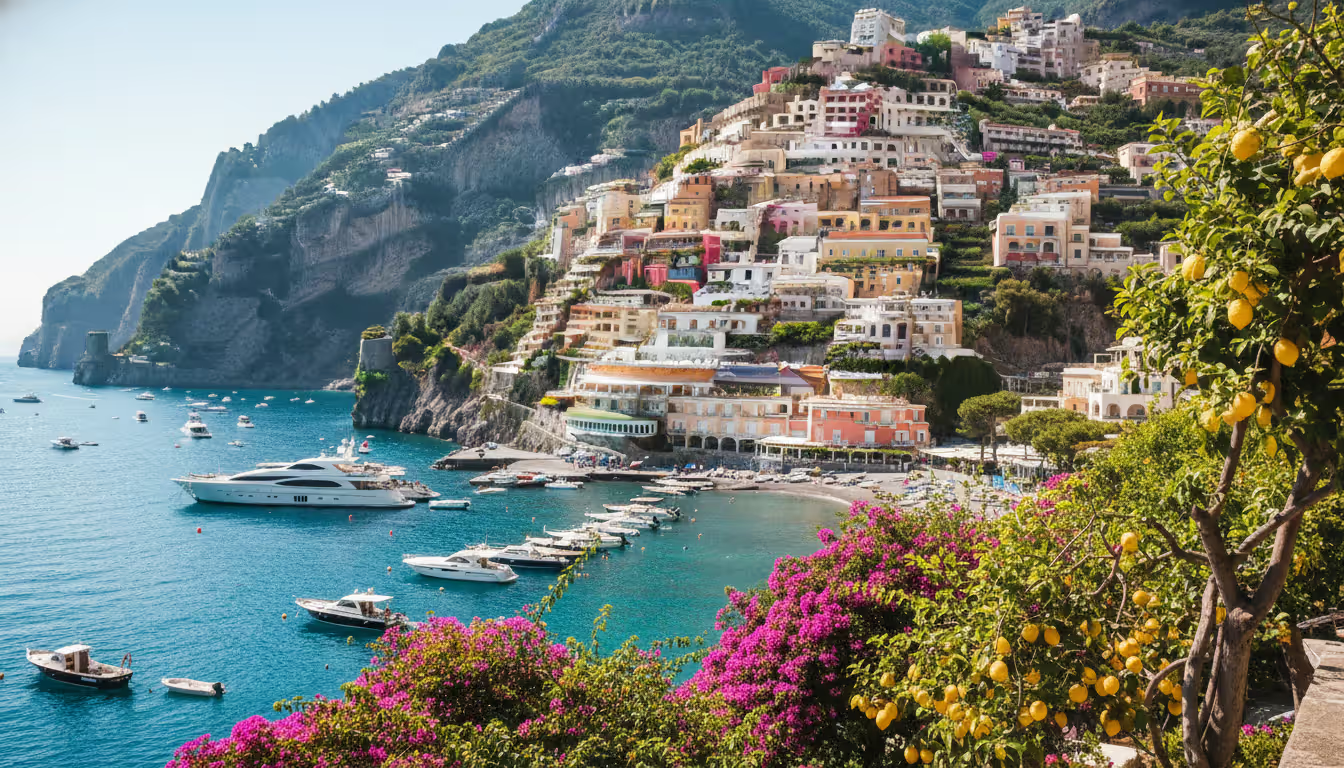
The Amalfi Coast—Positano, Ravello, Capri—delivers dramatic Mediterranean beauty with clifftop hotels, yacht excursions, and restaurants where views compete with food. Summer brings crowds and peak prices. Shoulder seasons (May through early June, September into October) provide better value and pleasant temperatures.
Author: Alexander Moreau;
Source: reykjaviksegwaytours.com
Barcelona blends Gaudí's architectural fantasies with beaches, world-class dining, and Catalan culture distinct from broader Spain. Luxury accommodations range from modernist landmarks like Hotel Casa Fuster to beachfront contemporary properties in Barceloneta. The compact city allows walking between major sights, while neighborhoods like Gràcia and Sant Antoni offer local flavor beyond tourist zones.
The Swiss Alps—Zermatt, St. Moritz, Gstaad—represent European luxury in its most refined form. These destinations cater specifically to affluent travelers with corresponding service standards, accommodations, and pricing. Summer brings hiking and mountain scenery. Winter offers world-class skiing. The Glacier Express train connecting Zermatt and St. Moritz provides one of Europe's most scenic rail journeys.
Vienna combines imperial grandeur with contemporary arts and café culture that makes lingering over coffee and Sachertorte a cultural institution. Luxury hotels include former palaces with original Baroque details. The opera, museums, and concert halls justify Vienna's reputation as Europe's classical music capital.
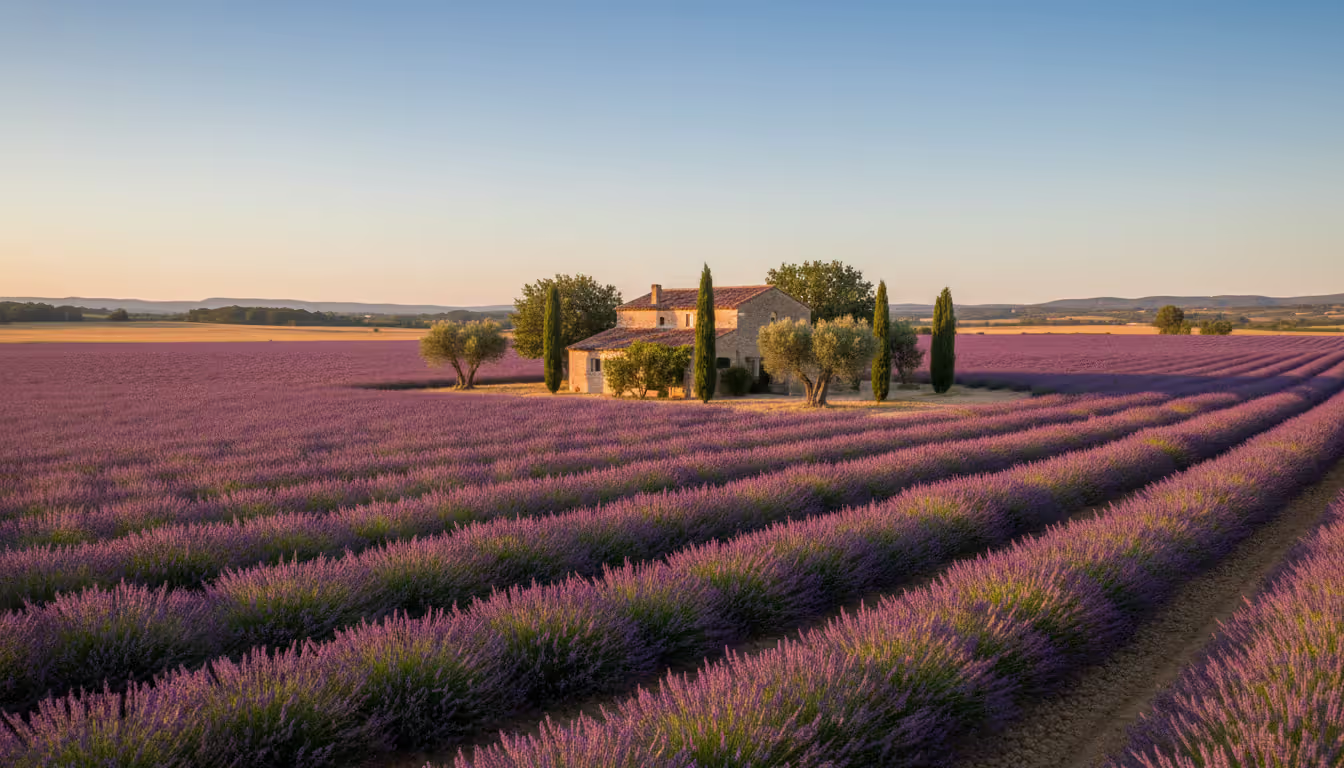
Provence and the French Riviera attract travelers seeking slower pacing. Provence offers countryside luxury—converted farmhouses, village hotels, vineyard estates—with markets, Roman ruins, lavender fields. The Riviera provides Mediterranean glamour in Nice, Cannes, Monaco, Saint-Tropez, with yacht culture, beach clubs, and hotels that defined 20th-century luxury travel.
Lesser-known destinations increasingly attract travelers seeking experiences beyond the standard circuit. Portugal's Douro Valley combines dramatic terraced vineyards with wine estates offering immersive stays. Slovenia's Lake Bled provides Alpine beauty without Swiss pricing. Croatia's Dalmatian Coast—particularly Dubrovnik and Hvar—offers Adriatic beauty, medieval towns, and emerging luxury properties.
How to Choose Between Tours, Cruises, and Custom Itineraries
The right format depends on your travel personality, not just budget. Premium tour packages suit people who value expertise and efficiency over complete autonomy. First-time visitors to a region, those who appreciate learning from guides, and anyone preferring that someone else handles logistics will find tours deliver excellent value despite higher upfront costs.
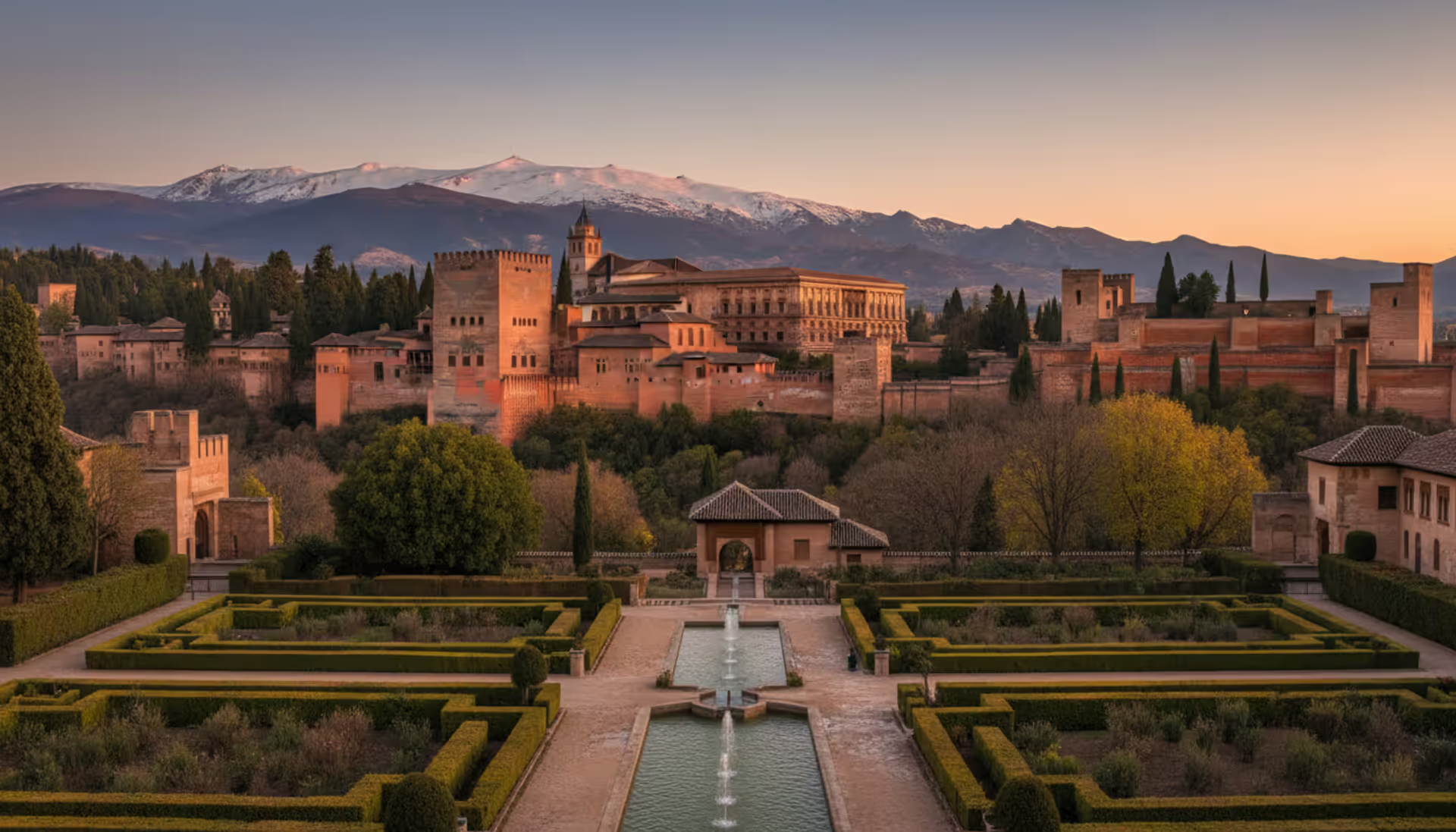
Tours work particularly well for destinations where language barriers, complex transportation, or cultural differences create challenges. A guided Andalusia tour navigating between Seville, Granada, and Córdoba removes stress about driving unfamiliar territory, finding parking in medieval city centers, and communicating in Spanish.
The social component appeals to some travelers, deters others. Small-group tours create opportunities connecting with like-minded people—you're traveling with others who value similar experiences and can afford comparable trips. Some enjoy this built-in social structure. Others find group dynamics constraining even with small numbers.
Luxury cruises excel for travelers covering significant distances who dislike frequent packing. A Mediterranean cruise visiting six countries in twelve days would require six different hotels traveling independently, with corresponding check-ins, check-outs, luggage management. The cruise ship serves as your floating hotel—unpack once while waking in new ports.
Cruises also suit people who appreciate structure and comprehensive pricing. Your daily schedule is planned: port arrival times, excursion options, meal times. This removes decision fatigue. Most costs are bundled, simplifying budgeting. However, this structure limits spontaneity. Love a particular port and want to stay longer? Not an option.
The tradeoff involves time in each destination. Port stops typically run 6-10 hours—sufficient for highlights but not deep exploration. You'll see Barcelona's Sagrada Família but won't have time for a leisurely afternoon in Gràcia's plazas. For travelers prioritizing breadth over depth, this works. Those wanting to genuinely understand a place will find cruise stops frustrating.
Custom independent itineraries provide maximum control. You design every aspect—destinations, accommodations, pacing, activities—around your specific interests. This suits experienced international travelers comfortable with planning and problem-solving, those with particular passions they want to pursue deeply, and anyone finding group travel or fixed schedules constraining.
Independent travel requires significant upfront effort. Researching hotels, reading reviews, comparing locations, booking trains, securing restaurant reservations, arranging guides takes time. For some travelers, this planning proves enjoyable. For others, it's tedious work detracting from vacation time.
The flexibility proves invaluable when it matters. You can adjust plans based on weather, energy levels, or discoveries. Meet locals who recommend a restaurant or sight? Incorporate it immediately. City disappoints? Leave early rather than enduring remaining scheduled days.

Author: Alexander Moreau;
Source: reykjaviksegwaytours.com
Budget considerations vary by format. Tours and cruises bundle costs, making total expenditure clear upfront but potentially including elements you don't value. Independent travel allows precise spending control—splurge on a particular hotel or meal while economizing elsewhere—but requires active budget management and can include unexpected expenses.
Planning Your Luxury European Vacation
Best Times to Visit
Seasonal timing dramatically affects both experience quality and costs. Summer (June through August) brings peak crowds, highest prices, uncomfortable heat in southern destinations. Paris in July means long museum lines and restaurants catering to tourists. The Amalfi Coast in August sees traffic jams, fully booked hotels, beaches packed with umbrellas.
Shoulder seasons—April through May and September through October—offer compelling advantages. Weather remains pleasant across most of Europe. Crowds thin substantially. Prices drop 20-40% compared to peak summer. Venice in October provides the same canals and architecture without cruise ship hordes. Provence in May means wildflowers and comfortable temperatures for countryside exploration.
Winter (November through March) suits specific destinations and interests. Skiing in the Alps peaks December through March. Christmas markets transform German and Austrian cities into festive destinations. Major cities like Paris, Rome, Barcelona remain accessible year-round, with museums and restaurants operating normally and hotel rates at their lowest.
Consider regional variations. Mediterranean destinations (southern Spain, Italy, Greece) become uncomfortably hot in July-August but offer pleasant winter weather when northern Europe turns gray and cold. Scandinavia's brief summer (June through August) provides nearly endless daylight and comfortable temperatures, while winter brings darkness but also Northern Lights opportunities.
Author: Alexander Moreau;
Source: reykjaviksegwaytours.com
Event timing affects both availability and pricing. Major happenings—Cannes Film Festival, Venice Biennale, Paris Fashion Week, Oktoberfest—drive hotel prices up and availability down. Some travelers specifically plan around these events. Others avoid them to escape crowds and premium pricing.
Booking Timeline and Lead Time
Upscale European travel requires longer lead times than standard trips. The best components have limited availability and book months ahead. Small boutique hotels might have only 15-20 rooms total. Popular suites book six to twelve months in advance for peak season.
Specialty restaurants present similar challenges. Copenhagen's Noma, if you can secure a reservation at all, requires booking the day reservations open months ahead. Even non-celebrity restaurants in major cities often need reservations 1-3 months out during high season. Walk-in dining works for casual meals but not destination restaurants.
Guided tours and cruises typically open bookings 12-18 months in advance. Early booking provides the best cabin selection on cruises and sometimes includes pricing incentives. However, booking extremely early (18+ months) can mean paying more than waiting for promotional pricing 6-9 months before departure.
A reasonable timeline for planning upscale European travel: begin research 9-12 months before your intended departure, finalize major decisions (destinations, tour versus independent, approximate itinerary) by 6-8 months out, and complete bookings 3-6 months before travel. This schedule allows access to good availability while avoiding the highest prices.
Last-minute luxury travel is possible but limited. You might find excellent hotel deals when properties discount unsold inventory 2-4 weeks before arrival. However, you'll have fewer choices, popular restaurants will be fully booked, and guided experiences or tours likely won't have availability. This approach works for flexible travelers without specific must-do experiences.
Working with Luxury Travel Advisors vs. DIY Planning
Travel advisors provide expertise, access, and advocacy justifying their fees or commissions. Experienced advisors maintain relationships with hotels, tour operators, and local guides that can secure upgrades, amenities, or access unavailable when booking directly. They've personally visited properties and can match recommendations to your specific preferences rather than generic "best of" lists.
Advisors save time by handling research, comparing options, managing bookings. Instead of spending hours reading hotel reviews and comparing locations, you communicate your preferences and budget, and the advisor presents curated options. They coordinate complex itineraries, manage changes, solve problems when issues arise during travel.
The value proposition increases with trip complexity. A simple five-night Paris stay in one hotel requires minimal planning—booking directly often makes sense. A two-week multi-country itinerary with trains, multiple hotels, restaurant reservations, private guides involves coordination advisors handle efficiently.
Advisor compensation varies. Some charge flat planning fees ($100-500+ depending on trip complexity), others earn commissions from hotels and tour operators (typically 10-15%), some combine both models. Commission-based advisors cost you nothing directly, but might favor suppliers offering higher commissions. Fee-based advisors provide unbiased recommendations but add to trip costs.
DIY planning works well for experienced travelers familiar with European destinations, those who enjoy research and planning, and anyone with specific visions requiring personal curation. You'll have complete control and potentially save advisor fees, but you'll invest significant time and won't have professional advocacy if problems occur.
The hybrid approach—using advisors for complex elements while booking straightforward components yourself—provides middle ground. An advisor might plan your overall itinerary and book hotels while you handle restaurant reservations and day-to-day activities. This splits workload and costs while retaining professional expertise where it matters most.
Cost Factors and Budgeting for Premium Europe Travel
Upscale European travel spans a wide cost spectrum. A week-long premium tour package might range from $5,000 to $15,000+ per person depending on destinations, accommodations, and inclusions. River cruises typically run $3,000-7,000 per person for a week, with premium lines and suites pushing higher. Independent luxury travel varies even more widely based on choices.
Accommodations represent the largest single expense. Luxury hotels in major cities charge $500-1,500+ per night for standard rooms, with suites easily doubling or tripling that. Boutique properties might offer better value—$300-600 per night—with more character and personalized service than chain luxury hotels. Shoulder season rates typically drop 20-40% compared to peak summer pricing.
Dining costs accumulate quickly at the luxury tier. Michelin-starred restaurants charge $150-400+ per person for tasting menus before wine. Even casual but high-quality dining runs $50-100 per person for dinner. Budget $100-200 per person daily for meals at the luxury level, more if you're specifically pursuing culinary experiences.
Transportation varies by format. First-class train travel between major cities costs $100-300+ per person per journey. Private transfers run $200-500+ depending on distance. Car services for airport transfers in major cities typically cost $100-200. Tours and cruises bundle transportation, simplifying budgeting but potentially including costs for services you wouldn't choose independently.
Experiences and guides add substantial costs. Private museum tours run $300-600 for 2-3 hours. Cooking classes cost $150-300 per person. Wine tastings at premium estates charge $50-150. A private guide for a full day typically costs $400-800. These experiences distinguish luxury travel from standard tourism, but they require budget allocation beyond basic sightseeing.
Hidden costs catch unprepared travelers. Tourist taxes in European cities add $3-10 per person per night. Resort fees exist at some properties. Tipping expectations vary by country but can add 5-15% to service costs. Credit card foreign transaction fees (2-3% unless using cards waiving them) accumulate on every purchase.
Maximizing value without compromising quality involves strategic choices. Book shoulder season when prices drop but weather and availability remain good. Choose smaller cities or emerging destinations over the most famous (Porto instead of Lisbon, Lyon instead of Paris) where luxury costs less. Splurge selectively—perhaps a suite in one city and standard rooms elsewhere, or one Michelin meal and otherwise excellent but less formal dining.
Package pricing often provides better value than booking components separately. Tour operators negotiate hotel rates unavailable to individuals and bundle guides, transportation, and experiences at lower total cost than arranging independently. Cruise pricing similarly includes accommodations, meals, excursions that would cost more separately.
All-inclusive pricing simplifies budgeting and can offer value, but examine what's actually included. Some river cruises include all beverages, shore excursions, gratuities. Others charge extra for premium alcohol, specialty excursions, tips. "All-inclusive" resort pricing might exclude premium restaurants, spa services, activities. Scrutinize the detailed breakdown before booking to avoid surprise charges.
Common Mistakes to Avoid When Booking Luxury European Vacations
The biggest shift we've seen in upscale European travel over the past few years involves travelers seeking depth over breadth.Clients increasingly want to spend a week in Provence truly understanding the region—its markets, vineyards, villages, people—rather than racing through five countries checking boxes. They're willing to pay premium prices, but they want those investments creating genuine understanding and connection, not just Instagram moments. The most memorable experiences we create now involve access and expertise that money alone can't buy—a winemaker opening their private cellar, a chef explaining regional food traditions during a market tour, a guide who's spent 30 years studying Renaissance art sharing insights in a quiet gallery. That's what defines luxury in 2026: meaningful experiences genuinely enriching your understanding of a place
— Jennifer Walsh
Over-planning creates rigid itineraries eliminating spontaneity and creating stress when inevitable changes occur. Scheduling every hour with guided tours, museum visits, restaurant reservations leaves no room for discoveries—the charming neighborhood you stumble upon, the local festival happening during your visit, or simply the need to rest after travel fatigue.
Build buffer time into itineraries. Spending four nights in Rome? Schedule guided experiences for two or three days maximum, leaving at least one day unstructured. This flexibility allows you to linger at places you enjoy, pursue recommendations from locals or hotel staff, adjust for energy levels and weather.
Under-planning presents opposite problems. Arriving in Paris during peak season without restaurant reservations means eating at tourist traps with availability rather than restaurants you actually want to visit. Hoping to tour popular museums without advance tickets means standing in lines or finding sold-out time slots.
The balance involves planning key elements—hotels, major transportation, must-do experiences requiring reservations—while leaving daily schedules flexible. Book that Michelin restaurant and private Vatican tour, but don't schedule every meal and activity weeks in advance.
Choosing the wrong season affects both experience quality and value. Summer in southern Europe brings oppressive heat and overwhelming crowds. Venice in August becomes nearly unbearable with humidity, cruise ship passengers, inflated prices. The Greek islands in July see temperatures regularly exceeding 95°F with limited shade.
Research seasonal patterns for specific destinations. Northern Europe (Scandinavia, Scotland, Ireland) offers the best weather June through August when southern Europe becomes uncomfortably hot. Mediterranean destinations shine in shoulder seasons. Alpine regions excel in summer for hiking and winter for skiing, but can be limited in spring and fall when weather is unpredictable.
Ignoring additional fees and supplementary costs leads to budget surprises. Resort fees, tourist taxes, service charges, gratuities add 10-20% to base costs. Premium cruise lines might advertise all-inclusive pricing but charge extra for premium alcohol, specialty restaurants, spa services, certain excursions. Tour packages might exclude lunches, entrance fees, guide gratuities.
Request detailed breakdowns of included versus additional costs before booking. Ask specifically about tourist taxes, resort fees, service charges, gratuities, and any experiences or amenities requiring additional payment. Factor these costs into total budget rather than being surprised during or after travel.
Booking too late limits choices, particularly for small boutique hotels, popular restaurants, specialized experiences. A 15-room boutique hotel can sell out months ahead for peak season. Restaurants with only 30 covers book quickly. Private guides with excellent reputations have limited availability.
Conversely, booking extremely early (18+ months) can mean missing promotional pricing. Hotels and tour operators often discount inventory 6-9 months before travel to stimulate bookings. Booking at first availability might mean paying full retail when waiting would have provided the same experience at 20-30% less.
The optimal booking window for most luxury European travel falls 6-9 months before departure, allowing access to good availability while potentially capturing early-booking incentives or promotional pricing. For particularly popular destinations or limited-inventory properties, booking 9-12 months ahead provides security.
Choosing properties based solely on photos and marketing rather than location creates daily inconvenience. A beautiful hotel located far from city centers or transit requires constant taxi rides, wasting time and money. Conversely, a hotel in the heart of tourist zones might offer convenience but lack authentic neighborhood character and suffer from street noise.
Research actual locations using mapping tools. Understand walking distances to major sights and transit connections. Read reviews specifically mentioning location pros and cons. Sometimes a property slightly outside the most central area offers better value, quieter surroundings, more authentic neighborhood character while remaining easily accessible.
Luxury Travel Styles Comparison
| Factor | Guided Tours | Luxury Cruises | Independent City Breaks |
| Typical Cost Range | $5,000–$15,000+ weekly per person | $3,000–$10,000+ weekly per person | $3,000–$12,000+ weekly per person |
| Best For | First-timers, those wanting expertise, travelers preferring structure | Multi-destination coverage, those disliking frequent packing, couples seeking bundled pricing | Experienced travelers, those with specific interests, anyone wanting maximum flexibility |
| Flexibility Level | Moderate—free time built in, but group schedule creates limits | Low—fixed itinerary and port schedules, limited time per destination | High—complete schedule control, activities, and pacing |
| Included Amenities | Hotels, most meals, guided experiences, inter-city transportation, expert guides | Accommodations, all meals, many excursions, onboard entertainment, beverages (varies by line) | Only what you book—typically just accommodations, sometimes breakfast |
| Planning Effort | Low—operator handles logistics, you choose overall tour and perhaps some activity options | Very low—choose cruise and cabin, everything else arranged | High—research and book all components yourself or work with advisor |
Frequently Asked Questions
Upscale European vacations offer transformative experiences when planned thoughtfully around your specific interests, travel style, and priorities. The continent's diversity means no single approach suits everyone—guided tours provide expertise and convenience for some travelers, while others thrive on the flexibility of independent exploration. River cruises offer effortless multi-destination travel. City breaks allow deep dives into specific places.
Success comes from honest self-assessment. Consider what actually matters to you rather than what luxury travel "should" include. Passionate about food? Allocate budget toward Michelin dining and cooking classes rather than the most expensive hotels. Art drives your interest? Invest in private museum tours and expert guides. Relaxation is paramount? Choose fewer destinations with more time in each rather than ambitious multi-country itineraries.
The most successful upscale European vacation balances planning with spontaneity, structure with flexibility, iconic experiences with personal discoveries. Book key elements requiring advance reservations—hotels, major transportation, must-do experiences—while leaving space for recommendations, weather-dependent activities, and the unexpected encounters that often become trip highlights.
Start planning with clear priorities, realistic budgets including additional fees and expenses, and timelines allowing access to the best availability. Whether you choose guided tours, luxury cruises, or independent travel, focus on experiences aligning with your interests rather than generic luxury checklists. Europe rewards travelers who invest time understanding what they genuinely want from their journey, then make intentional choices to create those experiences.
The memories you'll treasure won't come from simply staying in expensive hotels or dining at famous restaurants, but from moments when expert guidance, exclusive access, or perfect timing create genuine connection with places and cultures. That's what separates truly luxurious European travel from simply expensive tourism.